
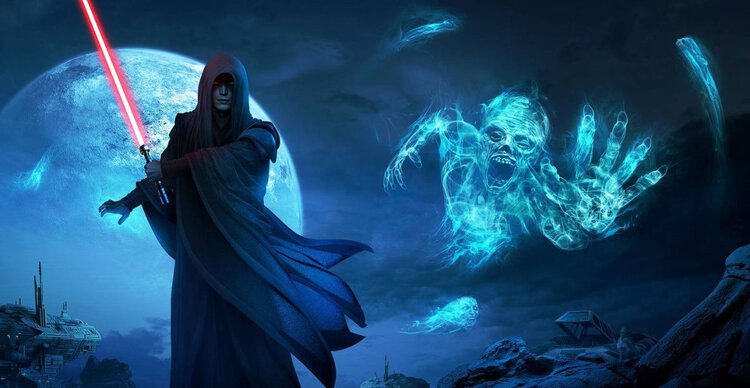
Most Sith stories start the same way: a war, a betrayal, a body count, and a new Dark Lord climbing up the ladder.
But here’s a weird one from Legends: there’s a Sith Lord people point to as the exception — someone who didn’t seem obsessed with conquering the galaxy or wiping out the Jedi. He’s basically remembered as the Sith who treated the dark side like a personal path, not a campaign.
Table of Contents
- 10. He Started as a Mine Director, Not a Warlord
- 9. Lumiya Uses Him as a “Good Sith” Example
- 8. He’s Famous Because He’s the Sith Who “Died Peacefully”
- 7. His Story Is Tied to an Asteroid Base Called “the Home”
- 6. He’s Linked to a Sith Trick Called “Force Phantoms”
- 5. Even the Jedi Don’t Know If He Was Real
- 4. The Book Claims He Had a Moral Code Before the Dark Side Got Its Hooks In
- 3. He Had a Soft Spot for Baby Animals
- 2. Other Sith Respected His Control… and Hated What He Represented
- 1. He Shook Up the Status Quo by Leaning Into the “Grey” Argument
10. He Started as a Mine Director, Not a Warlord
Most Sith “origin stories” begin with somebody already chasing power. His starts with a job.
Before he ever takes the name Darth Vectivus, he’s described as the director of the Jonex Mine Eight Eleven B asteroid mining colony. The way the story frames it, he isn’t out hunting Jedi or plotting a coup, he’s running a mining operation, dealing with workers, schedules, and the kind of problems that don’t sound “Sith” at all… until the dark side starts bleeding into the place.
9. Lumiya Uses Him as a “Good Sith” Example
Most of what fans “know” about him comes from a single moment in Legacy of the Force: Betrayal. This isn’t a neutral history lesson, it’s a conversation where Lumiya is trying to steer Jacen Solo toward the Sith path.
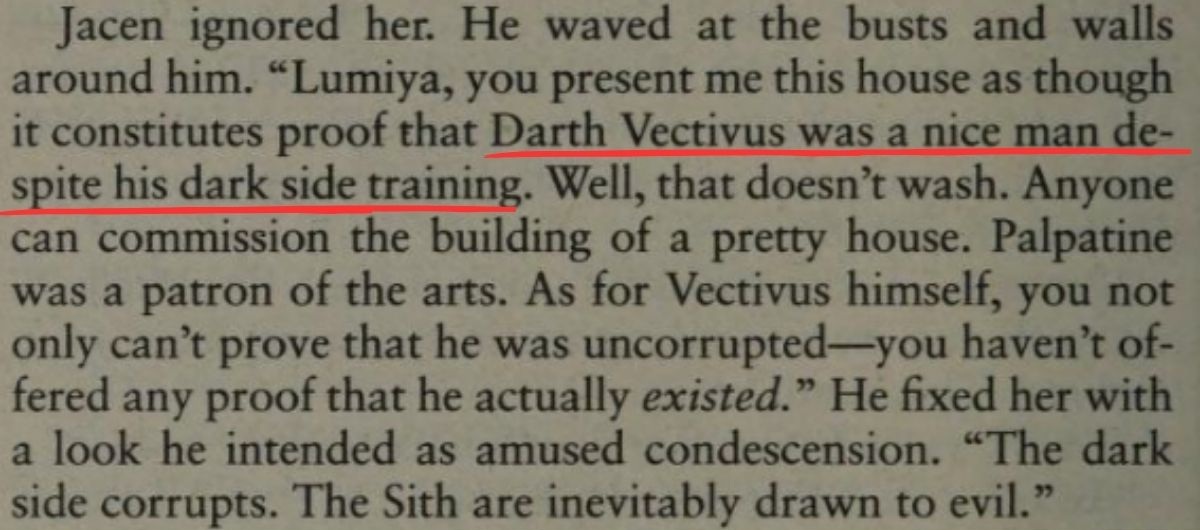
So she brings up this Sith Lord as her proof-of-concept: a Dark Lord who supposedly didn’t chase galactic conquest, didn’t spend his life hunting Jedi, and still died peacefully. And that’s why the “good Sith” label sticks, because the story is introduced as an argument. It’s meant to sound reasonable enough that Jacen might believe the dark side can be controlled.
8. He’s Famous Because He’s the Sith Who “Died Peacefully”
In Legacy of the Force: Betrayal, he’s described as a Sith Lord who didn’t meet the usual Sith ending. He isn’t killed in a duel, doesn’t get betrayed by an apprentice, and doesn’t go down in some last-stand war. Instead, the story says he dies of old age, with friends and family around him.
7. His Story Is Tied to an Asteroid Base Called “the Home”
Another concrete detail that keeps coming up with him is the Home, an asteroid habitat connected to his name. It isn’t framed as some random Sith fortress. It’s tied to an old mining setup (the same “Jonex Mine Eight Eleven B” thread), and it’s treated like the place has a dark-side presence underneath it that can affect people who spend too long there.
That’s why the Home matters in his lore. It’s one of the few “physical” anchors to his story: a real location you can point to, where strange dark-side stuff is said to have happened, and where later characters go digging for answers about him.
6. He’s Linked to a Sith Trick Called “Force Phantoms”
One of the few specific “Sith skills” tied to him is Force phantoms, those dark-side manifestations that show up in Legacy of the Force: Betrayal and later books as a way to mess with people, trap them, and scare them into bad decisions.
They’re treated as more than simple “illusions,” too. The way the technique gets described in reference material, these phantoms are dangerous because they’re meant to feel real, and the story uses them like a horror tool, not a stage trick.
5. Even the Jedi Don’t Know If He Was Real
In Legacy of the Force: Betrayal, the “good Sith” story gets told… and then it immediately gets challenged. After Brisha lays out the whole “he did no evil” pitch, Nelani flat-out points out the obvious problem: they don’t even know if this guy ever existed in the first place.
She says it right there: “Including whether he ever existed…”
4. The Book Claims He Had a Moral Code Before the Dark Side Got Its Hooks In
Same conversation, same source: Betrayal gives an actual explanation for why he’s supposedly different. When Jacen asks how he avoided being “ruined” by greed, Brisha’s answer isn’t “because he was secretly nice.” It’s that Vectivus already had a strong ethical center before he ever started pulling on the dark side.
The line is basically: he “developed a strong ethical code before he ever felt any pull from the dark side.”
3. He Had a Soft Spot for Baby Animals
One of the weirdest little character details attached to him is that he wasn’t “cold Sith 24/7.” Legends bios describe him having a soft spot for animals when they’re young, specifically saying he found baby banthas especially cute, while also joking that Kowakian monkey-lizards were the ugliest creatures in the galaxy.
2. Other Sith Respected His Control… and Hated What He Represented
Vectivus is remembered as the Sith who didn’t act the way Sith are “supposed” to. That alone would’ve been irritating to a lot of them. Sith culture rewards domination, ambition, and open cruelty, so a Dark Lord who keeps his life quiet and controlled would look like an insult to the whole image.
At the same time, that self-control is exactly what other Sith would respect. If you believe the story about him, he did something most of them fail at: he stayed in the dark side without letting it turn him into a walking disaster. So he ends up with this odd reputation, admired for discipline, resented for not fitting the stereotype.
1. He Shook Up the Status Quo by Leaning Into the “Grey” Argument
Vectivus matters in Legends because his story gets used to challenge the simple Jedi/Sith math. Normally it’s presented as: Jedi = self-control, Sith = corruption. End of discussion.
But the way people talk about him flips that into a messier idea: that someone could study the dark side without immediately turning into a galactic tyrant. Not “the dark side is good,” but “the dark side can be approached like a tool,” with discipline and limits. That’s basically the “grey” argument in a Sith wrapper, and it’s why his name keeps coming up whenever characters start debating whether the Force is really as black-and-white as the Jedi and Sith both claim.