
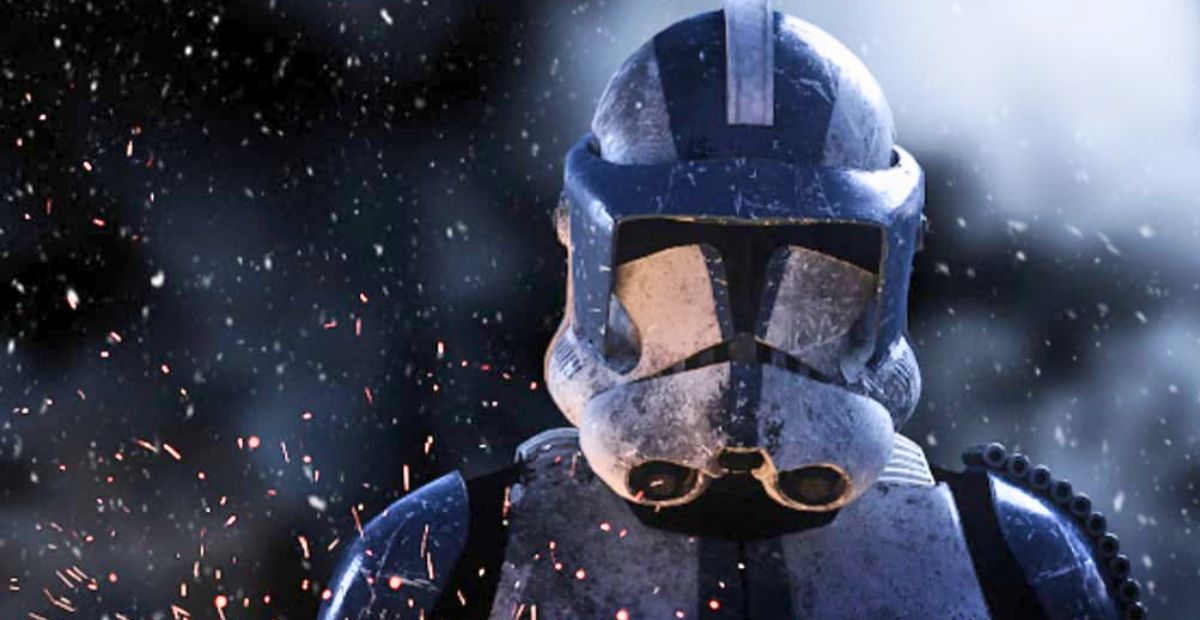
We usually picture clone troopers like Rex and Cody, disciplined soldiers who still have a conscience. But the Clone Wars weren’t that clean. Some clone units became the Republic’s “dirty work” teams, enforcing crackdowns, hunting targets, and treating civilians like collateral damage. Here are three clone units that were morally messed up, and what they did to earn that reputation.
Table of Contents
1. The Coruscant Guard as the Republic’s Heavy-Handed Security Force
The Coruscant Guard were an elite corps in the Grand Army of the Republic, made up of clone shock troopers. Led by Commander Fox, they weren’t sent to the front lines like most clones. Their job was Coruscant itself, the Republic’s capital.
At first, their focus was protecting government buildings and vital infrastructure. But as the Clone Wars dragged on, their role grew. The Senate Guard was becoming more ineffective and corrupt, so the Coruscant Guard ended up stepping in more and more, until they were essentially covering Senate security duties and acting as bodyguards for senators and even the Supreme Chancellor.
They also operated out in the city. Shock troopers patrolled Coruscant’s streets alongside local police and security droids, helped pursue suspects, and handled riot control. On top of that, they guarded detention centers, ran hostage rescue missions, escorted diplomatic travel, and acted as military police.
A clear example is Ahsoka’s arrest during the Jedi Temple bombing case. When she’s framed and the Republic turns on her, it isn’t battlefield clones coming for her. It’s Coruscant Guard shock troopers. Fox is the one putting her under arrest and treating her like a dangerous suspect right there in the capital. That’s the Coruscant Guard in their element: not fighting droids, but enforcing order, locking things down, and hunting targets in the streets of Coruscant.

And that’s why this unit gets a darker reputation than most. When your clone unit’s job is street patrols, raids, arrests, and crowd control in the capital, you stop looking like “soldiers defending the Republic” and start looking like the system that later becomes the Empire.
2. Commander Keller’s Unit and Martial Law on an Entire City
Keller is one of those clone commanders who shows how ugly things can get when the war ends and the purge begins. Like the other clones, he was grown on Kamino from Jango Fett’s template, promoted to Clone Commander, and brought into the ARC Commander program to train in Advanced Recon Commando skills. This whole sequence is shown in Star Wars: Republic #79.

Near the end of the Clone Wars in 19 BBY, Keller and his unit of Galactic Marines are deployed to the frozen Outer Rim world of Toola to fight Separatist incursions. After weeks of battle, the Republic wins by hitting the droids’ main generators. But right after the victory, Order 66 comes down from Palpatine, and Keller’s unit turns on their Jedi leaders.
They manage to kill General Simms, but two Jedi slip away, Kai Hudorra and Simms’ Padawan, Noirah Na. They escape on STAPs toward Ithaqua Station, and from that moment Keller’s mission changes completely. He’s not fighting droids anymore. He’s hunting Jedi.
This is where the “morally messed up” part kicks in. Keller doesn’t just chase them in the snow. He starts treating the whole area like a controlled zone. He rides out with his men on mastmots, finds the abandoned STAPs, tracks footprints through the snow, and then immediately orders his troops to comm ahead and alert the local garrison at Ithaqua Station, basically locking the place down before he even arrives.
When Keller reaches the station, he goes full crackdown mode. He storms into a cantina and orders everyone to freeze where they are and have their identifications ready. It’s not a normal search. It’s the kind of raid where every civilian becomes a suspect, and the goal isn’t “keep people safe.” It’s “catch the target at any cost.”
And even then, he still fails. Hudorra is actually in that cantina. He triggers a brawl between the patrons and Keller’s troops, using the chaos to slip away. The freezing night forces Keller’s unit off the streets until morning, and by the time the hunt resumes, the two Jedi have already boarded a ship and escaped Toola.
3. Commander Faie and the Clone Who Was Willing to Kill His Own Men
Commander Faie is the one who takes it to the extreme. This is another Legends example, and the story comes from Star Wars: Republic #83. If the Coruscant Guard show how clones can become enforcers and Keller shows how a Jedi hunt can turn into a lockdown, Faie is the one who pushes that mindset into something much uglier.

Once the purge begins, Faie is willing to go beyond soldiers, beyond battlefield targets, and beyond anything that could still be called restraint. In his effort to hunt down a Jedi, he is prepared to destroy a Wookiee village just to force his target into the open. That is the moment where his actions stop looking like military duty and start looking like pure expendability logic. Innocent civilians are no longer people to protect. They are just part of the price of finishing the hunt.