
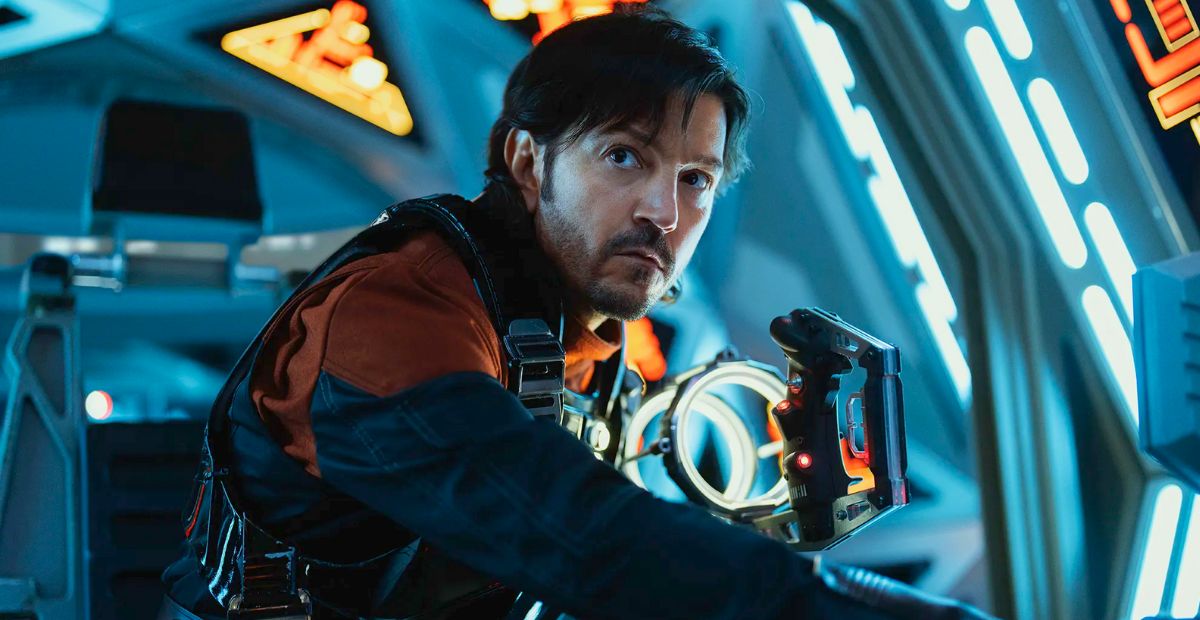
As reported late last month, Disney spent over $700 million on both seasons of Andor. That amount made the show the most expensive Star Wars production yet. While we may think that’s too much money on a television series, the exact opposite is true. It was worth spending that much on Andor to make the show a standout among the Disney offerings and win back fan support.
Table of Contents
Spending and Results of Andor
Articles like this Forbes one conveyed the figures. Disney spent an additional $60.5 million on filming and post-production for the second season of Andor, resulting in a total of $705.5 million spent on the entire series. This amount was higher than the spending on any of the Star Wars movies.
Both seasons of Andor came in at over $350 million each, which may seem pricey for television, but it seems to have paid off. As the above article noted, Andor is the “only one of Disney’s Star Wars franchises that has managed to maintain audience appeal across several seasons”, helping stabilize a rocky ride for Disney since 2012.
Quality writing and acting have garnered attention for being major parts of this show’s success. Original characters and creativity also make one of our recent lists for why Andor could be the best offering of the Star Wars franchise. Yet, budget items like a reliance on physical sets and practical effects also played a large role in making this a stand-out show.
Since Season One, Andor has received applause for moving away from CGI and opting for sets and locations. As this previous write-up expressed, Andor departed from The Volume approach that had become the new standard for shows like The Mandalorian and Obi-Wan Kenobi. Filmed mainly on “real, elaborate sets or on-location around the world,” Andor boosted its price but broke a Disney trend that may have been overused.
A more recent article focuses on the value of practical effects in Season 2. SFX Supervisor Luke Murphy commented on the task of building an actual TIE Fighter, indicating that it proved to be “one of the most challenging builds” they had ever done. It used aircraft materials and a steel core to accentuate its realism.
Such budgetary enlargements helped give the show its “grounded” feel and make it a success. Without the higher costs, we may have been looking at another failed Disney initiative.
Andor Costs and Benefits
Making extensive use of physical sets and practical effects served as the cornerstone of the costs and benefits of Andor productions. Other costly and worthy initiatives included the brick-constructed town of Ferrix in “Little Marlow,” or a village in Buckinghamshire, England, and filming on location in the Scottish Highlands.
Similarly, this short video brings us into the plaza set for Ghorman that was “the size of two football fields” and included a hotel and cafe. This spending certainly made the environment for the pivotal massacre feel quite real. In this scenario and others, Tony Gilroy and his creative team committed to enhancing the realism element that extended into top-notch costumes and props.

Challenges also figured into Andor’s high budget. The WGA/SAG-AFTRA strike caused a delay in production for Season Two. Although the strike added about $20 million to the costs, we may agree that it didn’t interfere with “the most existing and visually stunning espionage, spaceflight, and action” in recent Star Wars programming.
Planned and unplanned expenditures didn’t detract from the show. The second season, like the first, breathed new life into the franchise, and we could confidently claim the benefits outweigh the costs.
Andor’s Budget and Its Impact on Fans
Fans attest to the payoff of the big budget when commenting on the “amazing costumes and actual, real life sets.” Likewise, this Reddit discussion draws attention to “on location photography” and its role in the Aldhani story arc. Moreover, fans here indicate something larger–renewed fan interest and “goodwill” directed at Disney.
We may be overreaching by saying that Andor saved Disney+, but the series was certainly a critical and fan success. So, we could say it at least saved the trust of devoted fans.
However, we may also follow the logic of this video and end up with a more mixed conclusion. That is, all the elements that made the series succeed could lead us to wonder if it “raised the bar so high” that other Disney shows and movies will “struggle to keep up.”

As the above video explains, Season 2 “took everything that worked from Season 1” and “sharpened” and strengthened it. The careful, creative crafting of each episode, including the dialogue, established a new standard to live up to, especially in comparison to other programs like Obi-Wan and even The Mandalorian by the end.
Hence, it may be difficult moving forward, leading to renewed fan disappointment. But that remains to be seen. For now, we can congratulate Disney for making use of a high budget to deliver an outstanding show and possibly resurrecting its fan base.
Disney Spending More on Andor
For both seasons, Disney spent over $700 million, which made it the most expensive production to date. We have compelling reasons, though, to think this was money well spent in terms of delivering a stellar series that captivated existing and new audiences. Andor potentially offers a foundation for future franchise success.