
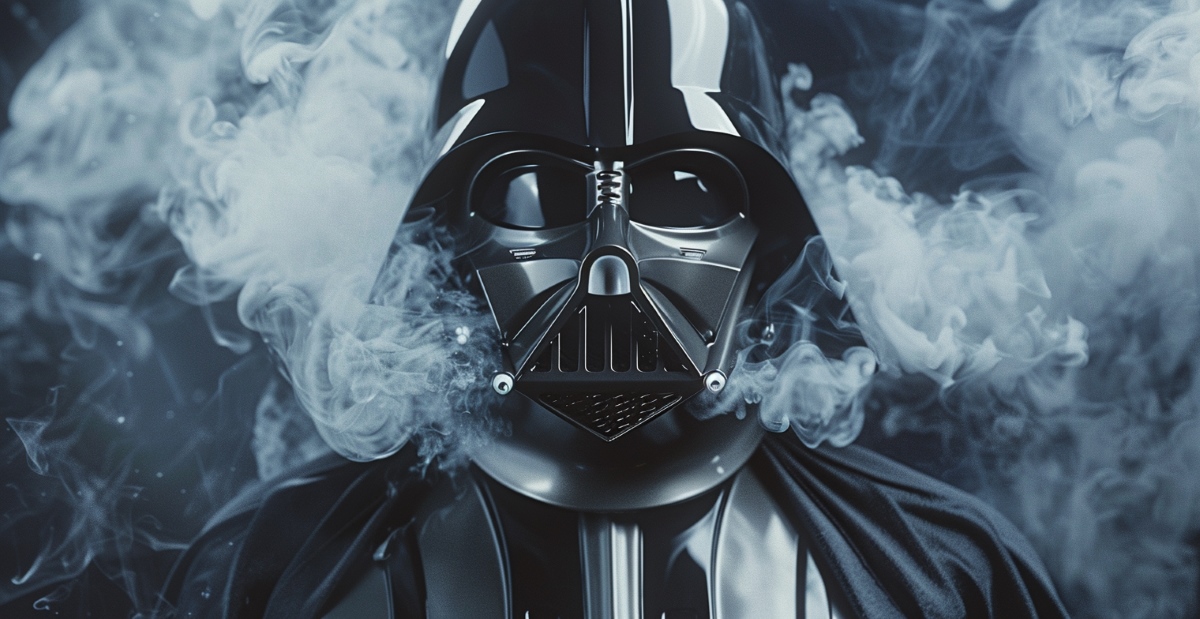
When people think of Darth Vader, they usually picture an unstoppable force — the black armor, the deep mechanical breathing, the presence that makes even seasoned generals tremble. But beneath that fearsome exterior was a man trapped inside a machine he despised. The life-support armor that kept him alive after Mustafar was also the source of constant pain, frustration, and resentment. And although he eventually learned to live with it, Vader’s suit was far from the gift it might have seemed.
Table of Contents
From Hatred to Reluctant Acceptance
He initially hated the armor, but after living with it for five years, he embraced how it isolated him from the rest of the galaxy, allowing him to concentrate on becoming a pure instrument of the dark side. In the beginning, however, Vader saw the suit as nothing but a curse. It was heavy, restrictive, and uncomfortable — a daily reminder of his failures and the price of his transformation. The machinery built to sustain him also bound him, cutting him off from the sensations, abilities, and freedoms he once took for granted.
The helmet was one of the worst parts. It drilled into his scalp and spine with painful neural connections so the suit’s systems could function, and the built-in respirator’s rasping sound echoed endlessly in his ears. The entire structure weighed around 120 kilograms, making every movement slow and deliberate. Gone was the swift, acrobatic fighting style of Anakin Skywalker — Vader had to completely reinvent how he fought because of the armor’s limitations.

From Star Wars: Absolutely Everything You Need to Know
His senses suffered, too. The helmet’s visual and auditory sensors dulled his connection to the world. Sounds became distorted, distances were harder to judge, and normal breathing was impossible without the life-support system. Eating required specialized equipment and a pressurized chamber, where he could remove his mask safely for brief moments. Even those short breaks were rare, and they were the only times he felt anything close to normal.
Pain, Vulnerabilities, and Control as a Daily Pattern
The discomfort went far beyond the weight and needles. Synthetic skin grafted over his burned flesh constantly itched, and his damaged body required regular treatments to remove dead tissue. True rest was almost impossible — the noise of his own breathing kept him awake, and nightmares haunted the few hours of sleep he could get. The armor also left him feeling claustrophobic, both physically and mentally, trapped inside a shell that reminded him every second of what he had lost.
On top of all that, the suit was full of weaknesses. Its oxygen supply was limited, and it could rupture under high pressure. Electrical discharges, like Force lightning, could overload its systems. The technology itself was outdated — even droids called it “junk.” Vader suspected Palpatine had intentionally chosen subpar components to keep him reliant and controllable. That suspicion wasn’t unfounded: his systems could be remotely shut down, and others had successfully hacked into the suit, manipulating his movements or disabling his voice.
In the Darth Vader (2015) comics, Dr. Cylo — one of the scientists who helped reconstruct Vader after Mustafar — demonstrates this hidden backdoor by pressing a small gray remote. Vader collapses instantly, unable to move, as the suit goes completely dark. You can read more at How Darth Vader was Disabled in a Click of a Button.
Palpatine’s Tool to Control Over Vader
The most bitter truth was that much of what Vader hated about his suit wasn’t accidental — it was deliberate. Palpatine had spent over two decades grooming Anakin Skywalker to become his ultimate apprentice, but when Anakin was burned and mutilated on Mustafar, he could no longer fulfill the Emperor’s vision of unstoppable power. Instead of replacing him, Palpatine chose to punish him and keep him under control.
He personally oversaw the design of Vader’s armor and ensured it would always keep his apprentice in check. The life-support system was built so that even a few seconds without the helmet would mean death. Thousands of microscopic needles were embedded into Vader’s skin to feed sensory data to his cybernetics, guaranteeing constant pain. Outdated materials — some decades old — were chosen intentionally, making the suit slower and clunkier than it needed to be. Palpatine could have easily given Vader a more advanced, agile system that resembled his former self, but he refused. He wanted Vader’s suffering to fuel his anger and deepen his connection to the dark side.
Palpatine also built vulnerabilities into the design to ensure Vader could never overthrow him. The armor was highly susceptible to Force lightning, a weakness the Emperor exploited more than once to torture his apprentice and remind him who was in control. These deliberate flaws served as a leash — proof that no matter how powerful Vader became, he would always be a step below his master. It’s why Vader sought Luke’s help to overthrow Palpatine: deep down, he knew he could never do it alone.
The Weight of Isolation
Despite all its flaws, the armor eventually became part of who Vader was. It isolated him from the galaxy, and in that isolation, he found focus. The man who once fought for freedom was now bound by the very thing that sustained him, and that separation from the world allowed the dark side to consume him completely. Yet even as he embraced it as a tool of power, the truth remained: Darth Vader’s suit was not a symbol of strength to him — it was a prison. It kept him alive, but it also ensured that the galaxy’s most feared Sith Lord would always live in pain, confinement, and control.