
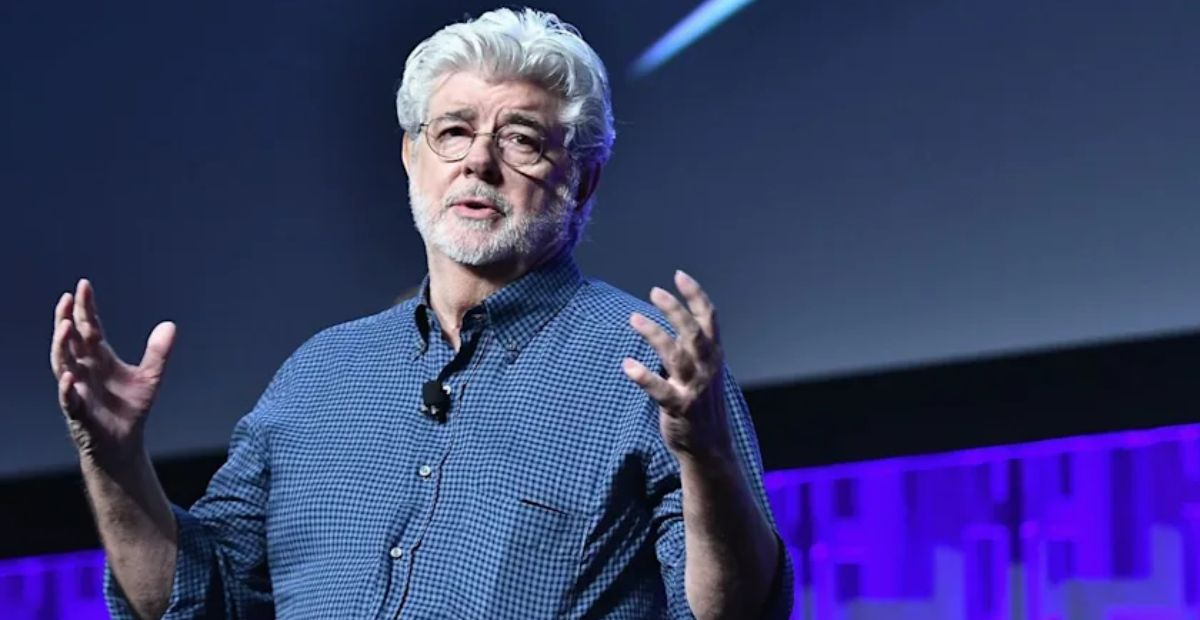
In October 2020, George Lucas appeared alongside his wife, Mellody Hobson, as part of a Virtual Speaker Series for The East Harlem School at Exodus House. During the event, Lucas was asked by a seventh-grade student named Jeremiah how changes in the fight for racial justice might affect the Star Wars universe going forward. His answer turned into one of the more revealing reflections he has given on what his version of Star Wars was meant to say.
Lucas began by admitting that the franchise was no longer moving in the direction he originally intended. “I kind of lost control of Star Wars,” he said, explaining that it was now “going off in a different path than what I intended.” But he immediately followed that by drawing a line around the saga he still considered his own, saying that “the first six” films were “very much mine and my philosophy.”

He then explained what that philosophy was. According to Lucas, the ideas behind those six films were never tied only to one era or one political moment, because they were rooted in history, philosophy, and recurring human patterns. He pointed especially to the prequel trilogy, saying that the first three films show how a democracy can gradually become a dictatorship and how that process leads to the rise of a tyrant like the Emperor. Lucas added that this theme felt especially important in the current political moment, making clear that he still viewed Star Wars as more than just fantasy adventure.
Lucas also addressed the question of diversity and discrimination inside the galaxy itself. He explained that the many different alien species in Star Wars were meant to exist as a normal part of that world, without the kind of racial discrimination seen in human history. In his words, the only real prejudice in that universe was directed at droids. He even suggested that, unlike humans, robots might ultimately be better equipped to overcome that kind of treatment because they do not process emotion in the same way.
From there, Lucas continued answering by connecting those ideas to Anakin Skywalker’s fall and, more broadly, to humanity’s own struggles on Earth. He argued that much of Star Wars ultimately comes back to politics, fear, and the challenge of resisting destructive ideas before they take hold. In that sense, his comments were not just about who owned the franchise or which films belonged to which era. They were a reminder that, in Lucas’s mind, Star Wars had always been built around larger themes about democracy, tyranny, fear, and the choices that shape the fate of entire societies.