The Star Wars galaxy is home to thousands of species but not all of them are treated equally. Some carry the weight of history, war, betrayal, or just centuries of cultural resentment. Sometimes it’s justified. Sometimes it’s pure fear or prejudice. But whether it comes from the Empire, the Hutts, or the average citizen on the street, certain species have become widely distrusted or outright hated across the galaxy.
In this list, we’re not talking about who deserves the hate. We’re talking about which species have earned that reputation in-universe, based on how others in the galaxy see them. From political fallout to ancient vendettas, here are 10 of the most hated species in Star Wars lore.
Table of Contents
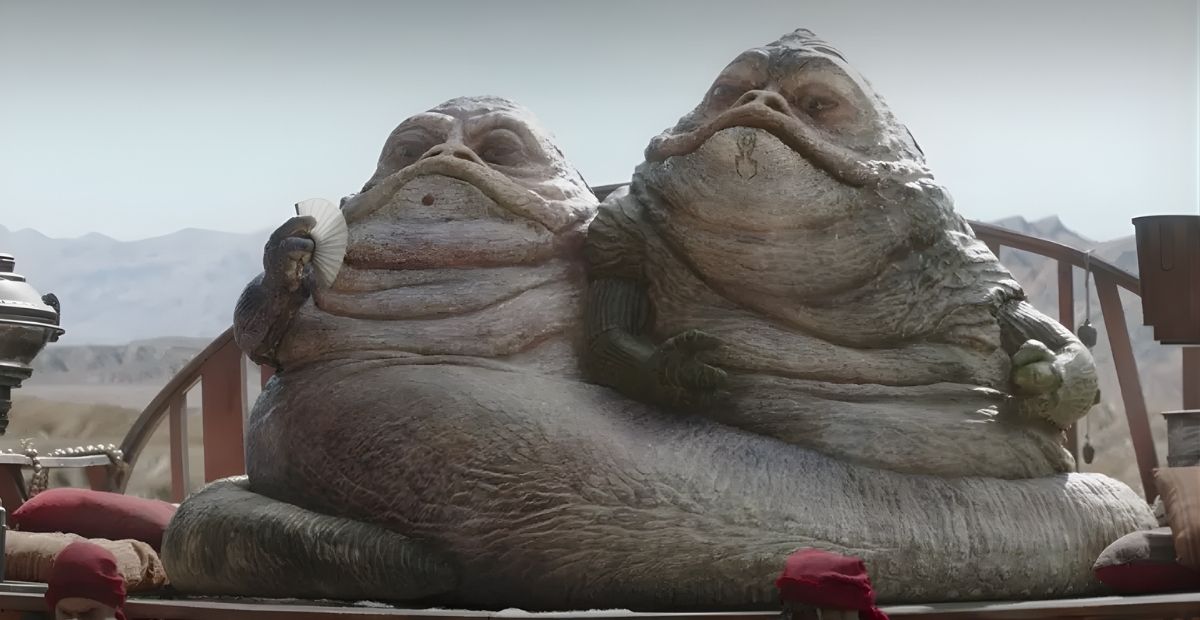
1. The Hutts

If there’s one species that nearly everyone in the galaxy has a reason to hate, it’s the Hutts.
For thousands of years, the Hutts built their empire not through diplomacy or heroism but through fear, crime, and enslavement. They ruled vast stretches of space known as Hutt Space, often beyond the reach of Republic or Imperial law, and maintained power through brutal cartels, corruption, and black market domination.
Even long before the rise of the Empire, the Hutts were feared. Ancient Rim worlds like Delacrix and Rinn have legends of entire populations being wiped out, poisoned, or burned to ash by Hutt warlords. Some planets were destroyed simply for offending a clan or being caught between rival kajidics, Hutt crime families locked in constant power struggles.
In the days before their philosophy shifted to shadowy manipulation, the Hutts would destroy any species too strong to control and enslave those that were useful. Many civilizations were worked to extinction, while others, like the Nikto, Klatooinians, and Vodrans, became permanently bound to Hutt service through ancient pacts forged in the blood of the Battle of Vontor.
Even in the modern age of the Galactic Republic and Empire, they continued this tradition of dominance. Jabba the Hutt, one of the most infamous among them, kept slaves in chains, executed prisoners for sport, and operated a criminal empire that stretched from Tatooine to the Outer Rim. The galaxy tolerated the Hutts only because they were useful or too dangerous to challenge directly.
2. Neimoidian Species

If there’s one species the galaxy learned to distrust after the Clone Wars, it’s the Neimoidians. Most people don’t even remember where they come from, they just remember the Trade Federation, the droid armies, and the blockade of Naboo.
Originally an offshoot of the Duros species, Neimoidians rose to power through the Trade Federation, an economic powerhouse they used not just for commerce, but control. With their influence spreading across the Outer Rim, they became known for blockades, intimidation, and backroom deals that left entire systems dependent on their shipments.
Their infamy exploded during the events of The Phantom Menace, when Viceroy Nute Gunray followed Darth Sidious’ orders to blockade and invade Naboo. The occupation was cold, bureaucratic, and brutal, everything people already feared about the Federation made real. From that point on, Neimoidians became synonymous with corruption and cruelty.
Their role in the Clone Wars only made it worse. As key backers of the Separatists, Neimoidian leaders helped fuel a galaxy-wide conflict without ever putting themselves at risk.
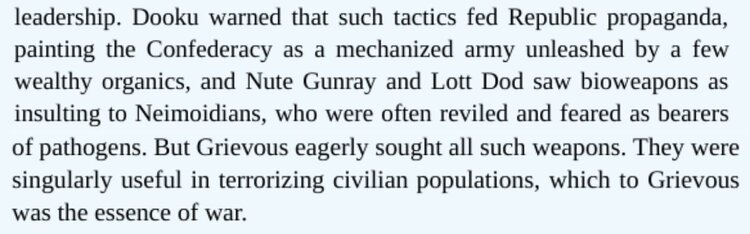
The Republic painted them as scheming cowards who’d rather profit from chaos than stand for anything. After the war, even their own allies distanced themselves, Grievous hated working with them, and Dooku warned that their reputation was hurting the cause. According to The Essential Guide to Warfare, Neimoidians were ‘reviled and feared as bearers of pathogens,’ thanks to their role in bioweapons development.
3. Zygerrians

The galaxy doesn’t forget slavers. And for thousands of years, the Zygerrians built their empire on exactly that.
Once the rulers of a powerful slave empire in the Outer Rim, the Zygerrians thrived on chains and cruelty. They didn’t just tolerate slavery, they glorified it. Entire generations were trained to believe that power came from ownership, that strength meant control, and that the weak were meant to serve.
Long before the Clone Wars, they trafficked millions across the stars, targeting weaker species and peaceful worlds. But when they enslaved an entire Togruta colony on Kiros, the Jedi finally stepped in. The Republic outlawed slavery in most systems, and the Jedi dismantled the Zygerrian empire by force.
But the hatred didn’t stop there.
Even after their fall, Zygerrians kept trying to claw their way back. During the Clone Wars, they made a deal with Count Dooku and the Separatists to rebuild their empire, trading slaves in exchange for political favor and military support. But that alliance was built on mutual contempt. Dooku used them, and when they failed him, he crushed their leader in cold blood.
4. Trandoshans

Trandoshans were hated not just for what they did, but for how proudly they did it.
As a species, they built their culture around hunting other lifeforms. Enslavement, blood sport, and death weren’t seen as crimes, they were offerings to their goddess, the Scorekeeper. And the more pain they inflicted, the more glory they earned.
Nowhere was this more brutal than on Kashyyyk. For centuries, Trandoshan raiders captured Wookiees by the thousands, selling them into chains or dragging them back to Wasskah to be hunted for sport. Jedi weren’t safe either. In The Clone Wars, a group of Trandoshans kidnapped younglings, children and turned them loose in the jungle, just to be hunted for fun.
![Ahsoka Tano is Hunted by Trandoshan [4K HDR] - Star Wars: The Clone Wars](https://may4bewithyou.com/wp-content/plugins/wp-youtube-lyte/lyteCache.php?origThumbUrl=https%3A%2F%2Fi.ytimg.com%2Fvi%2FYPi7SaevL_g%2F0.jpg)
The worst part? This wasn’t the act of a rogue clan. It was tradition.
Even during the days of the Republic, Trandoshans were tolerated because they were useful. They worked as slavers, mercenaries, bounty hunters—anything that paid in blood. Bossk, one of the most infamous among them, was hired by the Empire itself and stood beside Boba Fett aboard the Executor.
5. Anzati

Next on the list are the Anzati—one of the most feared species in the galaxy.
The Anzati are hated not because of politics or war—but because of what they are. From the outside, they look nearly human. But underneath that humanoid appearance is a terrifying truth: Anzati are ancient predators who feed on the life essence of sentient beings.
Known as the “soup,” this essence is drawn out through retractable proboscises hidden in their cheeks, which they use to literally drink their victim’s consciousness. Victims often appear dazed or frozen right before death, and many never see the Anzati coming at all. Their ability to move silently and cloud minds with the Force makes them near-perfect assassins.
In Star Wars: Republic #32, Jedi Master Tholme is nearly killed by an Anzat assassin—saved only by sheer will and intervention. And in Legends lore, some Jedi even believed that older Anzati could become virtually immortal if they consumed enough “soup.”
Because of their vampiric nature, ancient Jedi texts classified them as “monsters” rather than just another species. Their homeworld, Anzat, was avoided by most travelers, and their existence was rarely discussed in polite company.
Fun fact: the Anzati are finally back in canon thanks to the Battle of Jakku comic series.
6. The Muuns

A lot of people with financial trouble probably hate the Muuns.
The Muuns rarely appeared on the front lines of galactic events, but their influence was felt everywhere—from Senate chambers to Separatist war meetings. As the faces behind the InterGalactic Banking Clan, they controlled vast credit reserves, dictated planetary loans, and quietly shaped the rise and fall of governments.
Even before the Clone Wars, their influence reached into every corner of the Republic. Many senators owed favors to the Banking Clan. Some planets were stuck in debt they could never repay.
In Star Wars: The Clone Wars, the Banking Clan claimed neutrality, but their leadership secretly worked with the Separatists. Their representative, San Hill, appeared directly in Count Dooku’s inner circle. That blurred the lines between business and betrayal—and it confirmed what many already believed: the Muuns only looked out for themselves.
7. Mynocks
Among starship crews, few things are cursed more often than mynocks.
These leathery, winged parasites are drawn to power sources—specifically, electrical cables and energy systems. Once they attach themselves to a vessel, they begin feeding off its power, often chewing through vital conduits in the process. Shield generators, hyperdrives, and even life support can be compromised before anyone realizes what’s happening.
In The Empire Strikes Back, Han Solo spots a cluster of them clinging to the hull of the Millennium Falcon while hiding in an asteroid field. He immediately knows what kind of damage they can do, and doesn’t hesitate to clear them off.
According to The Essential Guide to Alien Species, mynocks reproduce by fission and can survive in the vacuum of space, making them a constant threat in deep-space travel. They’re not hostile in the traditional sense—but they don’t need to be. Their presence alone is enough to cripple a ship if left unchecked.

From freighters and starfighters to orbital stations and mining rigs, mynocks have been blamed for everything from sudden power failures to full-scale reactor malfunctions. They’re not rare, and they’re not hunted for bounty. But for anyone relying on technology to survive—which is almost everyone in the galaxy—they’re nothing short of a nightmare.
8. Pykes

Across the galaxy, no one trusts a Pyke.
They bring spice, death, and disappear before the dust settles. Their Syndicate doesn’t just deal in illegal trade—it destroys economies, destabilizes worlds, and leaves addiction in its wake. On Coruscant, senators whisper about Pyke bribes. On Kessel, entire mining populations curse their name.
People hate the Pykes because they never take the blame. When shipments go missing, when a village turns into a graveyard, when a politician’s family vanishes—there’s always a layer of deniability. The Pykes buy silence, hire outsiders to do the dirty work, and leave just enough room for doubt. But everyone knows who’s behind it.
Even the Jedi considered them a major threat during the Clone Wars. Sifo-Dyas’ death? Tied to the Pykes. The Martez sisters losing their parents?
9. Jawas

Ask anyone who’s ever lived on Tatooine, and they’ll tell you: you don’t trust a Jawa.
They don’t invade planets or rig elections—but if something mechanical goes missing, a Jawa was probably involved. Moisture farmers wake up to find parts stripped off their vaporators. Droids vanish in the night. Even speeder components—gone. And the worst part? The next day, a Jawa might show up trying to sell it back to you.
To the rest of the galaxy, that’s the Jawa reputation: scavengers, scrappers, and opportunists who never ask who something belongs to. In places like Mos Espa or Anchorhead, their sandcrawlers are as feared as they are familiar. No one wants to get on their bad side—not because Jawas are dangerous, but because they’re everywhere. Sneaking through junkyards, picking apart ships, trading rumors and rusted tech.
In The Mandalorian, even Din Djarin has to deal with it. They strip his Razor Crest to the bone in one night. And when he confronts them, they don’t apologize. They barter.
Jawas aren’t evil. But they’re not exactly beloved, either.
10. Yuuzhan Vong

No species in galactic history left scars as deep as the Yuuzhan Vong.
By the end of the Yuuzhan Vong War, entire worlds were gone. Trillions were dead. And the galaxy had learned to fear a name that didn’t even come from this galaxy. The Yuuzhan Vong weren’t just invaders—they were zealots who worshiped pain, who sacrificed the innocent, and who reshaped everything they touched.
According to The Essential Guide to Warfare, their conquests included the full-scale enslavement of populations on planets like Artorias and Vonak. Trillions were taken, tortured, and killed in rituals meant to honor their gods. Prisoners were sacrificed en masse. Some were grafted into monstrous bioweapons. Others were warped by Vong “shapers” until they weren’t even recognizable as the species they once were.
They didn’t use droids or machines. They fought with living creatures bred for war—venomous whips, exploding beetles, and serpents that doubled as restraints. Jedi and civilians alike were captured and transformed, their minds twisted or destroyed. Coruscant itself was taken, reshaped, and renamed. For many across the Core, that alone was enough to never forgive them.
Even after the war, the hatred didn’t end. In later decades, refugee Vong still faced violence and exile. Bothans called for a campaign to wipe out what remained. Other species refused to trade or speak with them. And across the galaxy, the name “Yuuzhan Vong” stayed etched in memory—not as a people, but as a warning.