
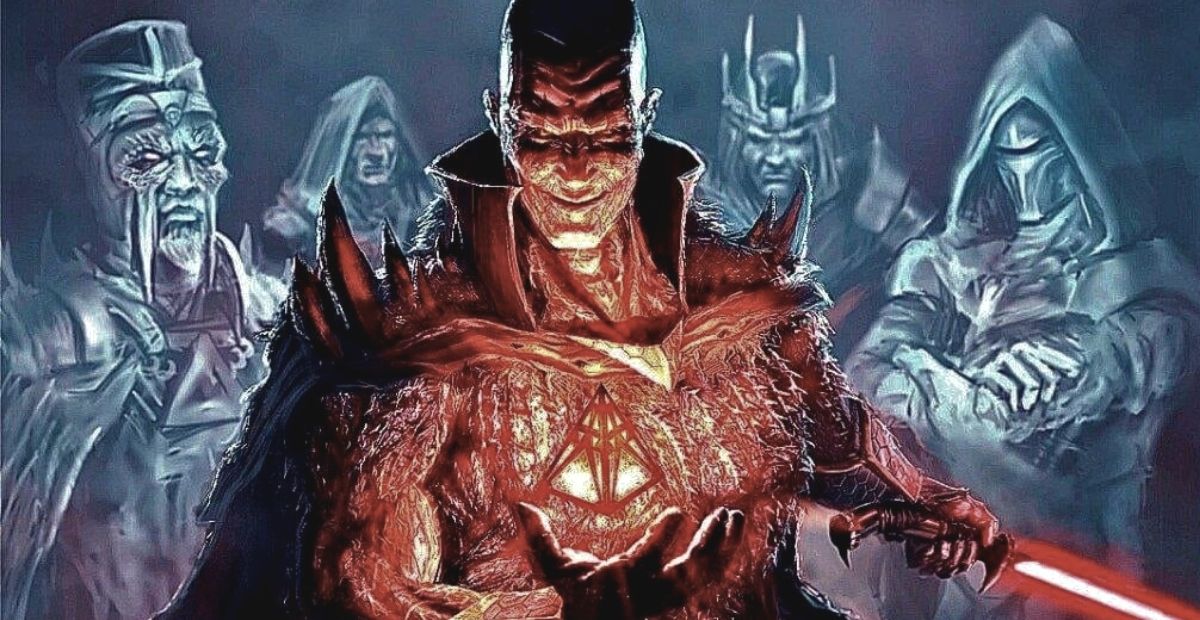
“Darth” is one of those Star Wars words that feels like it’s always been there. Vader. Sidious. Maul. Tyranus. You hear it and you instantly know what it means: Sith.
But that raises a question the lore doesn’t hand you for free: who was the first Sith Lord to carry that title in the first place? Who created it—and what did it actually mean?
Darth Andeddu Was the Earliest Known “Darth”
In Legends, Darth Andeddu is one of the first names that comes up when you start digging into where the title “Darth” really begins. He’s often treated as an early origin point for the honorific—but it’s worth framing it the right way: possibly the first, often credited as the first, not a timeline fact carved in stone.
What makes the claim interesting is where it comes from. Jedi vs. Sith: The Essential Guide to the Force doesn’t present it like a random rumor—it ties it to a specific source. The book notes that Asli Krimsan’s holocron yielded information about Darth Andeddu, who “may have been the first of numerous Sith Lords with the honorific Darth.”

And when you jump to Star Wars: The Book of Sith: Secrets from the Dark Side, the section “The Title of Darth” treats the honorific like a legacy that Sith claim, not just a name they’re born with. The page even throws out possible roots for the word—then immediately anchors the title in Sith history by listing early bearers. Darth Andeddu is the first one mentioned, described as a ruler who sought immortality, followed by other famous “Darth” figures like Revan, Malak, Malgus, and Ruin.

What the Title “Darth” Was Supposed to Mean
In The Book of Sith: Secrets from the Dark Side, the section “The Title of Darth” first points to what some believe are the word’s ancient roots. It suggests “Darth” may come from an old Rakatan term—either darr tah, meaning “triumph over death,” or daritha, meaning “emperor.”
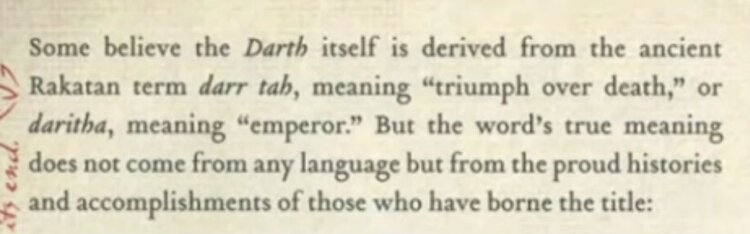
But the page immediately undercuts the idea that the title can be explained by etymology alone. It argues that the true meaning of “Darth” doesn’t come from language at all—it comes from the histories and accomplishments of the Sith who carried it. In other words, “Darth” isn’t just a definition. It’s a reputation.
If one of the old meanings people attach to “Darth” is “triumph over death,” then Darth Andeddu is basically the perfect example of what the title is supposed to represent. Andeddu isn’t remembered for winning a single duel or conquering one planet—he’s remembered for chasing the one thing the Sith obsess over more than anything else: refusing to die. His entire legacy is built around reaching beyond normal limits, trying to make death itself a problem he can solve. So even if you treat the Rakatan origin as “some believe,” the symbolism still lands: a “Darth” is the kind of Sith who aims to outlast everyone and make the galaxy remember their name long after they should be gone.