
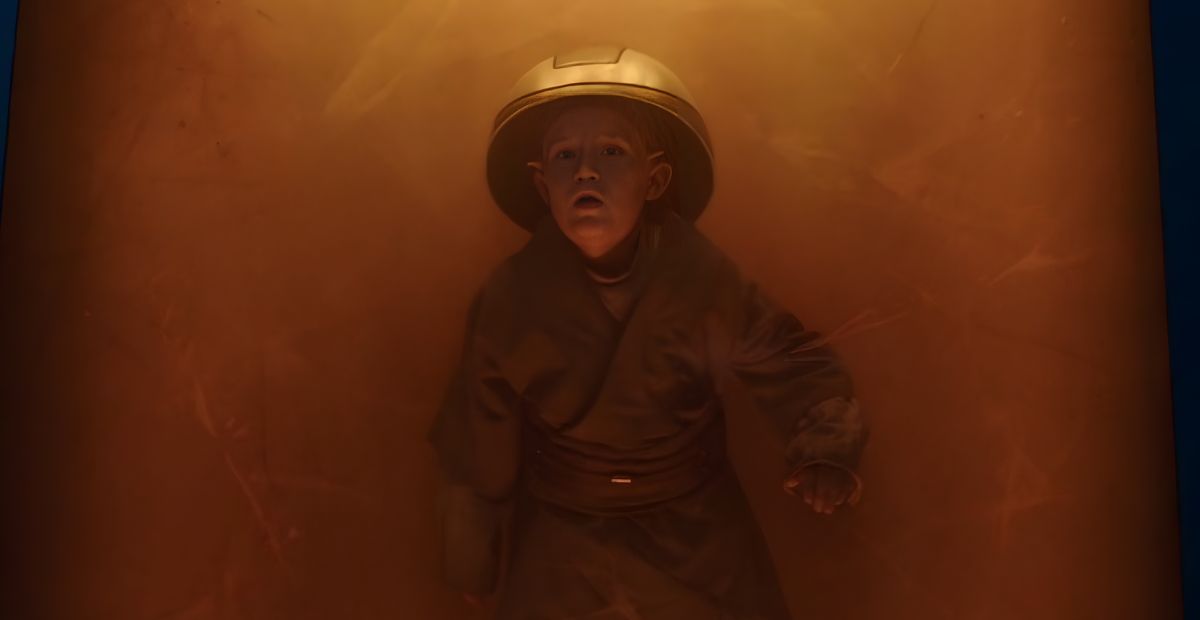
In Obi-Wan Kenobi, we get a quick but disturbing look inside Fortress Inquisitorius: Jedi and younglings suspended in amber, lined up like a hidden museum of the Purge. Obi-Wan calls it a tomb, and then the episode moves on.
In this article, I want to slow that down and answer one simple question: why are the Inquisitors keeping Jedi like this at all, instead of just destroying the bodies and erasing every trace?
What the Jedi Tomb in Fortress Inquisitorius Really Is
That corridor in Obi-Wan Kenobi isn’t just a random creepy set. In the reference book Star Wars: Dawn of Rebellion: The Visual Guide and on Wookieepedia it’s named directly as the Jedi tomb, a specific secured area deep inside Fortress Inquisitorius on Nur.
The tomb holds the bodies of Jedi killed in the Purge. We can clearly pick out figures like Tera Sinube and other Temple-era Jedi, along with younglings still wearing the training helmets from the night of Order 66. All of them are suspended upright in blocks of crystallised amber behind blast doors and Imperial control panels. This isn’t a mass grave, and it isn’t some forgotten basement. It’s part of the Inquisitors’ own headquarters, in the same facility where captured Jedi and Force-sensitives are interrogated, tortured, or turned.
Star Wars: Dawn of Rebellion: The Visual Guide makes that link explicit by pointing out that the way these remains are preserved on Nur is similar to how the Empire handled another dead Jedi somewhere else: Luminara Unduli on Stygeon Prime. That’s where we get the real answer for why these “tombs” exist at all.

Luminara Unduli and the Sinister Reason the Tombs Exist
To see what the Empire actually does with dead Jedi, you have to go to Star Wars Rebels Season 1, “Rise of the Old Masters.” The crew of the Ghost hears that Luminara Unduli survived the Clone Wars and is being held by the Empire. Kanan feels her in the Force. They break into the Spire on Stygeon Prime to rescue her and find what looks like Luminara standing in a containment cell.

Then the trap snaps shut. As Kanan gets closer, the image of her living form fades and we see what’s really there: her corpse, held upright in a special chamber. The Grand Inquisitor walks in and explains exactly what’s going on:
“Yes, I’m afraid Master Luminara died with the Republic. But her bones continue to serve the Empire, luring the last Jedi to their ends.”
That line tells us more about the Nur tomb than Obi-Wan Kenobi ever spells out. Luminara’s body is not being kept out of sentiment. It’s a hunting tool. The Empire is using her remains, plus the residual presence around them, as bait to draw surviving Jedi into a kill zone. Other sources summarise that this trap was used more than once against fugitives like Kanan.
Once you know that, the Jedi tomb on Nur stops being a mystery. The Inquisitors already have a proven method: preserve a well-known Jedi, project just enough of a “living” presence to fool anyone listening for them in the Force, and use that as a lure. The tomb gives them a whole stockroom of possibilities. Masters, Knights, even younglings can be turned into “Luminara traps” if the Inquisitors decide it’s useful.
On top of that, the tomb itself works as a psychological weapon. The Inquisitorius exists to wipe out the Jedi Order. Walking a captured Jedi, a Force-sensitive child, or even a rebel sympathiser past rows of preserved Jedi sends one clear message: this is what happens to your kind. When we see Obi-Wan react in the show, that’s exactly the point—he recognises faces, sees Temple helmets on children, and realises their bodies have been turned into decorations inside the Inquisitors’ home base.
There’s also a bigger pattern in how the Empire handles the Jedi legacy. Palpatine doesn’t just want them dead; he wants control of their story. Taking respected Masters and innocent younglings and freezing them in amber in a secret Imperial facility twists what they used to stand for. They stop being guardians of the Republic and become exhibits, bait, and warnings. Their memory is literally locked up inside the machinery of the Inquisitorius.
Later canon about places like Mount Tantiss in The Bad Batch, or the interest in Grogu’s blood and “donor” material, shows the Empire and its remnants are willing to use Force-sensitives as raw material for dark experiments. The Nur tomb is never labelled as a lab, so that connection stays in the theory box, but it fits the same mindset. If Palpatine is already turning living Jedi into Inquisitors and stealing children for tests, keeping dead Jedi perfectly preserved also leaves the door open for whatever he might want from them later.
Even without going that far, the canon answer is already clear. The Inquisitors keep Jedi in tombs because, for the Empire, a Jedi’s usefulness doesn’t end with death. In life, they protected the Republic. In death, their bodies are recycled as bait, intimidation, and tools of the hunt—still serving an Empire that’s built on the lie that the Jedi are gone forever.