
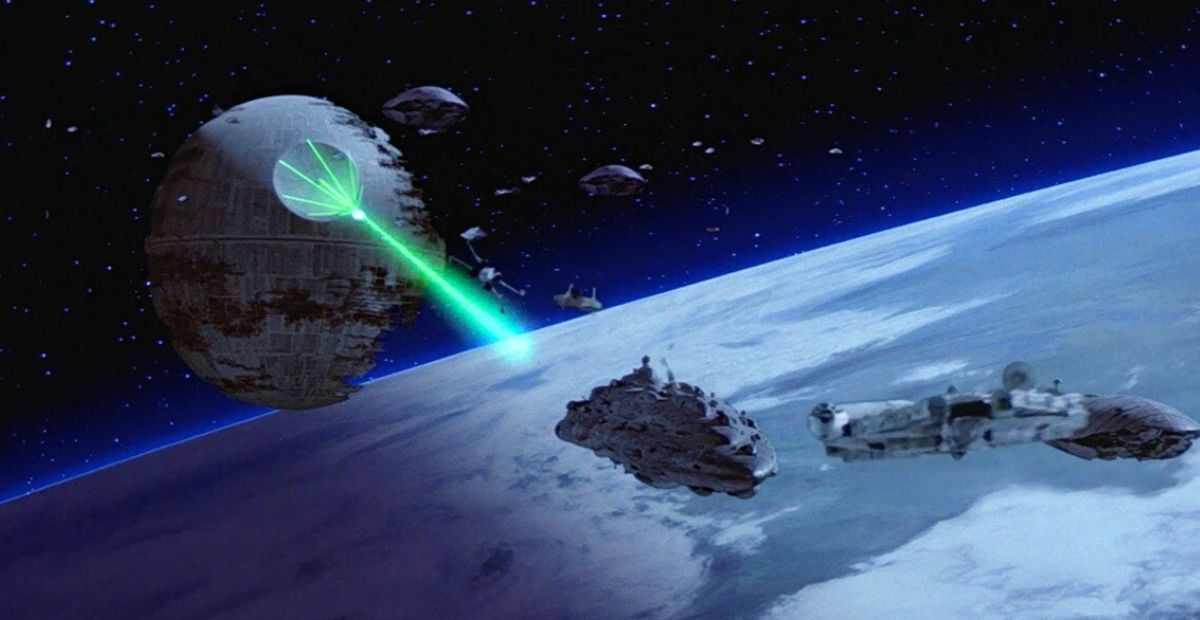
At the end of Return of the Jedi, the second Death Star is destroyed above Endor, and both the Emperor and Darth Vader are killed. During the battle, we clearly see a massive Imperial fleet deployed around the station, Star Destroyers, command ships, and support vessels filling the system.
But once the Death Star explodes, the film moves on. We never see the Imperial fleet surrender, retreat, or get wiped out. The story jumps forward, leaving a simple but important question unanswered: what actually happened to all those ships?
The War Continued With the Battle of Jakku
![Star Wars Battlefront II: The Battle of Jakku [1080 HD]](https://may4bewithyou.com/wp-content/plugins/wp-youtube-lyte/lyteCache.php?origThumbUrl=https%3A%2F%2Fi.ytimg.com%2Fvi%2FYhmbpV3UyTo%2F0.jpg)
The destruction of the second Death Star did not end the war immediately. While the Emperor and Darth Vader were killed at Endor, the Imperial military still existed in large numbers. Star Destroyers, sector fleets, and ground forces remained active across the galaxy.
About one year later, those remaining forces were drawn into another massive engagement known as the Battle of Jakku. This battle takes place in canon and is primarily detailed in the Aftermath trilogy. It represents the final large-scale conventional battle between the New Republic and the Empire.
At Jakku, the Empire commits a significant portion of its remaining fleet and ground forces. This is not a sudden regrouping of new ships, but the result of Imperial units that survived Endor, retreated, and continued fighting under fragmented leadership. Many of the Star Destroyers seen at Jakku are the same types of vessels deployed earlier in the war.
The battle ends in a decisive Imperial defeat. The remaining Imperial command structure collapses, and shortly afterward the Galactic Concordance is signed. This agreement formally ends the Galactic Civil War and forces the Empire to surrender its remaining territory and military assets.
In other words, the Imperial fleet seen at Endor did not disappear. Much of it survived, regrouped, and fought again. Jakku is where the war actually ends.
Imperial Remnants Disappeared Into the Unknown Regions
However, even after the Battle of Jakku, not every Imperial force chose to surrender. While the Galactic Concordance formally ended the war, many Imperials remained loyal to the Empire and refused to lay down their arms. Instead of continuing open warfare, these groups retreated, went into hiding, and became what are known as Imperial remnants.
We can see this clearly in The Mandalorian. Long after the fall of the Empire, former Imperial officers are still operating in the shadows, holding onto ships, troops, and resources. One of the most prominent examples is Moff Gideon, who is actively trying to rebuild Imperial power using what remains under his control.

But Gideon and his forces represent only a small part of what survived. While some remnants stayed in known space, operating quietly and avoiding direct confrontation with the New Republic, much larger Imperial elements withdrew far beyond the galactic frontier. These forces retreated into the Unknown Regions, where they could regroup in secrecy, beyond the reach of Republic patrols and political oversight.