
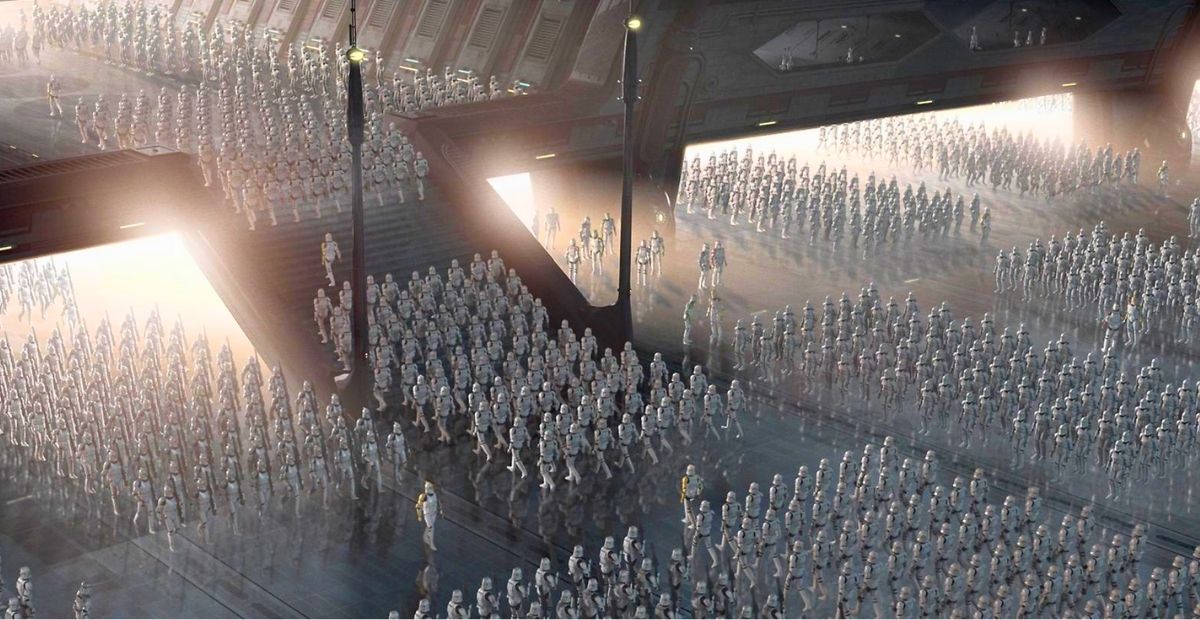
The Clone Army is one of the biggest purchases in galactic history, and the wild part is it happens in secret. Long before the Senate debates a budget, long before the Jedi even realize what’s been set in motion, Kamino is already growing soldiers by the millions.
So the real mystery isn’t just who placed the order. It’s who had the credits to get the entire program moving in the first place, and how they kept that money trail invisible for years?
Sifo-Dyas Was the Name on the Order
The first thing to understand is that the clone project doesn’t begin with a Senate vote or a public contract. It begins with a single Jedi acting alone. Sifo-Dyas is the name tied to the initial commission, which is why everything on Kamino is filed like legitimate Republic business when Obi-Wan arrives there in Attack of the Clones and the cloners greet him as if the Jedi already know about the order.
That detail matters, because it explains how the army can exist in plain sight without the Republic noticing. If Kamino believes it’s working for a Jedi acting on behalf of the Republic, then nobody there is asking the kind of questions that would happen if a mysterious outsider showed up trying to buy an army in secret.
But Sifo-Dyas being the “official” name on the deal doesn’t automatically mean he’s the one financing it. Putting a name on the order and actually funding a program of that size are two completely different things—and that gap is where the real story starts.
The Sith Who Paid for It
The clearest version of that story comes from Star Wars: Darth Plagueis by James Luceno.
In the novel, Hego Damask—better known as Darth Plagueis—is already working with Darth Sidious when the idea of an army first surfaces. Their goal isn’t just to fight the Jedi. It’s to undermine them without turning them into martyrs. Sidious argues that the Jedi must be discredited—made to seem like the problem, not the protectors. Damask agrees. But he knows the danger of being too direct.
At first, he explores the idea of cloning Force-resistant Yinchorri to fight the Jedi. He brings the plan to Kamino. The science doesn’t scare them, but the scale does. They explain their facilities aren’t equipped to build an army and would need serious investment to expand. That’s when Damask makes it real. Through Damask Holdings, he offers to fund the upgrades and brings in Rothana Heavy Engineering for military support. The credits start flowing. Kamino starts growing.
Then the plan evolves.
After conversations with Dooku and Sifo‑Dyas, Damask starts thinking differently. If the Jedi can be pulled into war, their downfall won’t require framing or spin—they’ll fall with the Republic they fought to defend. An army with the Jedi becomes more effective than an army against them.
That’s what he pitches to Sifo‑Dyas: not a coup, not a conspiracy—just a warning. The Republic is slipping. Systems are arming. Conflict is coming. The Jedi Council won’t act, but maybe Sifo‑Dyas can. He’s felt it too.
When Sifo‑Dyas says the Republic would never authorize an army, Damask agrees. It doesn’t need to. The Jedi Order doesn’t need to either. The army can be built in secret, in reserve, just in case. Sifo‑Dyas asks who would pay for something like that.
Damask says he will.

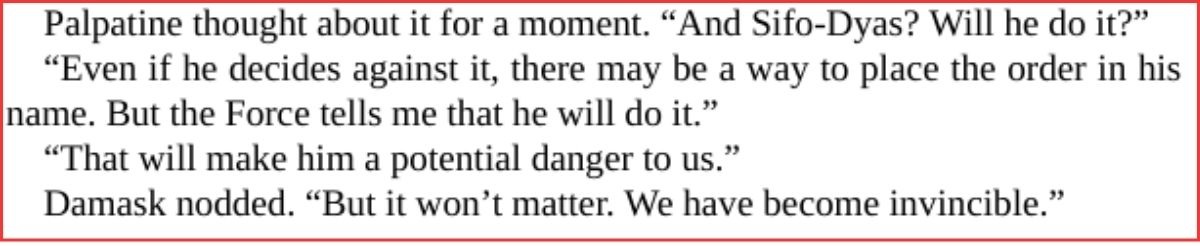
He explains that the Kaminoans won’t take an order from a Muun banker—but they would from the Jedi. Sifo‑Dyas’s name gives the project legitimacy. The money comes from untraceable Outer Rim accounts. No trail. No oversight. No questions.
Sifo‑Dyas doesn’t say yes on the spot. But Damask is confident. Even if the Jedi Master hesitates, the Sith can still place the order in his name.
And that’s exactly what happens.
By the time the Republic learns it has an army, the work is already done. Not by the Senate. Not by the Jedi.
By a Sith Lord who made sure the Republic’s war began with someone else footing the bill.