
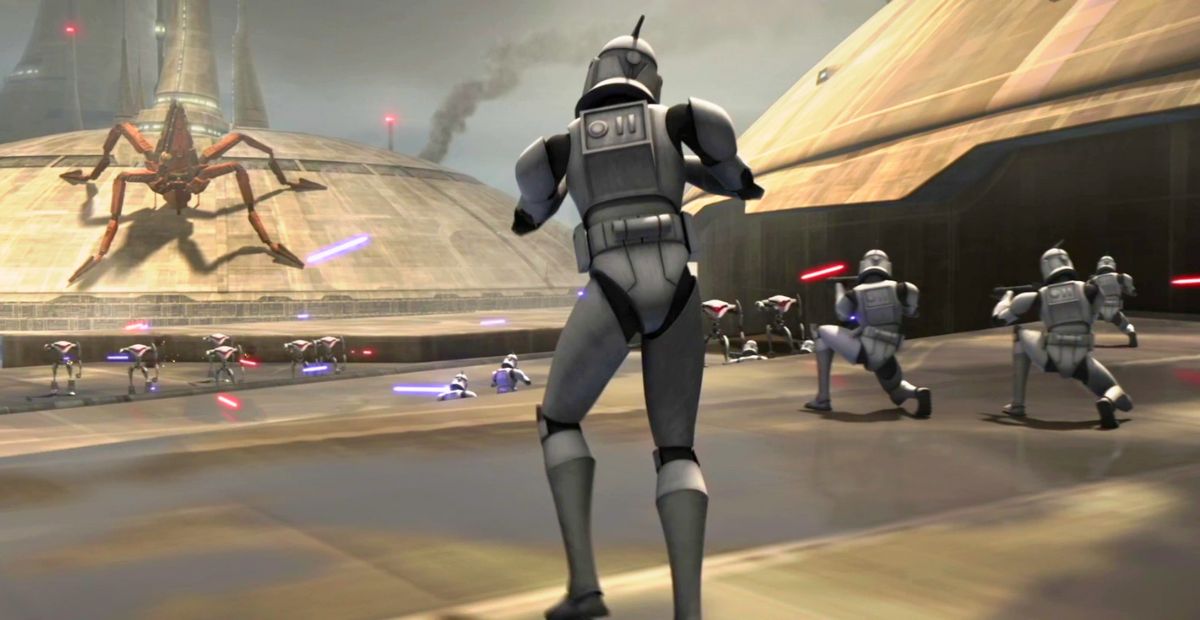
When the Separatists launched their massive assault on Kamino in Star Wars: The Clone Wars, it looked like a major strategic threat. After all, Kamino was where every clone in the Grand Army of the Republic was born, the very heart of the Republic’s military power. Losing it could’ve crippled the war effort entirely.
So that raises the obvious question: why did Palpatine allow it to happen at all? If he truly wanted to preserve his army, shouldn’t Kamino have been the most heavily protected world in the Republic?
The Separatists Had to Look Like They Were Winning

From Palpatine’s point of view, the war had to look real. The Separatists couldn’t just lose every battle — that would expose the whole game. Kamino was the perfect stage to prove the enemy’s strength without ever risking his true plan.
By allowing the attack, Palpatine made sure the Separatists appeared aggressive and capable, forcing the Republic to respond with more troops, ships, and emergency powers. If the Republic ever looked too secure, senators might start questioning why they needed a war at all.
At the same time, Palpatine was already thinking ahead. He knew that once the Clone Wars ended, he’d have no more use for the Kaminoans — or their independence. Letting Kamino take a hit created a natural excuse to move cloning research elsewhere, under tighter Imperial control.
Later, that’s exactly what happened. Under the Empire, cloning programs were quietly relocated to more secretive facilities — places like Mount Tantiss on Wayland and later Exegol in the Unknown Regions. These were sites where Palpatine could continue his experiments without outside oversight, laying the groundwork for the cloning projects that would one day lead to his own resurrection.
And if, by some chance, the battle turned against the Republic? He could always “engineer” a dramatic reversal, another heroic Jedi victory, another reason for the galaxy to trust him completely. The message was clear: nowhere is safe. Not Kamino, not Coruscant. Only the Chancellor could protect them, and that fear kept his power growing.
In other words, the Battle of Kamino wasn’t a random Separatist offensive. It was Palpatine setting the stage for the Empire’s next phase — a galaxy where he alone controlled life, death, and the creation of soldiers themselves.
Palpatine Had to Keep the War Real
Palpatine couldn’t let the Clone Wars look like a staged performance, not to the Jedi, and especially not to General Grievous. Grievous wasn’t part of the inner plan like Dooku was; he truly believed in the Separatist cause. If he ever started to suspect the war was rigged, he might have turned on Dooku or gone rogue altogether.
That’s why Sidious had to let the Separatists win battles every now and then. The war needed to feel real from both sides, real victories, real losses. Whenever Grievous scored too big, like with the Malevolence or other superweapons, Palpatine quietly leaked intelligence to make sure the Republic could strike back and destroy them. But when the Republic looked too strong, he’d loosen the leash again, feeding the Separatists new targets to keep the balance going.
It was all part of his long game. The longer the war lasted, the more time he had to expand his authority, justify new military spending, and secretly test technologies that would one day feed into the Death Star project. Every prototype the CIS built, ion cannons, beam weapons, battle stations, became another data point for his ultimate weapon.
In short, the war had to feel real to everyone involved, even its own generals. That illusion of balance was what let Palpatine play both sides perfectly — until the galaxy was too exhausted to fight back.
