
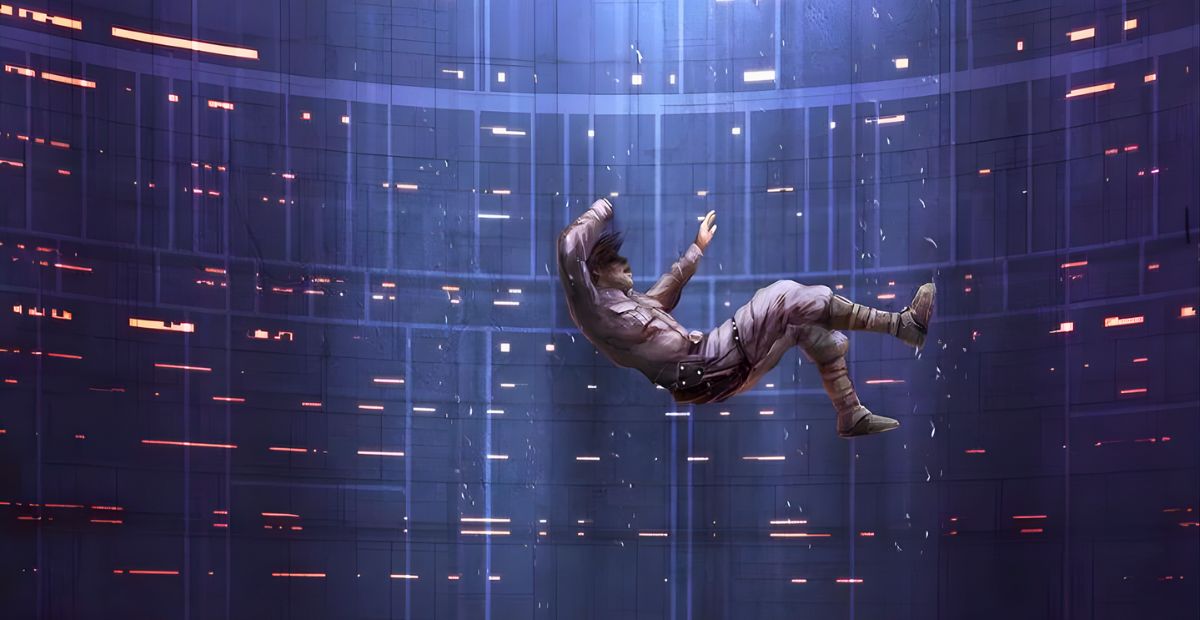
Luke’s jump in The Empire Strikes Back is one of those moments that can look confusing if you watch it like a normal “escape move.” He’s injured, cornered, and Vader is literally offering him a hand… and Luke chooses the drop.
At first glance, it looks like Luke just gives up. But that’s not what the scene is doing. The fall is Luke’s answer to Vader’s offer—and it’s the first time in that duel where Luke stops reacting and makes a choice on his own.
He’d Rather Fall and Die Than Become Vader’s Partner
Moments earlier, Luke had fought with everything he had—rushing into battle without finishing his training, believing he could stand against Vader on his own. He couldn’t. Vader broke him down piece by piece, battering him with debris, slicing off his hand, then stripping away the last thing Luke thought he understood: his identity. The saber he carried—Anakin Skywalker’s—fell into the abyss. And then came the line that shattered the rest of him.
“I am your father.”

In the film, Luke’s reaction plays like shock. But Skywalker: A Family at War reveals something deeper. Luke doesn’t just slip. He hears Vader’s offer—father and son, ruling the galaxy together, and then he lets go.
“Instantly weighing the choices between giving in to Vader’s demands and sacrificing himself, Luke let go of the walkway, resolved to fall to his death in the abyss below”
This wasn’t a desperate accident. It was a decision. Vader believed his son might say yes. He thought he’d broken him. But Luke understood what saying yes would mean.
He wouldn’t just be turning away from his friends. He’d be giving up everything he believed in—everything Obi-Wan and Yoda had tried to teach him, and everything the Rebellion stood for.
“He refused to share Vader’s dismal fate, rejected by those he held dear or giving in to his basest feelings of anger and hate. Death was better than betraying the rebel cause he had fought for…”
What Luke sees in that moment isn’t power—it’s the end of everything he fought for. And if the only way to avoid becoming like Vader is to die, then he’ll take that path. Because unlike Anakin, Luke doesn’t believe that the end justifies the fall.
The Fall Is Also the First Time Luke Reaches Leia Through the Force
Luke survives the fall, but nothing about it feels like a rescue.
He’s thrown into Cloud City’s lower machinery and ends up clinging to a weather vane, badly injured and overwhelmed. The moment Vader tells him the truth hasn’t passed—it’s still playing in his mind. Luke can’t stop thinking about it, or about the offer Vader made right after.
He tries to reach someone through the Force. First, he calls for Ben Kenobi. The same Ben who told him he’d be alone, but who Luke still believed would show up if things got bad enough.
No one answers.
The book says: “Luke had still believed that in his moment of need, Ben would materialize in the Force and somehow save the day. When Ben did not answer his cry, Luke instinctively called out to Leia.”
By now, the physical damage is just part of it. What hurts more is the feeling that no one told him the truth. He keeps reaching out in the Force—first to Ben, then to Yoda—trying to understand why they never said anything about Vader. Why they waited until it was too late.
It’s in that state—wounded, isolated, and unsure of who to trust—that Luke starts to feel like quitting. The book doesn’t dramatize it. It just lays it out:
“Luke felt even more lost and confused than he had on Dagobah… It was enough to make Luke Skywalker want to quit.”
That’s the weight of the choice he made. He refused Vader’s offer and nearly died for it. Now he’s left hanging—literally—without a clear sense of who he is or what comes next.