
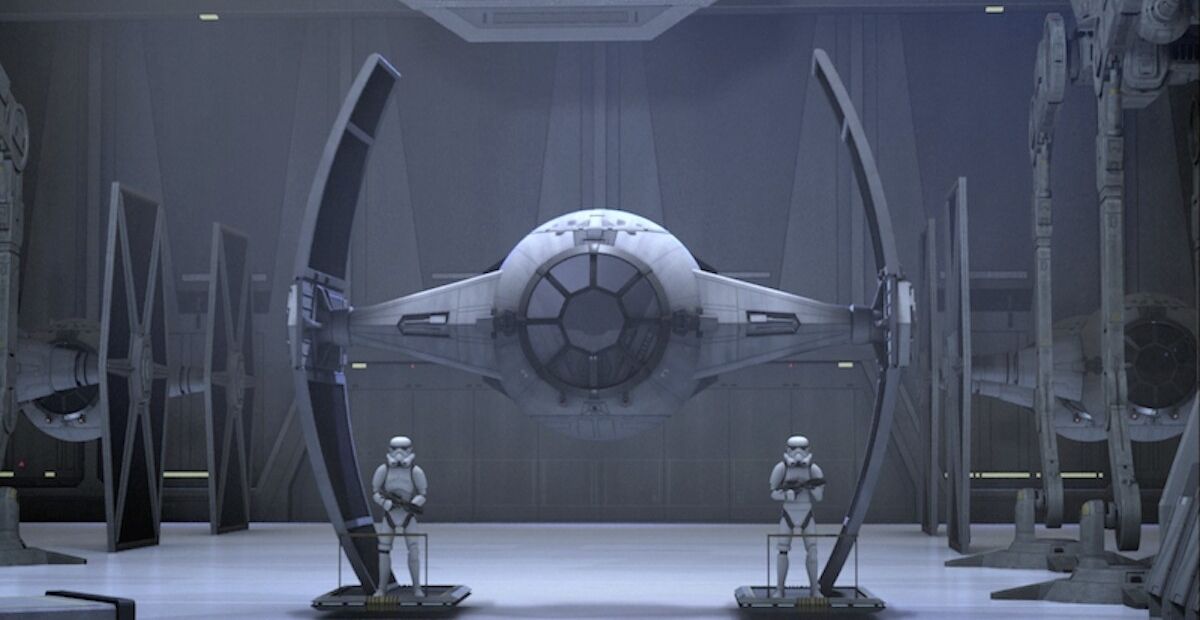
We’ve all heard the same explanation over and over: Imperial TIE fighters don’t have shields because the Empire wanted to mass-produce them. Strip out the protection, make them cheaper and lighter, and you can flood the galaxy with more TIEs.
On the surface, that sounds pretty reasonable. The more starfighters you have, the better… right? But this is the Empire we’re talking about. They can build a battle station the size of a small moon. If they really wanted a massive TIE fleet with shields, it feels like they could have done that too. So why didn’t they?
The Real Reason TIE Fighters Have No Shields
If we step away from fan jokes for a second and just look at what the lore says, the answer is pretty straightforward: TIE fighters don’t have shields because they were designed that way on purpose, not because the Empire couldn’t afford them.
The official Star Wars Databank entry for the TIE fighter makes it very clear. It describes the standard Imperial TIE as lacking shields and tough armor, and says it depends on maneuverability and its pilot’s skill to be effective in combat. It also points out that, as the Empire tightened its grip on the galaxy, TIE fighters were built on more and more worlds and became a common sight in Imperial skies. In other words: fast, fragile, and mass-produced is the whole point.
Older material lines up with that. Star Wars: Rogue Squadron III – Rebel Strike describes the TIE as an agile, single-pilot craft with a titanium alloy hull and armored solar panels, but no deflector shield and no primary life-support systems, and says it was intended as a short-range attack craft launched from nearby Imperial installations in swarms to overwhelm opponents. That’s the whole philosophy in one place: short range, no shields, and many, many TIEs instead of a few tough ones.
So the “real reason” isn’t that the Empire ran out of money after building the Death Star. It’s that the Empire signed off on a fighter that deliberately ditches shields to stay cheap, light, and fast, because it assumes there will always be another pilot ready to climb into the next one.
How Imperial Thinking Keeps TIEs Unshielded
Once we know the TIE was built to be fast, cheap, and disposable, the next step is to look at who asked for that and why. The memo from Grand Moff Tarkin to Raith Sienar in the TIE Fighter Owner’s Workshop Manual basically lays the whole mindset out for us.
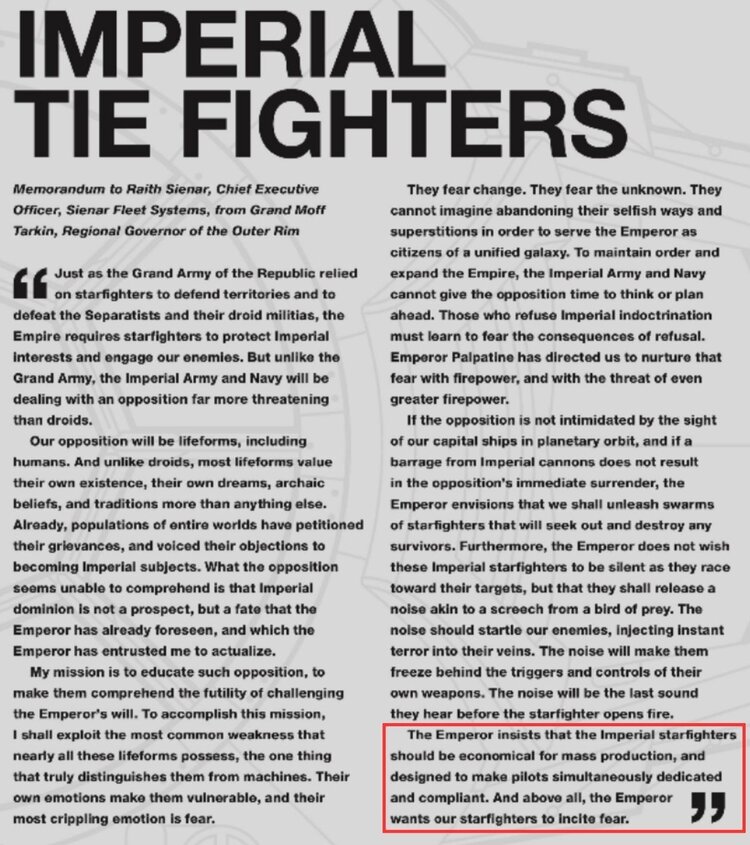
Tarkin starts by saying the Empire isn’t fighting droids anymore. The new opposition is made of people: entire populations who care about their own lives, their beliefs, their traditions. His job, as he puts it, is to “educate such opposition” and make them understand that resisting the Emperor is pointless. The way he plans to do that is by exploiting their biggest weakness compared to machines: their emotions, and especially their fear.
From there he describes the order of battle. First, you break worlds with the sight of capital ships in orbit. If the sight of Star Destroyers and a barrage from their cannons doesn’t make people surrender, only then do you send in starfighters. Those fighters aren’t meant to be equal partners with the big ships. They’re the follow-up: swarms unleashed to hunt down and destroy any survivors who still think about fighting back.
He even cares about the noise they make. The memo says the Emperor doesn’t want these starfighters to be silent; he wants them to “release a noise akin to a screech from a bird of prey.” That sound is supposed to startle enemies, freeze them on their own controls, and become the last thing they hear before the shooting starts. We actually see that play out in Andor during the Aldhani arc, when a single TIE roars over the valley and everyone on the ground just stops and looks up, completely shaken by the engine scream long before it fires a shot. The TIE’s noise isn’t an accident of design—it’s part of the weapon.

Right at the end, Tarkin explains what that means for the design. The Emperor, he says, insists that Imperial starfighters should be economical for mass production, and built in a way that keeps pilots both dedicated and compliant. In practice, that means a craft that is unforgiving and fragile: no shields to hide behind, no hyperdrive to run away with, and the constant knowledge that if you don’t finish the mission quickly, you’re dead.