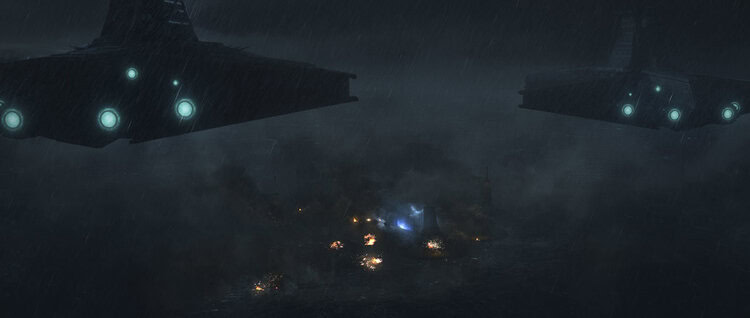
Kamino built the army that helped Palpatine take over the galaxy. Then the Empire destroyed its cloning facilities, sending Tipoca City into the ocean. Why destroy such a valuable resource instead of keeping it under guard? The answer becomes clearer when we look at what the Empire took before opening fire and what it wanted to leave behind.
1. The Empire Wanted Recruits, but It Still Valued Clone Experience
Tarkin considered Kamino’s clone army too expensive. The Empire favored recruited soldiers who cost less, allowing it to build its forces from the population it now ruled.
Recruitment also offered something Kamino could not: soldiers whose military service began with the Empire. The clones had been raised to serve the Republic, and many had spent years fighting beside Jedi. Imperial officers wanted a new army shaped around the new regime.
That did not mean the clones had suddenly become useless. In War-Mantle, Gregor reveals that clone commandos are training their replacements on Daro. The Empire still wanted their experience, even as it dismantled the system that produced them.

This explains why the Empire stopped ordering clone soldiers. But canceling a contract and destroying an entire production center are very different decisions. The remaining problem was Kamino’s ability to keep operating without its former customer.
2. Kamino’s Cloners Could Find Another Customer
The Kaminoans did not see the end of their Imperial contracts as the end of their business. In War-Mantle, Nala Se suggests finding other clients. Lama Su doubts the Empire will allow that and begins arranging for key personnel to escape.
That exchange gets to the heart of the problem. Kamino possessed more than a collection of laboratories: it had scientists, production facilities, and the knowledge needed to create an army. Losing the Empire’s business did not erase those capabilities.
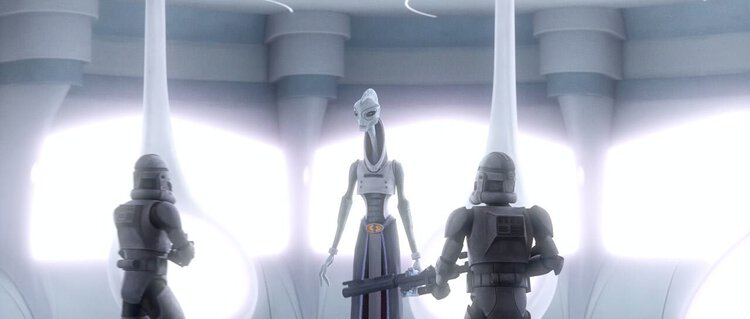
Rampart stops their escape plans and separates the scientist from the politician. Nala Se has skills the Empire wants; Lama Su’s position as prime minister offers him no protection.
Seen this way, the attack on Kamino also prevents a dangerous possibility: its cloning industry becoming available to another power. A facility that had supplied Palpatine’s army could potentially supply someone else’s.
Keeping the complex under occupation could have prevented that, but it would have required continued security and control over the people running it. Destroying the facilities removed the production site entirely once the Empire had taken what it wanted.
3. The Empire Took Valuable Assets Before Destroying the Facilities
The bombardment followed an organized withdrawal. Clone troops and cadets were transferred away, equipment was packed up, and Nala Se was taken into Imperial custody.
Before authorizing the attack, Tarkin checks that Nala Se has been secured. By the time the Star Destroyers fire in Return to Kamino, the Empire has already decided which parts of Kamino’s operation it intends to preserve.

The ending of Kamino Lost reveals where that approach leads. Nala Se arrives at a secret mountain facility, escorted by armed troops. Her work is still valuable, but she no longer has any say over who controls it.

That facility is Mount Tantiss on Wayland. The official Databank describes its research as using cloning technology stolen from Kamino. Under Doctor Hemlock, the Empire experiments on clone prisoners and children while pursuing secret projects.
One of those is Project Necromancer, a highly classified undertaking of personal interest to Palpatine. These priorities are very different from Kamino’s former role as a large-scale army supplier.
The Empire kept cloning expertise and technology while destroying the Kaminoans’ ability to operate independently.
Moving the research to a concealed base also offered greater secrecy. Kamino was a known military supplier; Tantiss was hidden inside a mountain on a remote world. For work the Emperor wanted kept out of public view, that was an obvious advantage.
4. Palpatine Turned the Destruction Into an Argument Against Clones
Destroying Kamino also made the move toward a recruited army harder to reverse. Senators could argue over military policy, but they could no longer preserve an operating clone-production system. Its facilities were already gone.
Rampart initially concealed the attack behind a story about a catastrophic storm. In Truth and Consequences, Senator Riyo Chuchi and her allies expose the bombardment using a command log recovered from his ship.

The revelation should have damaged the Empire’s recruitment plans. Instead, Palpatine uses it to push them forward.
He presents Rampart as a rogue officer and has him arrested. Then he turns attention to the clone soldiers who carried out the attack, questioning their willingness to follow such orders. Their obedience becomes his argument for replacing them through the Defense Recruitment Bill.
It is a brutal reversal: the Empire orders the destruction of the clones’ home, then uses their participation to justify ending their place in its military.
Keeping Kamino might have preserved more research capacity and future options. But the Empire’s actions show that preserving every useful resource mattered less than controlling who could use it. It took valuable personnel and technology, shifted secret research to its own facilities, and destroyed the production center it no longer wanted operating.
Kamino still had enormous value. The Empire simply wanted that value under its own control, without the Kaminoans remaining a power it had to bargain with.