
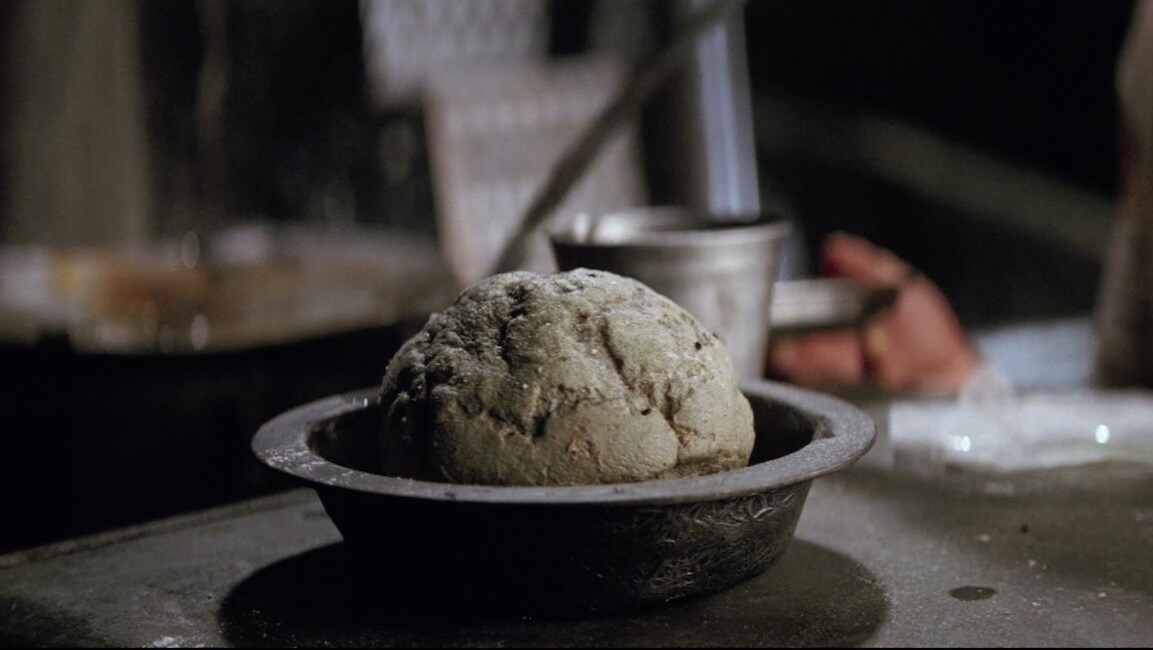
Imperial troops could spend weeks on warships, patrol deserts, and occupy planets far from home, but they still needed regular food. Star Wars does not show many Imperial lunch breaks, so it is easy to imagine stormtroopers living on gray nutrient paste.
In reality, Canon gives us a wider picture: portable ration packs in the field, cafeterias aboard major ships, snacks like travel biscuits, and a huge supply system supporting it all.
Stormtroopers Relied on Portable Rations in the Field
The clearest Canon example of stormtrooper food is the survival ration pack. Imperial packs contained dehydrated food that expanded when water was added, including foods described as veg-meat and polystarch. They were not fancy meals, but they were light, easy to store, and practical during long missions.
Other ration packs across the galaxy could contain ration bars, protein cubes, nutrient paste, jerky, and other compact foods. Some meal packets could even heat themselves. The contents varied depending on the time, location, and mission, so Imperial troops were not necessarily eating the exact same food everywhere.
Specialized units also carried supplies suited to their environment. Sandtroopers, for example, wore survival backpacks containing extra food and water for desert operations.
That does not mean stormtroopers lived on ration packs all the time. Portable meals made sense when troops were away from a base or ship. When stationed somewhere with kitchens and dining facilities, they could eat more normal prepared meals.
Travel Biscuits Expanded The Canon Menu
Imperial ration kits also included foods that looked much more familiar. In The Mandalorian episode “Chapter 19: The Convert,” Doctor Penn Pershing remembers eating yellow travel biscuits during his Imperial service, while Elia Kane says she preferred the red ones. The yellow biscuits were packaged in pairs as part of Imperial ration supplies.

The official Star Wars video above recreates the yellow biscuits from the episode. The recipe itself is obviously made for viewers rather than an in-universe military manual, but the scene shows that Imperial rations included recognizable snack foods alongside more basic survival meals.
Pershing also remembers the biscuits fondly after leaving Imperial service. That small detail makes Imperial food feel more realistic: even boring institutional food can become comfort food when someone has eaten it for years.
Imperial Warships Had Cafeterias and Regular Meals
A massive warship carrying thousands of people could not depend entirely on pocket-sized ration bars. Large Imperial vessels needed food storage, preparation areas, and dining spaces for their crews.
The Canon novel Lost Stars gives us a direct example aboard the Executor, Darth Vader’s Super Star Destroyer. Imperial officer Berisse Sai drinks nutritive milk in the ship’s cafeteria, confirming that major Imperial ships had shared dining areas.

Nutritive milk was another practical food used across the galaxy. It was cheap, portable, filling, and could be stored in cans or carried in canteens. Jyn Erso considered it bland and less satisfying than real food, so it seems closer to a quick nutritional drink than a luxurious meal.
That kind of food also fit Imperial military life. Personnel working long shifts could quickly drink something filling instead of sitting down for a full meal. Still, there is no reason to think every person aboard an Imperial ship lived only on liquid nutrition. Cafeterias existed because crews needed more than emergency rations.
Did Imperial Officers Eat Better Than Stormtroopers?
Officers probably had more choices, but duty and location mattered just as much as rank.
A senior officer working aboard a Star Destroyer or at a major base had easy access to cafeterias and permanent food facilities. A stormtrooper several kilometers into a desert patrol had whatever could fit inside a survival pack.
That does not mean Imperial officers constantly enjoyed luxury food while stormtroopers ate sludge. Both groups could use the same standardized Imperial supplies, especially while serving on the same ship or installation.
The biggest difference was access. Officers usually worked closer to established facilities, while combat troops were more likely to depend on lightweight food during missions.
Feeding the Imperial Military Required an Enormous Supply Network
Ration packs solved only the final part of the problem. Before food reached a stormtrooper’s backpack or a Star Destroyer’s cafeteria, the Empire still needed farms, processing facilities, warehouses, transport ships, and reliable supply routes.
The Empire’s real advantage was control. It could take over local production and redirect resources toward military needs.
The farming moon Raada is one of the clearest Canon examples. Imperial authorities took control of the moon to grow nutrient-rich crops used in supplements for personnel working in low-gravity environments.

The crop rapidly drained nutrients from the soil, but the Empire did not provide enough synthetic fertilizer to restore the farmland. For Imperial planners, Raada was useful because it could produce what the military needed. What happened to the land afterward was far less important.
That makes Imperial food logistics much darker than a simple question about what stormtroopers ate. A cheap ration on one planet could depend on damaged farmland and exploited communities somewhere else.
The Empire also understood that food itself could be used as a weapon. During the blockade of Ibaar, Imperial forces cut civilians off from vital supplies, creating a famine in an attempt to force Rebel intervention.
Ibaar was not necessarily producing food for Imperial troops, but it shows how much power came from controlling supply routes. The same military system that kept stormtroopers fed could also decide which populations were allowed to receive food at all.