
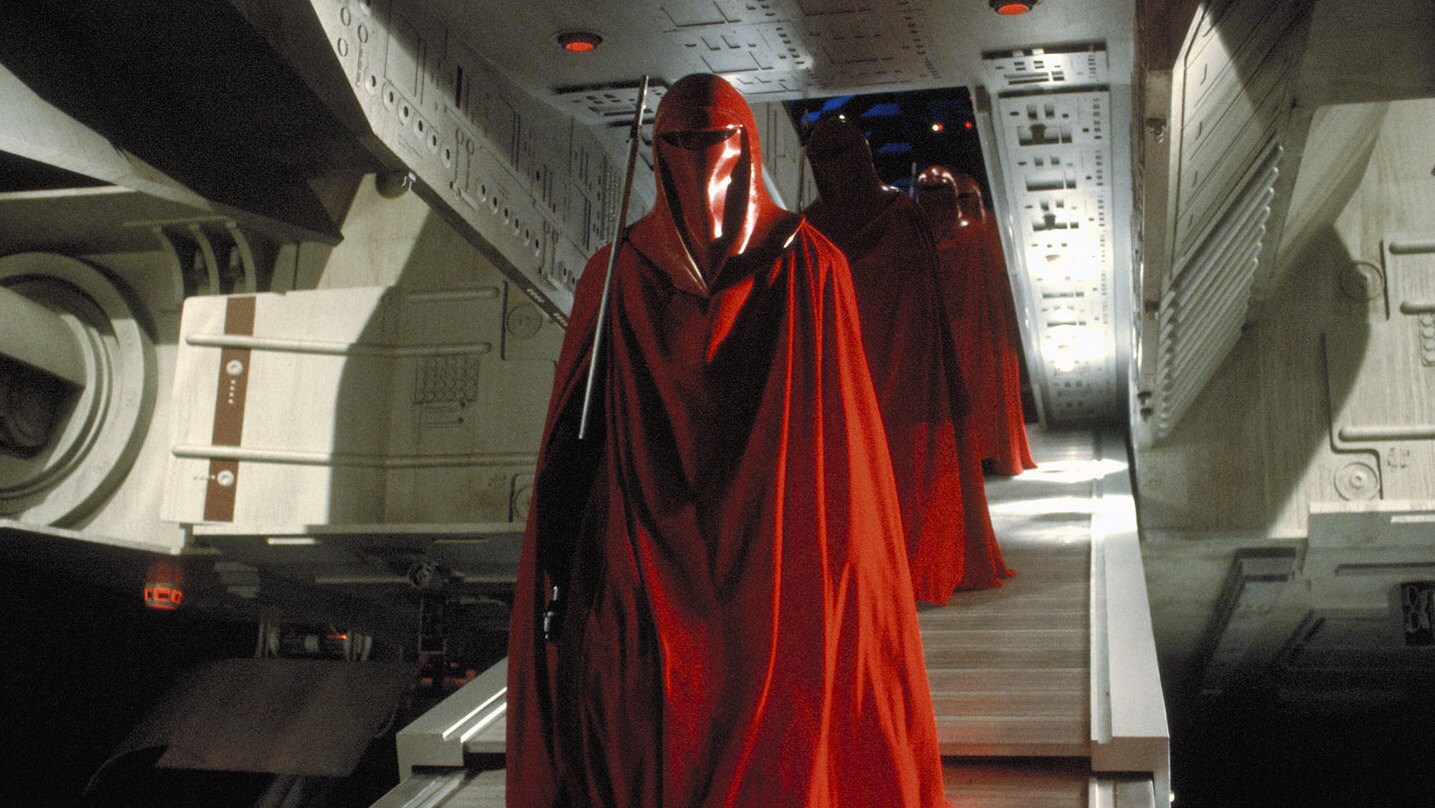
Palpatine’s red-robed guards are some of the most memorable figures in Star Wars, even though the films barely let them move. They stand silently, carry strange weapons, and somehow make the Emperor’s throne room feel even more dangerous. That creates an obvious question: were they truly elite fighters, or was the uniform doing most of the work? The answer only becomes clear when we look beyond their few seconds in the movies.
Elite Soldiers, Not Secret Sith
The Imperial Royal Guards were among the Empire’s best conventional fighters. They were selected from highly skilled members of the Imperial Military, trained in several forms of combat, and screened for strength, intelligence, and complete loyalty. Their main job was close protection: stopping assassins, controlling access to Palpatine, and standing between the Emperor and any threat that reached his inner circle.
That does not make every Royal Guard a Force-user or a Jedi-killer. Current Canon presents them as exceptional soldiers with specialized weapons and training. Against ordinary troops, criminals, or assassins, one guard would be a frightening opponent. Against a trained Force-user, several guards could still create a real problem if they had the right equipment and support. Against a Jedi Master on Yoda’s level, however, the gap was enormous.
The official Star Wars Databank deliberately keeps their background mysterious, describing the crimson guards as Palpatine’s protectors while noting the rumors around their combat ability. Wookieepedia’s Canon history, drawing from novels, comics, television, and reference material, gives a clearer picture of how they were chosen and used.
How Did a Soldier Become a Royal Guard?
The process began with selection, not basic training. Royal Guard candidates were already drawn from the most skilled soldiers in the Imperial Military. They also had to meet strict standards for physical strength, intelligence, height, and loyalty. In other words, the Empire did not take average recruits, put them in red robes, and hope they looked intimidating. The robe came after a soldier had already proved he belonged near the top.
Candidates then received advanced instruction in several forms of combat. Royal Guards learned to work with weapons such as force pikes and heavy blasters, but their training was also built around one special demand: Palpatine’s word came before everything else. They were expected to obey without hesitation, even if an order required them to kill another guard.
Canon has now added a particularly brutal final stage. Trainees sparred in a place called the Squall, and their final test was a battle to the death in front of the Emperor. The test did more than remove the weaker candidate. It forced a guard to prove that loyalty to Palpatine was stronger than friendship, teamwork, or self-preservation.
That psychological conditioning mattered as much as combat skill. Palpatine was surrounded by officers who wanted power and apprentices who were expected to betray their masters eventually. A bodyguard who could be bribed, frightened, or persuaded was useless to him. The Royal Guard therefore combined physical ability with a level of obedience that ordinary Imperial units could not match.
What Were They Trained to Do?
The Royal Guards were bodyguards first. Their work was narrower than that of a normal battlefield unit, but it demanded a wider range of close-range skills.
They controlled close space. A force pike gave a guard reach in a corridor, doorway, or throne room. It could strike, stun, and keep an attacker away from the protected person. In Canon, modified pikes could also use magnetic clamps to restrain a target.
They fought as a coordinated group. Their best on-screen showing is not a heroic duel. It is several guards surrounding one dangerous target, resisting his first attack, and using their weapons together. That is exactly how protective personnel should fight: quickly, unfairly, and with the advantage of numbers.
They could operate outside the palace. Royal Guards accompanied Imperial leaders aboard ships and into active combat zones. Their robes made them look ceremonial, but lighter armor could be worn when a mission required movement.
They were trusted with sensitive knowledge. The guards knew that Palpatine was a Sith Lord and kept that secret. That does not measure fighting strength, but it explains why a highly trained stormtrooper could not simply be assigned to the same position. A Royal Guard needed skill, discipline, and absolute political reliability.
Star Wars Rebels Finally Showed How Dangerous They Could Be
The clearest Canon demonstration appears in the Star Wars Rebels finale, “Family Reunion – and Farewell”. After Ezra Bridger rejects Palpatine’s offer, three Royal Guards enter without their long ceremonial robes and attack him.
![[Ezra Vs Royal Guards] Star Wars Rebels Season 4 Episode 16 [HD]](https://may4bewithyou.com/wp-content/plugins/wp-youtube-lyte/lyteCache.php?origThumbUrl=https%3A%2F%2Fi.ytimg.com%2Fvi%2Fd09f9Vj6Z-o%2F0.jpg)
Ezra opens with a Force push. One guard is knocked down, but the other two remain standing. They then use modified force pikes fitted with magnetic clamps to lift Ezra off the floor and hold him in agony while stormtroopers fire at him. Ezra escapes only after using the Force to throw heavy pieces of the reconstructed Lothal Jedi Temple at the group.
The scene proves several things. The guards could resist at least part of a Force-assisted attack, their equipment was designed to control an unusually dangerous prisoner, and three of them could briefly immobilize a Jedi-trained fighter. They also coordinated with stormtroopers instead of treating the encounter like an honorable duel.
It does not prove that one Royal Guard was stronger than Ezra. The guards had numbers, specialized equipment, and armed support, while Ezra ultimately defeated them. Still, holding him at all is far more impressive than standing beside a doorway. It is the best direct example of their anti-assassination role in action.
Their Other Canon Achievements
Canon does not give the Royal Guard a long list of individual victories, but it does place them in several situations that ordinary ceremonial soldiers would never survive.
Surviving Ryloth in Lords of the Sith
In Paul S. Kemp’s Canon novel Lords of the Sith, Royal Guards travel with Palpatine and Darth Vader during an attack by the Free Ryloth movement. Vader crash-lands the Emperor’s damaged shuttle in a dangerous equatorial forest. Several crew members and guards die in the crash, but Sergeant Erstin Deez and a Royal Guard captain – formerly a clone trooper – survive alongside the two Sith Lords.
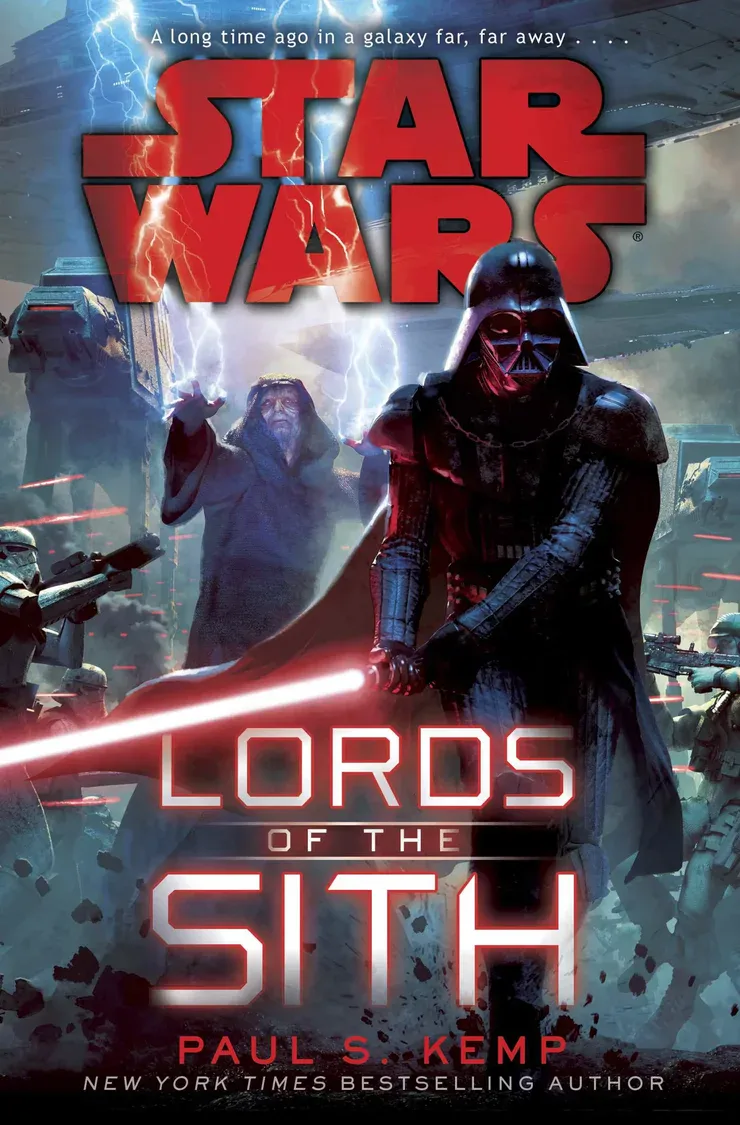
The survivors then face lyleks, the massive apex predators native to Ryloth. The captain is killed, while Deez remains alive long enough for Imperial forces to reach the group. This is not a clean victory for the guards, and it would be dishonest to sell it as one. What it does show is that Royal Guards were expected to survive crashes, move through hostile wilderness, and fight creatures dangerous enough to kill elite soldiers.
Fighting beside the Empire’s most dangerous forces
Royal Guards also joined Palpatine, Vader, and death troopers during the Battle at Amaxine Station in Marvel’s Hidden Empire #4 and #5. The Imperial force attacked Crimson Dawn while Qi’ra’s plan involving the Fermata Cage reached its final stage.
This deployment is meaningful because Palpatine took the guards into a major assault alongside Vader and elite death troopers. It shows trust and combat readiness. It is not, however, a useful solo feat: Vader and Palpatine dominate the confrontation, and the comic does not give a normal Royal Guard a clear victory that can be measured against them.
So Why Yoda Defeated Them So Easily
The guards’ most famous movie “fight” lasts only a moment. In Revenge of the Sith, two red guards move toward Yoda in Palpatine’s office, and Yoda throws both of them into the wall with the Force before they can attack.

That scene establishes their ceiling, not their average level. Yoda was one of the most powerful and experienced Jedi in history. Losing instantly to him does not mean a guard would lose instantly to a rebel soldier, bounty hunter, assassin, or even every less-experienced Force-user.
There is also a practical difference between surprise and a prepared engagement. The guards facing Ezra had room to spread out, specialized pikes ready, and three stormtroopers supporting them. The two men facing Yoda were caught by a sudden Force attack from a master who had no interest in giving them a fair fight. Training helps against superior power; it does not erase it.
Were Royal Guards Stronger than Death Troopers?
There is no official Canon fight or ranking that settles this. The best answer is to compare their jobs rather than invent a number.
Death troopers were elite special-operations soldiers. Their armor, encrypted communications, stealth features, rifles, and squad tactics suited raids, battlefield security, escort missions, and ranged combat. We see them deployed more often as an independent combat force.
Royal Guards were selected for a more exclusive political and protective role. They trained for close-range attacks, guarded the most important person in the Empire, carried specialized melee weapons, and went through extreme loyalty conditioning. If an attacker reached the Emperor’s room, the Royal Guard was the last conventional barrier.
In a tight corridor or one-on-one melee fight, a Royal Guard has the stronger argument. In an open firefight or special-operations mission, a death trooper’s armor and ranged weapons may be more useful. Canon never says that one is always better. They are elite units built for different problems.

Legends Turned the Royal Guards into Real Monsters
The old Expanded Universe gives the guards a much more detailed and extreme training system.
According to the Legends history of the Emperor’s Royal Guard, candidates were chosen from exceptional stormtroopers and trained at the Imperial Royal Guard Academy on Yinchorr. They studied multiple martial arts, including Echani, and used force pikes, vibroswords, and heavy blaster pistols. Live combat killed many candidates before they ever reached final selection.
The strongest showcase is Kir Kanos in the Crimson Empire comics. Kanos began in a class of forty-three trainees. The survivors were paired so they would learn to depend on one another, only for Palpatine’s final test to force each pair into a death match. Kanos killed his partner, Lemmet Tauk, and earned the crimson armor.
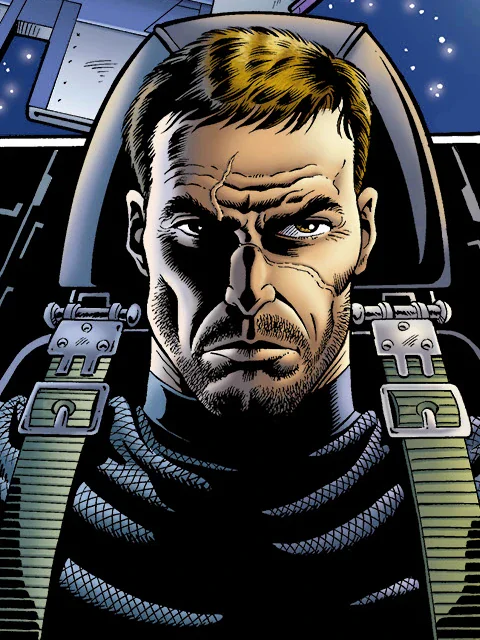
After Palpatine’s death, Kanos survived the massacre of the remaining guards on Yinchorr and hunted the people responsible. His combat skill allowed him to defeat groups of enemies, operate as a bounty hunter under the name Kenix Kil, infiltrate hostile locations, and destroy one criminal base almost single-handedly. Crimson Empire is the clearest story showing what happens when a Royal Guard becomes the main character instead of background security.
Kanos should not be treated as a perfect average. He is a named survivor whose entire story depends on being unusually capable. Legends also contains specialized offshoots such as Force-sensitive Shadow Guards and Sovereign Protectors. Their powers cannot be assigned to every ordinary Royal Guard, and they should not be mixed into a current-Canon comparison.