Darth Maul’s second blade makes a single lightsaber look like half a weapon. Yet most Jedi in the movies stick with one, even after facing opponents carrying more. The explanation starts with a simple distinction: two blades offer different options, but they don’t automatically make someone a better fighter.
One Lightsaber Already Suited Most Jedi Missions
Qui-Gon and Obi-Wan arrive in The Phantom Menace as negotiators. Fighting their way through a ship full of battle droids wasn’t the assignment. Their job was to settle a dispute.
That fits the Jedi’s role as guardians of peace and justice. They needed to protect people, investigate threats, and resolve conflicts, rather than prepare exclusively for duels with other lightsaber users. At the beginning of the prequel trilogy, they even believed the Sith had been extinct for a thousand years.
A single lightsaber already handles much of that work. It can deflect blaster fire, cut through obstacles, and hold off an attacker. Qui-Gon doesn’t need a second blade to get through the battle droids or start cutting into the Trade Federation ship’s blast doors.
The standard hilt also gives its wielder flexibility. A Jedi can switch between one-handed and two-handed grips or free a hand to climb, grab something, or help another person. Carrying two sabers doesn’t make those things impossible, but it introduces another weapon to manage.
Two Lightsabers Require More Than Picking Up Another Hilt
Anakin tries the obvious solution in Attack of the Clones. After Dooku injures Obi-Wan, Obi-Wan throws his lightsaber to his apprentice. Anakin attacks with a blue blade and a green one, only for Dooku to destroy one of them moments later.

That exchange doesn’t prove dual-wielding is ineffective. It shows why counting blades tells us very little about who will win. Anakin gains another weapon, but Dooku still counters him.
Dual-wielding, commonly called Jar’Kai, gives a fighter two independently moving blades. One can threaten an opponent while the other guards against a response, and attacks can come from different angles.
The tradeoff is coordination. Both weapons have to work together without blocking each other’s movement or leaving openings. With a saber in each hand, the fighter also gives up the option of keeping both hands on one hilt unless they put a weapon away or change their approach.
Ahsoka is a better example of a developed two-saber style than Anakin’s brief attempt against Dooku. During her Padawan years, she built a second lightsaber with a shorter, shoto-style blade to complement her primary weapon. Her setup became part of how she fought, rather than something she borrowed in an emergency.
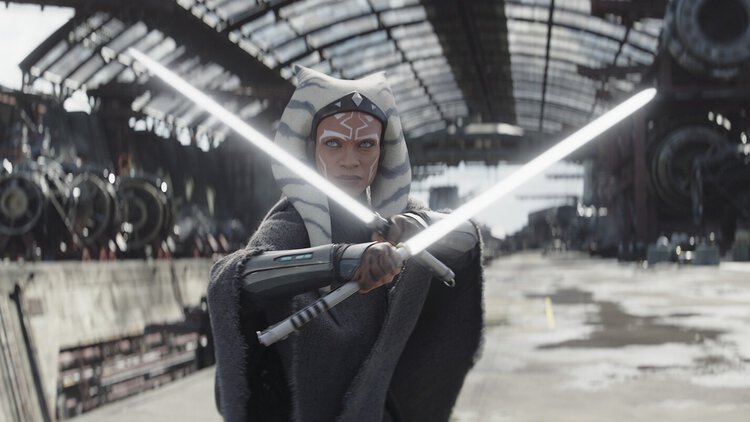
The useful comparison is between a fighter who has built their technique around two weapons and someone who has simply picked up another one. Ahsoka’s success gives other Jedi a reason to consider the style, but it doesn’t mean Obi-Wan or Mace Windu would improve by copying her equipment.
A Double-Bladed Lightsaber Has Different Tradeoffs
Maul’s saberstaff presents a separate question. Two lightsabers can move independently; two blades attached to the same hilt cannot. Moving one end changes the position of the other.
That connection gives Maul an impressive range of attacks and defensive movements. On Naboo, he uses the weapon against Qui-Gon and Obi-Wan together, turning between them and keeping both involved in the fight. His dexterity and extensive training allow him to fight with either one blade active or both.

But a second active blade also changes which movements are practical. Bringing the hilt close to the body or turning an attack into a block means accounting for both ends. A Jedi accustomed to a single saber couldn’t assume every familiar position would work unchanged.
Maul himself demonstrates the weapon’s flexibility by using only one blade during his fight with Qui-Gon on Tatooine. Having two available doesn’t mean both must stay active in every encounter. Obi-Wan later even cuts the hilt in half on Naboo, leaving Maul with one working blade
The Jedi Allowed Both Setups
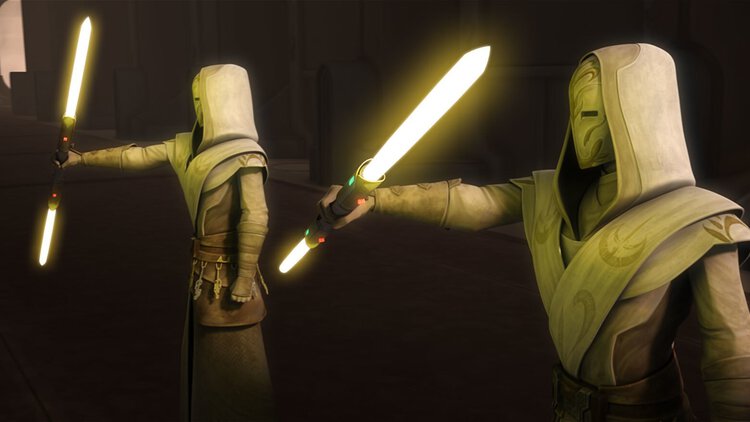
The clearest answer to the idea that double-bladed weapons were “too aggressive” for Jedi is the Jedi Temple Guard. Its members were selected from the Order’s own ranks, and they protected the Temple with yellow, double-bladed lightsaber pikes.
Ahsoka also adopted her second saber while she was still a Jedi Padawan. And in Star Wars Jedi: Fallen Order, Jaro Tapal carries a double-bladed weapon that eventually passes to Cal Kestis.
These examples rule out a blanket ban. Jedi could use alternative designs, and some clearly found them useful. Most of the familiar movie Jedi simply favored a single blade.
Extra Blades Also Make the Movie Fights Stand Out
There’s a storytelling effect here, too. Maul revealing his second blade immediately changes the mood of the confrontation. Anakin taking up another saber adds a new beat to his duel, while Grievous unfolding four arms gives Obi-Wan a very different problem.
Those moments feel unusual because the single lightsaber is the established norm. If every Jedi carried Maul’s weapon, his reveal would lose much of its impact.
The films also repeatedly put exceptional fighters behind ordinary single blades. Dooku counters Anakin’s two-saber attack with one weapon. Yoda, Mace Windu, and Obi-Wan all demonstrate how dangerous that familiar setup can be.
Most Jedi weren’t overlooking an obvious upgrade. A second blade could expand their options, but making those options useful depended on the person holding it.