
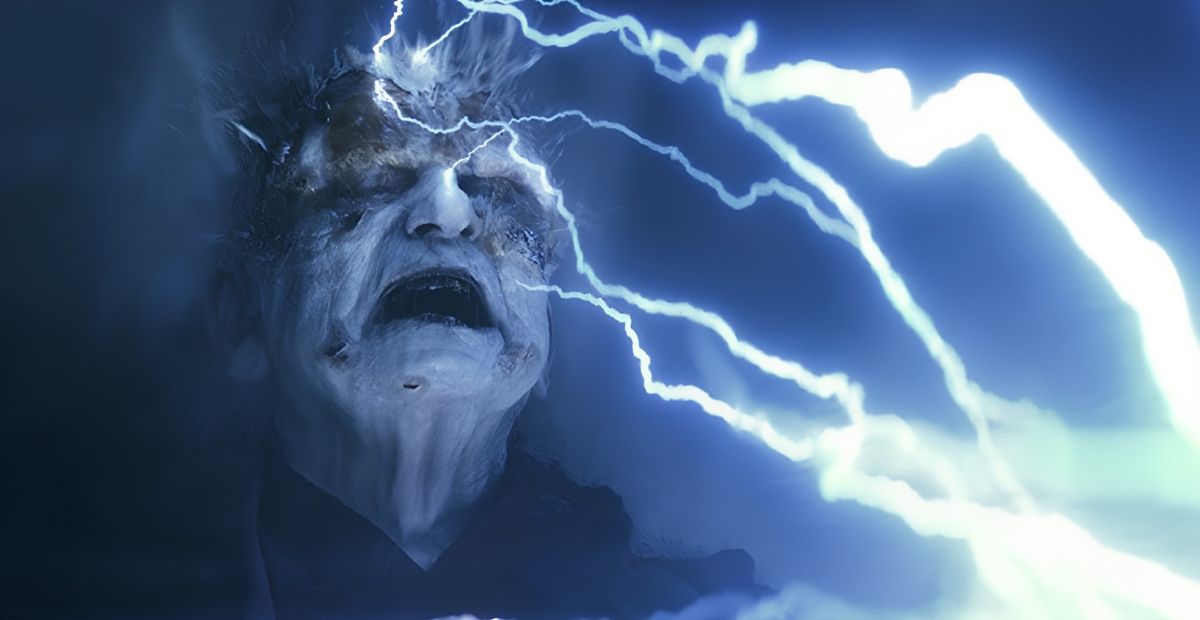
One of the biggest questions left after the sequel trilogy is why Palpatine’s destruction on Exegol was permanent. If he managed to survive the explosion of the Death Star II by tossing his consciousness across the galaxy, why couldn’t his spirit just find another vessel after the Battle of Exegol?
Palpatine Could Only Survive Because Exegol Was Prepared for Him
One important thing about Palpatine’s return is that his spirit was not just freely immortal, floating around the galaxy without limits. After he died in Return of the Jedi, he survived because Exegol had already been prepared for him.
That is why we see him connected to machines and trapped inside a decaying clone body in The Rise of Skywalker. The body could barely contain his power. Palpatine himself even admits that he had “died before,” showing that his survival came through Sith rituals, cloning, and essence transfer, not true immortality.
The comics also show that Exegol was not just some random hiding place Palpatine found later.
In Marvel’s Darth Vader #11, Vader reaches Exegol decades before the sequel trilogy and discovers part of what Palpatine has been hiding there. The planet is already connected to his master’s secret work: Sith cultists, cloning experiments, the hidden fleet, and the machinery behind Sidious’s long-term plan.

He did not simply die and choose a new body anywhere in the galaxy. Exegol had the cultists, laboratories, cloning work, and dark-side rituals needed to keep him alive after Endor. Without that preparation, there is no Emperor returning in the sequels at all.
But even those clone bodies were failing. That is why Palpatine became obsessed with Rey. He needed a younger and stronger vessel, someone powerful enough to properly contain his spirit.
Exegol Was Destroyed Along With Palpatine
The biggest difference between Palpatine’s death in Return of the Jedi and his death in The Rise of Skywalker is that this time, the whole Exegol operation collapsed with him.
After Endor, Palpatine still had Exegol waiting in secret. Star Wars Databank describes Exegol as an ancient Sith world with “a massive citadel” and “a still viable enclave of Sith cultists” carrying out Darth Sidious’s plot. That matters because Palpatine’s survival depended on that hidden world, those cultists, and the work they had been doing for years.

But by the end of The Rise of Skywalker, that system is gone. The Final Order fleet is destroyed above Exegol, the Sith throne collapses, and the cultists gathered in the arena are wiped out when Palpatine’s own lightning is turned back on him. Whatever remained of the cloning and Sith machinery that kept him alive was tied to that place.