
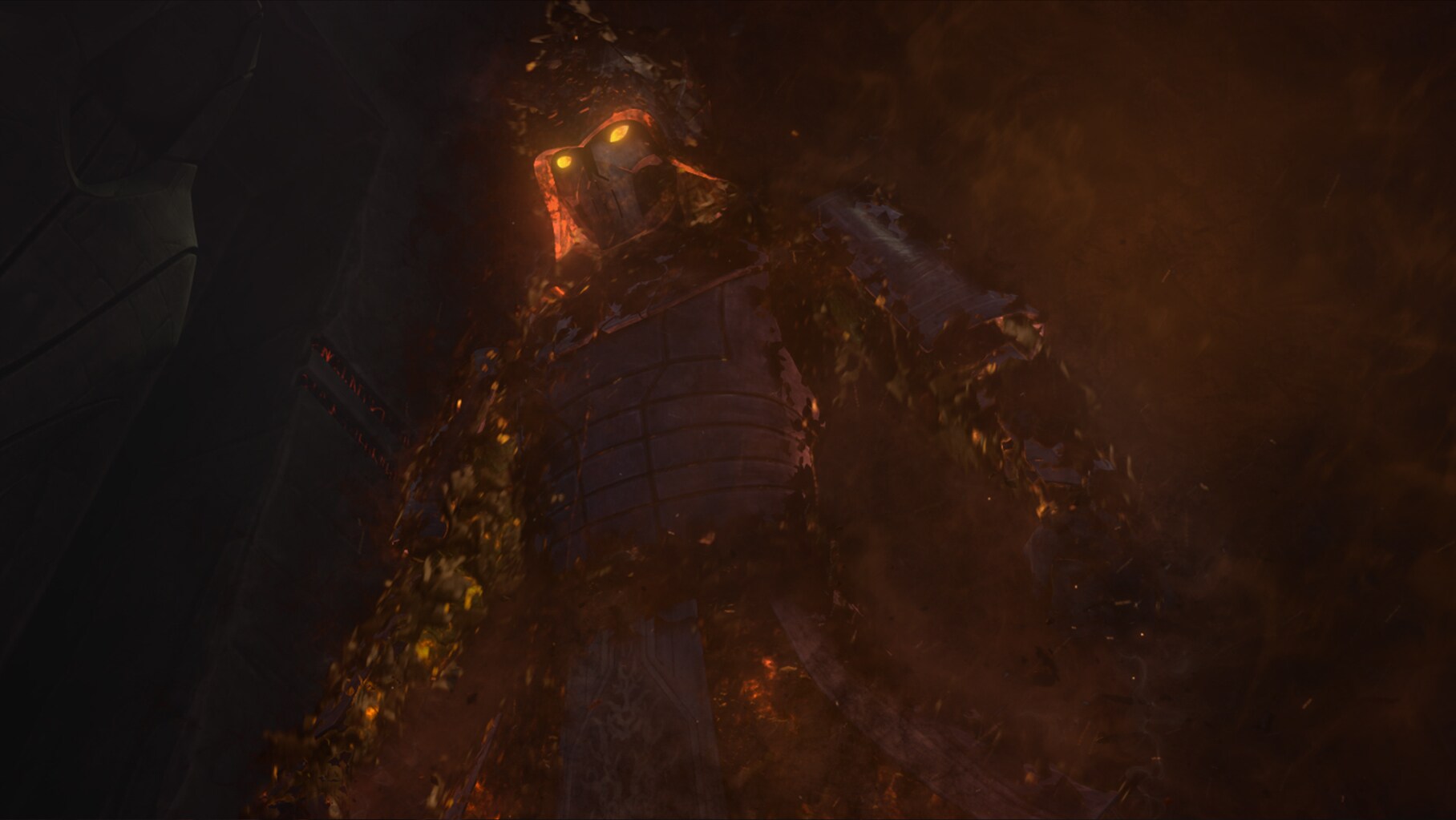
The Rule of Two sounds brutally simple: one Sith Master holds the power, one apprentice tries to take it, and the winner carries the Order forward. It turns Sith betrayal into a system rather than an accident. But a thousand-year chain built on secrecy leaves us with missing names, uneven evidence, and several transfers of power that were anything but fair tests. So did Darth Bane’s plan really make every generation stronger than the last?
What Darth Bane Was Trying To Fix
Darth Bane did not create the Rule of Two because two was a mystical perfect number. He created it because a large Sith order kept destroying itself.
The old Sith had many ambitious Lords competing for status, knowledge, and control. That was a terrible structure for people who believed power should belong to whoever could seize it. Weaker Sith could combine against a stronger rival, internal fights could ruin long plans, and every victory created another struggle over leadership.
After the Sith were crushed about a thousand years before the Clone Wars, Bane replaced their old model with two active Sith: a Master to embody the dark side’s power and an apprentice to crave it. They would hide, use deception and conspiracy, and wait until they could bring down the Jedi and the Republic from within.

That distinction matters. The Rule of Two was not only a training method. It was also an answer to two practical problems: Sith infighting and Jedi attention. Reducing the Order to a pair made both problems easier to control.
How The Rule Was Supposed To Produce Stronger Sith
The intended cycle was simple. The Master possessed the accumulated knowledge and power of the Order. The apprentice learned from the Master while developing new abilities, allies, and plans. When the apprentice became capable of killing the Master, the apprentice took the title, chose a new student, and began the cycle again.
In theory, this prevented a weak group from overwhelming one superior Sith. A lone challenger had to find a way past the current Master. The test also covered more than lightsaber skill. A successful Sith needed patience, secrecy, judgment, manipulation, and the ability to recognize the right moment to strike.
The system therefore selected for survival and success, not for a clean arena victory. Poison, betrayal, political leverage, and an ambush were valid Sith tools. From Bane’s point of view, a Master who could not detect or survive an apprentice’s plot had exposed a real weakness.
One successor might be a better duelist, another a better infiltrator, and another a better political strategist. The real question was whether the next Sith could protect the lineage and move its long plan closer to victory.
What The Known Generations Actually Show
Canon gives us the beginning, the end, and only pieces of the middle. Bane founded the system, and his apprentice Darth Zannah carried it forward. Nearly a thousand years later, Darth Plagueis trained Darth Sidious, who killed him and became the Master. Sidious then used Maul, Dooku, and Vader as successive apprentices while he moved from hidden conspirator to Emperor.

There is no complete current-canon list of every Master and apprentice between Zannah and Plagueis. There is also no shared test that lets us compare all of them. Canon can support the claim that the line survived and advanced its plan, but it cannot prove a perfectly rising power level across every generation.
Legends supplies far more of the chain, but it also shows why the theory was never clean. In that continuity, Zannah defeated Bane and took Darth Cognus as her apprentice. Cognus later trained Darth Millennial, who rejected the Rule of Two and left. Centuries later, Darth Gravid destroyed much of the Sith knowledge that generations had collected before his apprentice Darth Gean killed him. That setback reportedly cost the Order centuries of work.
Later Legends Sith bent the rule in other ways. Darth Tenebrous trained Darth Venamis in secret while Darth Plagueis was already his apprentice. Plagueis and Sidious imagined ruling together rather than completing the old cycle exactly as Bane designed it. Sidious eventually killed Plagueis in his sleep after getting him drunk, which was a successful Sith betrayal, but not proof that Sidious would have beaten him in a fair duel.
This does not make those events worthless as tests. It shows that the Rule selected the most effective survivor in that moment, which is not always the same thing as selecting the strongest individual in every category.
The Rule Became Stronger As A Strategy
The clearest success was institutional, not physical. Bane’s Sith remained hidden for roughly a millennium while the Jedi believed their ancient enemy was gone. That gave the line time to preserve knowledge, gather wealth, study the Republic, and replace open war with patient manipulation.
By Sidious’s era, the Sith no longer needed an army of Sith Lords. He used his public identity as Palpatine to rise through the Senate, manufactured a galactic crisis, controlled both sides of the Clone Wars, and turned the Republic’s own clone army against the Jedi. The same hidden Sith who engineered Order 66 then transformed the Republic into the Empire.

That was a kind of power Bane’s old rivals had failed to achieve. Thousands of Sith warriors could threaten the Jedi openly, but their presence also united the Jedi against them and exposed every internal fracture. Two Sith could spend generations attacking systems, trust, and institutions before anyone understood there was a war.
Judged by secrecy, continuity, and political reach, later generations became far more dangerous. They inherited not only Force teachings but a growing conspiracy. Sidious was the product of that accumulated advantage, even if we cannot draw a straight line showing that every forgotten Master had more raw power than the one before.
Why The Stronger-Every-Time Claim Breaks Down
The Rule of Two never created a controlled test. An apprentice could strike while the Master was injured, distracted, asleep, or betrayed by someone else. A victory proved that the Master had failed to protect the position, but it did not automatically prove superiority in Force power or combat.
The Master also had a reason to sabotage the process. Sith were selfish by nature. A Master might withhold a secret, choose a manageable apprentice, search for a replacement, or kill a student who became dangerous too soon. The system expected each Master to train the person who would murder them, while also expecting that Master to behave like a Sith and protect their own power. That contradiction never went away.
Sidious made the problem obvious. He replaced fallen or inconvenient apprentices, tested Vader, and tried to turn Luke Skywalker when Luke appeared capable of taking Vader’s place. He valued apprentices as useful tools and possible vessels for the Sith future, but he had no intention of stepping aside simply because the next generation deserved a turn.

Vader also shows how badly the final test could misfire. Anakin had the potential to become extraordinarily powerful, and Sidious expected great things from him. Yet Vader remained the Emperor’s enforcer for decades, then turned against Sidious to save Luke. He did not kill his Master to become the next ruling Sith. He rejected the dark side and broke the succession.
A two-person order was easy to hide, but it was also fragile. If the apprentice died before becoming ready, the Master had to find and train another. If both Sith died together, there was no wider institution to continue the system. The same small size that protected the conspiracy created a single point of failure.
So, Did The Rule Of Two Work?
Strategically, yes. It stopped large-scale Sith infighting from repeatedly wrecking the Order, kept the Sith hidden, and allowed generations of plotting to culminate in the destruction of the Jedi and the rise of the Empire. In that sense, the Sith became stronger because each pair inherited a more advanced plan and a better position.
As a guarantee that every new Master was personally stronger than the last, no. Canon does not contain enough generations to prove it, and Legends includes lost knowledge, breakaway apprentices, secret replacements, unfair killings, and major setbacks. Killing a Master showed cunning and opportunity as often as it showed greater combat power.
As a permanent system, it also failed. Sidious reached the summit of Bane’s project, but his Empire lasted only a fraction of the time the Sith had spent preparing it. Vader’s return to the light ended the normal line of succession, and Sidious’s later attempt to restore Sith rule on Exegol ended with his final destruction.
The best verdict is that the Rule of Two created the most successful Sith conspiracy in galactic history. It did not create a flawless ladder where every rung was stronger than the one below it. Bane solved the Sith’s problem of surviving long enough to win, but he never solved the Sith’s deeper problem: people driven by fear, greed, and domination cannot be trusted to preserve any system, even their own.
Gerrera
Saturday 19th of September 2026
The Rule of Two is so funny to me
Bane said “ok, we can’t help being a bunch of treacherous bitches, so let's reduce our population for damage control”