
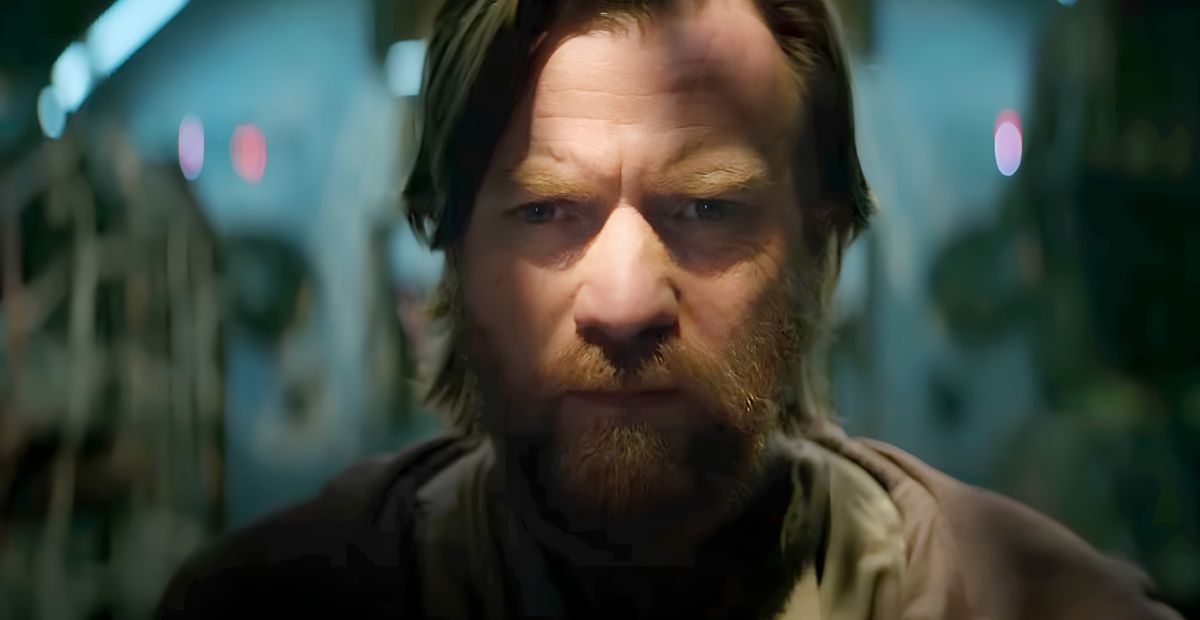
Most fans think of Obi-Wan Kenobi as the perfect Jedi. He follows the Code, respects the Council, and spends most of his life trying to do what he believes is right.
That is exactly why moments like this stand out so much.
Because when it came to Qui-Gon Jinn, Obi-Wan’s loyalty was never simple. It was deeper than normal master-and-padawan respect. And more than once, that loyalty pushed him dangerously close to crossing lines the Jedi would never have approved of.
The most obvious example came after Qui-Gon’s death. But newer canon stories make it clear that this was not some sudden emotional reaction on Naboo. Obi-Wan had already been putting Qui-Gon above strict Jedi obedience long before The Phantom Menace ended.
A Vision of Qui-Gon’s Death Changed Everything
In Jedi Knights #1, the Jedi are dealing with a conflict between Vekura and Syrinx Prime. On the surface, it looks like a political crisis between two worlds, with the Jedi sent in to stop the violence before it gets worse.
Qui-Gon Jinn is on Vekura with another Jedi, Berem Khana, trying to negotiate with General Lafco. At the same time, other Jedi, including Yoda, Mace Windu, Ki-Adi-Mundi, Vetna Mooncrest, and Obi-Wan Kenobi, are involved in the wider mission.

But while Qui-Gon is away from Obi-Wan, something much darker happens.
A masked assassin attacks him.
This is not just some random soldier in the middle of the war. The attacker is skilled, prepared, and clearly focused on Qui-Gon. The assassin fights him directly, escapes before the Jedi can get answers, and leaves behind the feeling that Qui-Gon himself was the target.

That already makes the mission personal. But the real moment comes later, when Obi-Wan is training with Yoda.
During the training, Obi-Wan sees a vision. In it, Qui-Gon is killed by a masked figure.
For a normal Jedi, this should have been a warning, but not something to chase. Yoda reminds Obi-Wan that the future is always moving. Visions are dangerous because they can mislead a Jedi. They can make fear feel like truth.
But Obi-Wan cannot just let it go.
And that is where the story becomes less about the mission and more about Obi-Wan’s real weakness: Qui-Gon.

He Started Searching for the Man Who Would Kill Qui-Gon
By Jedi Knights #2, Obi-Wan is no longer just shaken by what he saw. He has already started looking for answers.
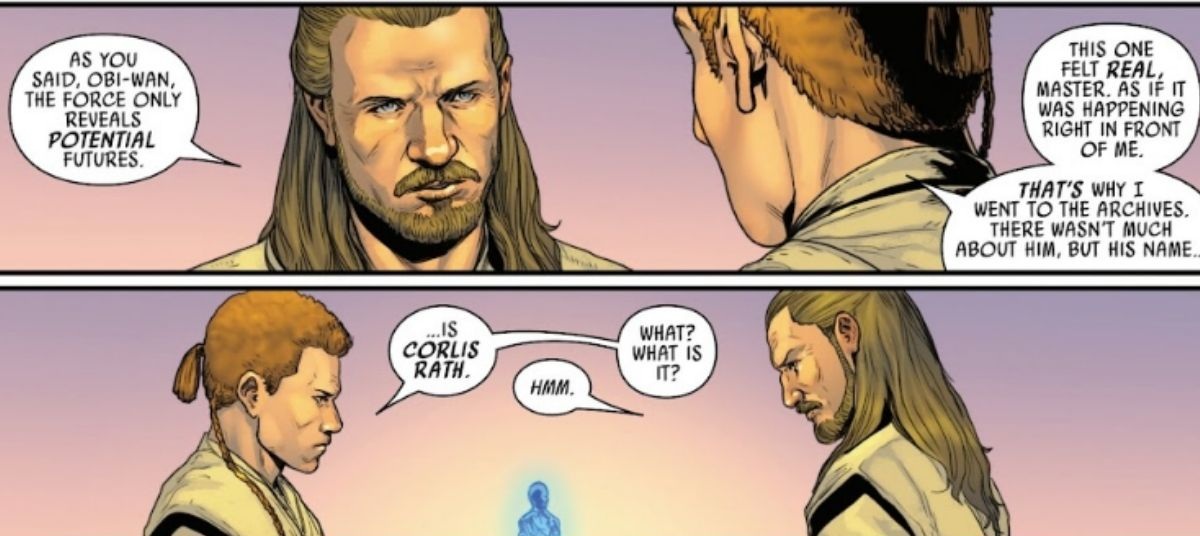
After seeing the vision of Qui-Gon being killed, Obi-Wan goes to the Jedi Archives and searches for the masked man from that vision. That alone says a lot, because Yoda had already warned him that the future is always moving. A Jedi is not supposed to treat a vision like a fixed truth, and they are definitely not supposed to let fear guide their actions.
But Obi-Wan does not treat this like a normal lesson from Yoda. This is about Qui-Gon. So he searches anyway.
Eventually, Obi-Wan finds a match. The man from his vision is named Corlis Rath. When Obi-Wan brings this to Qui-Gon, he tells him directly that this is the man he saw killing him.

That is where the moment becomes even more unsettling, because Qui-Gon has no idea who Corlis Rath is. He tells Obi-Wan he has never seen the man before.
So now Obi-Wan is left with something he cannot easily explain. Qui-Gon has already been attacked by a mysterious assassin, and Obi-Wan has now seen a vision where that same kind of danger ends with his master dead. The Jedi way would be to stay calm, trust the Force, and not let fear take over. But Obi-Wan is not calm here.
He is trying to stop the future before it happens. And because the person in danger is Qui-Gon, Obi-Wan comes dangerously close to choosing his master over the Jedi teaching he was supposed to follow.
Obi-Wan Almost Crosses the Line
By Jedi Knights #2, Obi-Wan has already gone into the Jedi Archives to search for the masked figure from his vision. He finds a name: Corlis Rath.
When Obi-Wan brings this to Qui-Gon, he tells him that Rath is the man he saw killing him. But Qui-Gon says he has never seen Corlis Rath before.
That leaves Obi-Wan with only a vision, a name, and the fear that his master might die.
For the Jedi, that fear is the danger. Obi-Wan is not openly betraying the Order, but he is already moving against what Yoda tried to teach him. Instead of accepting that the future is uncertain, he starts chasing it. And the reason is simple: the person in danger is Qui-Gon.
Obi-Wan Was Prepared to Train Anakin Illegally
In the Obi-Wan & Anakin comic miniseries by Charles Soule and Marco Checchetto, we see just how far Obi-Wan was willing to go to honor Qui-Gon’s final wish.
After Qui-Gon died on Naboo, Obi-Wan felt bound to train Anakin Skywalker, the boy Qui-Gon believed was the Chosen One. The problem was that the Jedi Council still had serious concerns about Anakin. He was older than most initiates, extremely powerful in the Force, and still carried attachments from his life as a slave.
Even with those concerns, Obi-Wan refused to back down. In a conversation with Yoda, he made it clear that if Anakin chose to leave the Jedi Order, Obi-Wan would go with him and continue training him anyway. He even acknowledged that doing so would be illegal, but said it did not matter to him.

That moment shows how much weight Qui-Gon’s last request carried for Obi-Wan. He was usually loyal to the Jedi and respectful of the Council, but when it came to Anakin, he was prepared to step outside the Order completely just to keep his promise to his master.
That is why Obi-Wan’s warning in The Phantom Menace hits differently. When he tells Qui-Gon, “Don’t defy the Council, Master. Not again,” he is not speaking as someone shocked by rebellion. He already knows Qui-Gon has a history of pushing against the Council.
But the deeper irony is that Obi-Wan nearly did the same thing himself. Not for power, not for ambition, and not because he hated the Jedi, but because Qui-Gon’s final wish meant that much to him.