
Sam Witwer explained his problem with the sequel version of Luke Skywalker during an Electric Playground interview, around the part where the conversation turned to The Last Jedi.
His criticism was not that every fan had to reject the movie’s version of Luke. Witwer actually made room for the opposite reaction. He said some people needed to see an older Luke who had failed, suffered, and was still facing major challenges later in life. For those fans, that version of Luke worked.
But Witwer also said the other reaction was just as legitimate.

His main point was simple: when a filmmaker takes a beloved character and fundamentally changes that character off-screen between stories, disagreement is part of the deal. Fans grew up with Luke. They watched his choices, read stories about him, built opinions about who he was, and understood him through the original films. If a later story asks the audience to accept a very different Luke without showing enough of the journey, some people will not buy it.
For Witwer, the biggest problem was what Luke represented in the George Lucas films. Luke was the character who refused to give up. In The Empire Strikes Back, he left Dagobah because his friends were in danger. In Return of the Jedi, he believed Darth Vader could still be saved when almost no one else did.
That is why Witwer compared Vader and Kylo Ren directly. In his view, saving Kylo Ren should not be harder than saving Darth Vader. Vader had spent decades as the Emperor’s enforcer. By the time Luke faced him in the original trilogy, Vader looked fully committed to the dark side. Kylo Ren, by contrast, was still visibly conflicted. Witwer described him as someone who did not even fully know who he was yet.
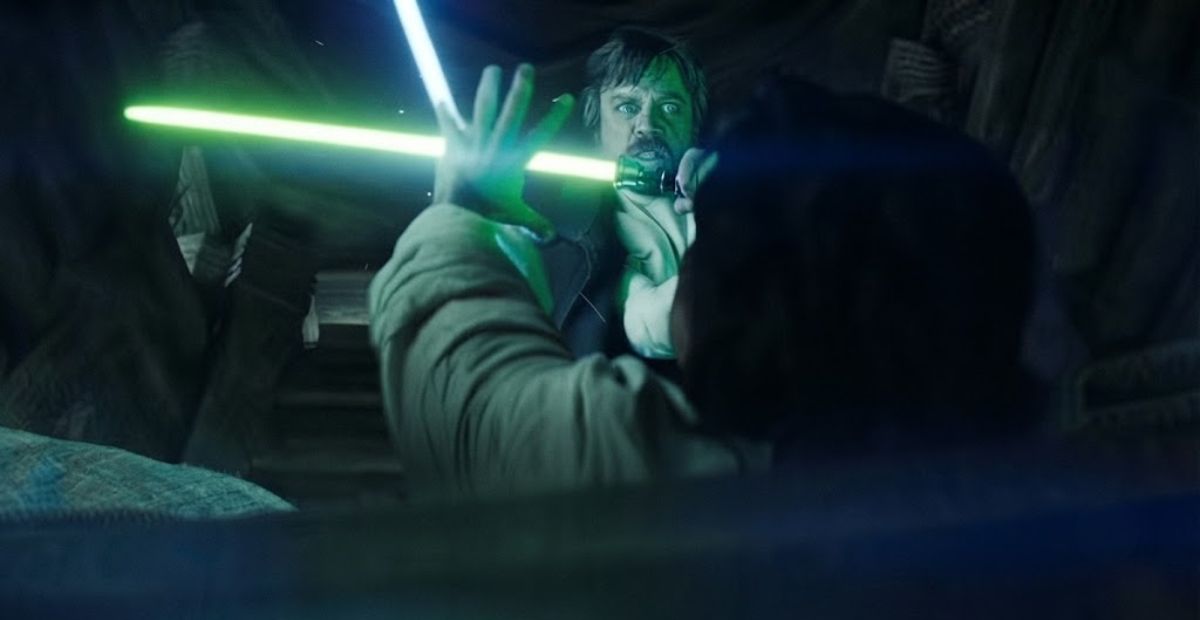
So when The Last Jedi showed Luke briefly considering killing Ben Solo in his sleep, Witwer did not feel that lined up with the Luke from the original films. The last major image of Luke under George Lucas was a man throwing down his weapon in front of the Emperor and refusing to kill his own father. Witwer’s point was that this version of Luke would not easily jump to harming his best friend and sister’s child.
He even joked that if Luke had made a mistake with Ben, he would probably keep reaching out through the Force until Ben answered, trying to talk him back instead of disappearing to die at the first Jedi Temple.
That part is important because Witwer was not only talking about Luke being older or broken. He was talking about what Luke normally does after failure. Witwer said that in his own life, overcoming challenges made him more likely to fight harder the next time, because he had already seen what it meant to get through something difficult. He saw Luke the same way: someone whose past victories should make him even less likely to give up completely.
Witwer also contrasted Luke with Han Solo. He said he could more easily understand Han becoming cynical and running away, because Han already had cynicism in him. That leap was easier for him to accept. Luke was different because Luke’s defining trait was compassion, especially toward someone as far gone as Darth Vader.
At the same time, Witwer did not dismiss the craft of The Last Jedi. He said that if someone wanted that version of Luke Skywalker, Mark Hamill’s performance and the way it was presented were very strong. His disagreement was with the character direction, not with the idea that nobody could enjoy it.