Saving Luke Skywalker gives Darth Vader one of Star Wars’ most moving endings. It becomes harder to celebrate, though, when you remember the people he chose to destroy. In Charles Soule and Giuseppe Camuncoli’s 2017 Darth Vader comic, he sacrifices an entire city to win a lightsaber. That story raises a difficult question: does returning to the light mean being forgiven for everything that came before?
The Jedi Vader Couldn’t Beat Head-On
The story begins shortly after Revenge of the Sith, with Vader still learning to move and fight in his armor. Obi-Wan has taken his old lightsaber, so Palpatine sends him to steal a surviving Jedi’s weapon and make its kyber crystal bleed, turning it Sith red.
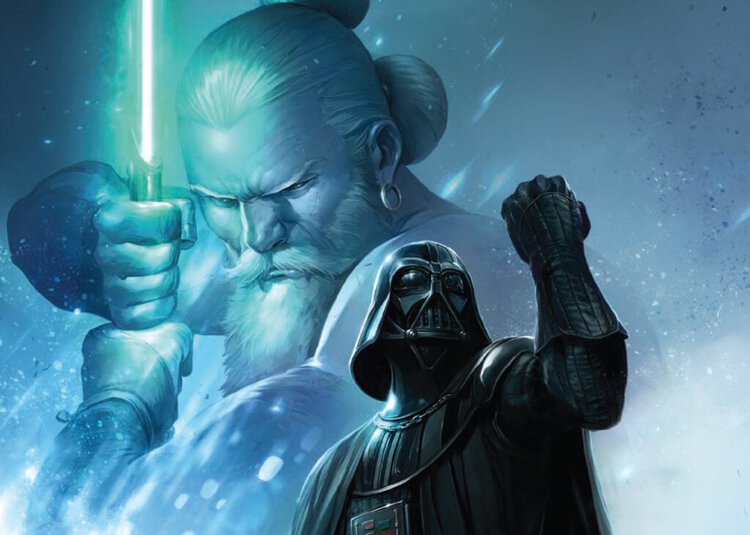
Vader targets Kirak Infil’a, a Jedi Master whose isolation under the Barash Vow helped him survive Order 66. Kirak proves more than capable of defending himself: he defeats Vader and throws him off a mountain, believing the fight is over.
Vader survives and repairs his damaged armor using parts from Kirak’s training droid, Arex. Anakin’s engineering skills are still there, but now they help him continue hunting a man who has already beaten him.
Vader Uses a City Against Him
Their next confrontation takes place at the dam overlooking Am’balaar City on Al’doleem in Darth Vader (2017) #4. When Kirak threatens to defeat him again, Vader turns his attention to the people nearby.
First, he throws security officers off the dam, forcing Kirak to save them. Then he damages the dam itself, making the Jedi divide his attention between their fight and the city below.
While Kirak struggles to hold back the water, Vader takes his lightsaber through the Force. Kirak pleads for the civilians’ lives, but Vader snaps his neck and releases the flood, destroying the city.
The civilians are part of Vader’s plan. He deliberately puts them in danger because he knows Kirak will try to protect them.

In an interview about the arc, Soule describes Vader as having “murdered an entire city,” including children. The weapon is his objective; the people who stand between him and that objective are disposable.
That makes Kirak’s defeat especially cruel. His compassion gives Vader an opening, but it also shows why he remains a Jedi. Even when his own life is at risk, saving strangers matters to him.
His Suffering Doesn’t Remove His Responsibility
By this point, Anakin has already helped destroy the Jedi Order and murdered younglings. Am’balaar does not reveal that he was secretly worse than the films suggested. It shows him continuing to choose cruelty after his fall.
There is time between his defeat and his return to repair his armor and pursue Kirak again. Once there, he recognizes the Jedi’s concern for others and exploits it. This is a deliberate strategy, rather than a momentary loss of control.
Palpatine’s manipulation, Padmé’s death, and Vader’s injuries help explain his state of mind. They do not make the decision to flood the city someone else’s responsibility.
Saving Luke Doesn’t Erase Am’balaar
The strongest objection to Vader’s redemption is understandable: why should saving his own son outweigh everyone he killed?
It doesn’t. Luke’s survival cannot bring back Kirak, rebuild Am’balaar, or undo decades of service to the Empire. The victims do not matter less because Vader finally saves someone the audience knows and loves.
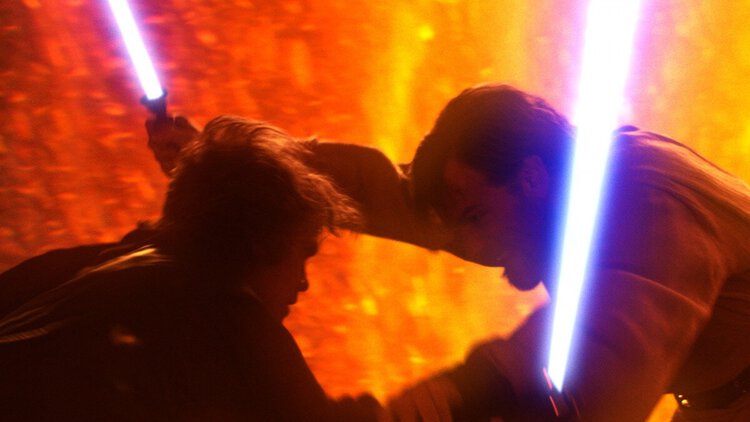
But Return of the Jedi does establish that Anakin turns back to the light. He intervenes when Palpatine tortures Luke, throws his master into the reactor shaft, and suffers fatal injuries from the Emperor’s lightning. The official Star Wars account describes this as a redeeming act, and the film ends with Anakin appearing alongside Obi-Wan and Yoda as a spirit.

His final choice changes who he is when he dies. It does not change what he did while he lived.
The ending gives Luke a chance to reach his father. It never shows Vader’s victims forgiving him, and his death leaves him no opportunity to face them or spend years making amends.
That is why the Am’balaar massacre makes the redemption debate harder without settling it. Anakin’s return to the light is part of the story; whether that feels like enough is a judgment viewers can still make for themselves.
Vader saves his son, and that matters. The city he drowned matters too.