Yoda was warned that a dark future was coming. By the end of the Clone Wars, the Jedi had also learned enough about the clones to know something was wrong.
So why didn’t Yoda stop Order 66 before it happened?
Yoda Had Enough Clues to Fear the Clones

The warning was not just one vague feeling in the Force. As the Clone Wars continued, the Jedi kept finding pieces of the same larger problem.
The clone army was created for the Republic, but the Jedi never fully controlled where it came from. Later, they discovered that every clone had an inhibitor chip inside his head, and one malfunction caused a clone trooper to turn on the Jedi and kill Master Tiplar. That alone should have made the army look dangerous, because it proved the clones could be made to attack Jedi without choosing it themselves.
Then the mystery around the army became worse. The Jedi learned that Dooku was connected to its creation, which meant the Sith had been much closer to the clone army than the Republic ever admitted. For an army fighting beside the Jedi on every battlefield, that was not a small detail.
Yoda also saw more through the Force. His vision showed him that darkness was coming, and by the end of the war, those warnings were no longer just about a possible future. The clones had hidden control chips, a Jedi had already been killed because of one, and the Sith were tied to the army’s origin.
Yoda may not have known the exact words Palpatine would use, but he had enough clues to know the clone army was part of something dangerous.
The Republic Could Not Simply Throw Away Its Army
Even if Yoda warned the Republic, the problem would not disappear.
The clone army belonged to the Republic. It was not something the Jedi could simply shut down on their own. By the time the warning signs became clearer, the Republic was already deep into a galaxy-wide war with the Separatists, and the clones were holding battlefronts across countless systems.
Removing them all at once would have left the Republic exposed.
That also made Yoda’s warning difficult to prove. If he told the Senate that the clones were secretly dangerous, many leaders would have had reason to doubt him. The clones had saved Republic worlds, fought beside Jedi generals, and carried the war effort from the beginning. To most of the Republic, they looked like loyal soldiers, not a hidden Sith weapon.
So even if Yoda suspected the clones were part of the trap, he did not have an easy way to act on it. The Jedi could not replace the army overnight, and the Republic could not stop fighting the war without giving the Separatists an opening.
That was part of Palpatine’s design. By the time the Jedi had enough reasons to fear the clones, the Republic already depended on them too much to let them go.
Yoda Feared Changing the Future
Yoda’s problem was not only the clone army. It was also what could happen if he tried to fight a vision of the future too directly.
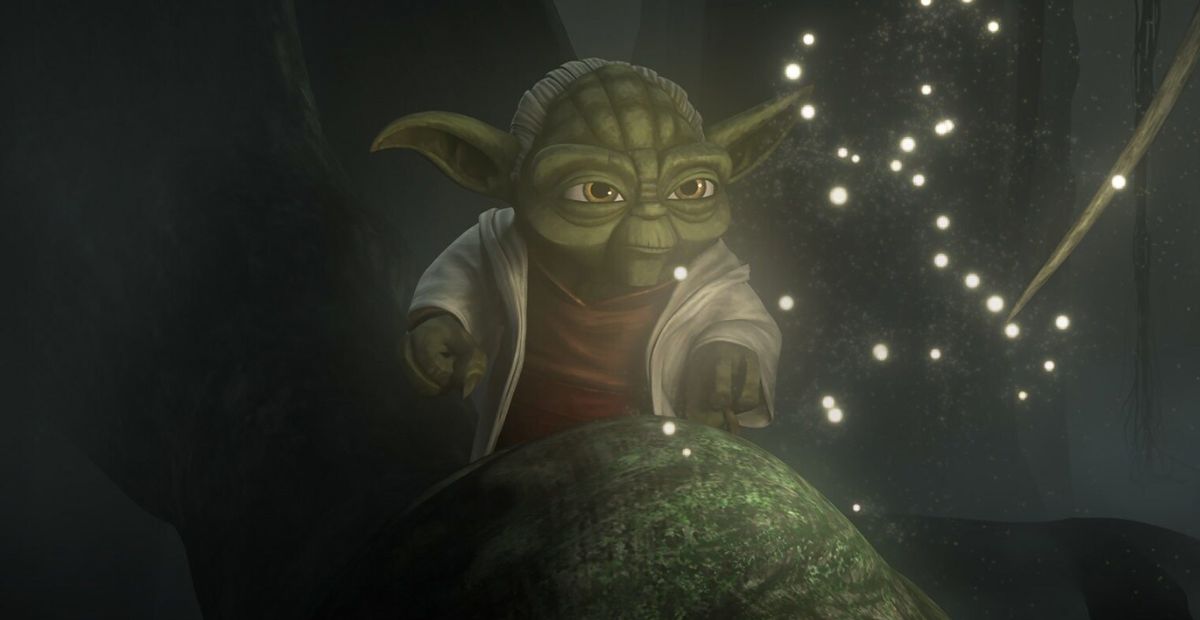
The Jedi had always treated visions carefully because they could lead someone into fear. Yoda understood that danger. In “Sharing the Same Face,” he reminded himself that “visions of the future were a dangerous lure,” and that many Jedi had been led the wrong way by trying to prevent what they saw.
Anakin became the clearest example of that. He saw death coming for someone he loved, tried to stop it, and his fear helped push him toward the dark side. Yoda may have feared that the Jedi could make the same mistake on a larger scale if they acted from panic over the clones.

There was another part of Yoda’s vision too. He was shown that the darkness ahead would not be the final end. A future still existed where Luke Skywalker would rise and the Sith would eventually be defeated.
Yoda may have believed that stopping the dark future too aggressively could also change the path that led to the Sith’s final defeat. He wanted to prevent what was coming, but he also knew that acting from fear could make the future worse.