
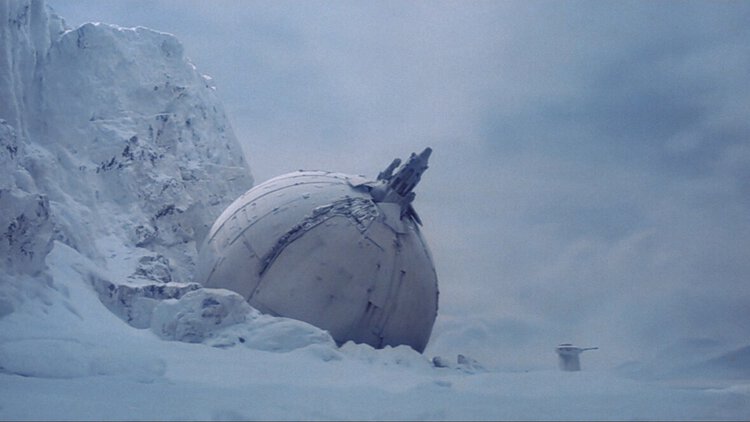
A few shots from a gun buried in the snow, and an Imperial Star Destroyer is suddenly out of the way. Hoth’s ion cannon makes one of the Empire’s most intimidating ships look surprisingly helpless. Watching that escape, it is hard not to wonder why every fleet did not build its whole strategy around the same trick. Why keep trading laser fire when you could shut the other ship down?
They Already Put Giant Ion Cannons on Warships
The Malevolence carried enormous ion cannons long before the Rebels evacuated Hoth. General Grievous used the Separatist heavy cruiser during the Clone Wars, knocking out Republic ships and leaving them open to attack. Its twin weapons were not a failed experiment that nobody could get working. They helped the ship devastate several Republic task forces.
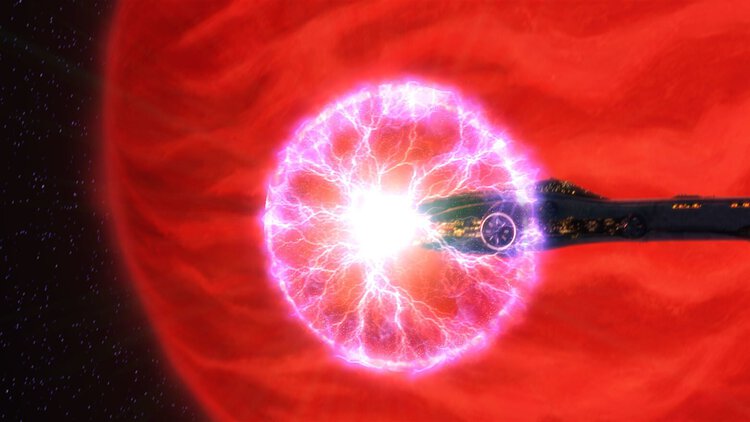
That changes the question. It is not really, “Why didn’t anyone use this in space?” They did. The useful question is why every warship did not become a giant ion-cannon platform.
Ion weapons also appeared on much more ordinary vessels. An Imperial I-class Star Destroyer carried ion cannons alongside turbolasers and tractor beams. The Empire was not overlooking a technology that the Rebels alone understood.
The weapons shared a basic job: disrupting electronic systems. But that does not make every ion cannon interchangeable. A small weapon and a huge capital-ship installation can use the same principle without delivering the same result. Simply having ion cannons aboard does not mean a ship can reproduce Hoth’s performance against any opponent with a few shots.
Hoth Needed an Escape Route, Not a Dead Star Destroyer
At Echo Base, the Rebels had a very specific problem. Imperial ships were waiting above the planet while transports tried to carry people and equipment out of a collapsing defense. The Rebels did not need to win a full fleet battle. They needed a gap in the blockade.
The v-150 Planet Defender gave them one. Under Toryn Farr’s coordination, it disabled the Star Destroyer Tyrant, allowing the first transport, Quantum Storm, to escape into hyperspace. The cheering in the command center is about the transport getting away, not the destruction of the Imperial fleet.

For that mission, disabling the enemy was enough. Once the transport had passed the blocking ship and escaped, the Rebels had achieved what they needed from that exchange. They did not have to stay nearby and finish the Star Destroyer off.
A fleet that remains in the battle has a different problem. Its commander has to decide what happens after an enemy loses power. Is there time to board it? Should another ship destroy it? Are other hostile vessels still able to shoot?
Hoth gives us a clear example of an ion cannon doing its job brilliantly. It does not establish a universal recovery time for ion damage, or show that one emplacement can switch off every ship in an entire blockade at once. A successful escape is not the same thing as winning every possible naval engagement.
Even the Malevolence Still Needed Other Weapons
Grievous’s cruiser gives us the clearest demonstration of how a huge ion weapon fits into a battle. Its attack had two distinct steps. First, its primary weapon knocked out a target’s power systems. Then its secondary laser cannons and turbolaser batteries destroyed the defenseless ship.
The ion cannon created the opening. The other weapons exploited it.
That is not a sign that ion cannons were weak. Leaving a warship unable to fight back is an enormous advantage. But Grievous still wanted his targets destroyed, and the cruiser carried weapons for that part too.
Different commanders could use the same opening differently. A force trying to capture a vessel might value an intact hull. A transport escort might only need enough time to leave. An attacker trying to eliminate a hostile warship has a reason to follow the disabling shot with destructive fire. Those are different objectives, even when the first shot looks similar.
Replacing every other weapon with more ion cannons would not automatically serve all those objectives. Nor does Hoth demonstrate that any ion bolt will disable any shielded target regardless of the weapon’s size or the circumstances. The ships we actually see combine systems rather than treating one impressive effect as a substitute for everything else.
The Republic Found a Way to Hit the Giant Gun
The Malevolence was dangerous enough that Anakin’s first plan was to strike its bridge with Y-wing bombers. In Shadow of Malevolence, that plan became too costly as the attacking squadron suffered heavy losses. Reaching the ship did not make the giant ion cannon harmless to small craft.
Anakin changed targets. Instead of continuing toward the bridge, the remaining bombers attacked the starboard ion cannon with torpedoes.

The strike damaged the weapon while it was charging. When Grievous ordered it to fire, the cannon overloaded, setting off an explosion that knocked out both ion cannons and damaged the cruiser’s hyperdrive. The medical facility survived, and Republic warships arrived to pursue the wounded ship.
The battle shows that an enemy can adapt to a powerful weapon and attack the hardware behind it. The Separatists had built a frightening ship, not an unbeatable one.