
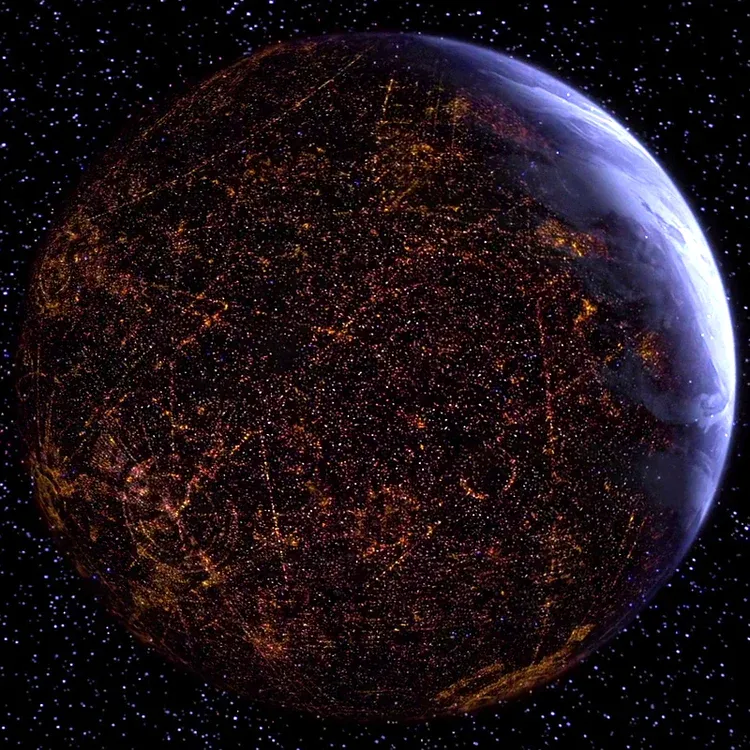
Coruscant has one of those Star Wars problems that gets funnier the longer you stare at it.
The whole planet is city. Not “a big capital with suburbs.” Not “New York but larger.” Coruscant is a planet-wide stack of skylanes, towers, underlevels, factories, ports, apartments, Senate districts, crime dens, luxury penthouses, and people. Sooner or later, the obvious question hits:
Where is the food?
The short answer is simple: Coruscant eats because the rest of the galaxy feeds it.
Canon backs up the broad answer. Coruscant is a city-covered world, and its listed major imports include foodstuffs. That one detail explains a lot. Coruscant is not a self-sufficient planet with normal farms and open countryside. It is the galactic capital, a political and economic monster kept alive by constant shipping, specialized food worlds, massive ports, industrial processing, and probably a lot of lower-level food that nobody wants to think about too long.
Coruscant Is Not Just A Big City
To understand the food problem, you have to remember what Coruscant actually is.

Coruscant is an ecumenopolis, meaning the planet is essentially one huge city. The StarWars.com Databank describes Coruscant as the capital of the galaxy during the age of the Empire, with citizens spread across hundreds of levels. Wookieepedia describes its population as trillions of beings from all over the galaxy.
That matters because the Reddit version of the question often jumps straight to “quintillions.” That is a fun exaggeration, but “trillions” is already ridiculous enough. Feeding a few billion people on Earth is hard. Feeding trillions on a planet with no normal farmland is a nightmare wearing a Senate robe.
And Coruscant’s class structure makes it even messier. The rich live high above the pollution, closer to sunlight, clean air, luxury towers, and elite districts. The poor live lower, sometimes far below the shiny version of the planet we see in the prequels. So even if Coruscant has food, the real question becomes: what kind of food, for whom, and at what quality?
The Canon Answer Starts With Imports
The cleanest canon answer is right there in Coruscant’s basic profile: one of its major imports is foodstuffs.
That sounds boring until you realize how much it solves. Coruscant does not need wheat fields, oceans full of fish, or open ranch land if it can pull food from thousands of worlds. It is the capital, the administrative heart, and one of the most important trade hubs in galactic history. Food can be grown elsewhere, packed elsewhere, frozen elsewhere, shipped through hyperspace, inspected at ports, taxed, processed, distributed, and sold across the planet’s levels.
Basically, Coruscant works like a real mega-city, but scaled up until it becomes absurd. New York does not grow enough food inside Manhattan to feed itself. Tokyo does not rely on rooftop gardens alone. They survive because supply chains bring food in constantly. Coruscant is that idea pushed to Star Wars size: a whole planet acting like the center of a galactic supply web.
That also explains why Coruscant can exist at all. It sits at the heart of galactic power and trade. If any planet could demand endless shipments of grain, meat, produce, processed meals, luxury imports, and emergency rations, it would be the planet where the Senate, the Jedi Temple, the Imperial Palace, and the galaxy’s biggest bureaucrats all lived.
Star Wars Has Entire Planets Built To Feed Other Planets
One of the easiest things to forget about Star Wars is that planets often act like specialized economies.
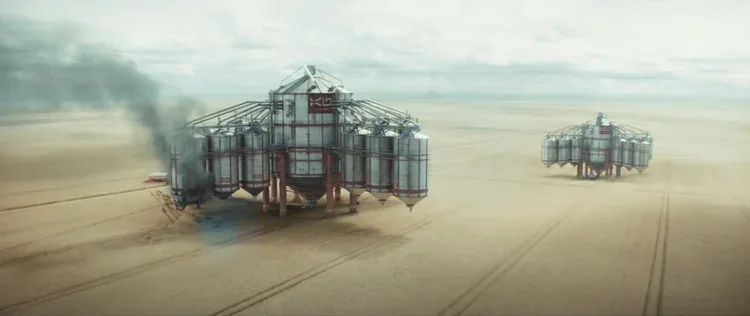
Some worlds are industrial. Some are mining worlds. Some are fortress worlds. Some are political centers. And some are agriworlds, planets whose entire job is producing food.
That makes Coruscant’s setup feel less impossible. A city-world does not need to be balanced the way a normal planet would. It can outsource agriculture to worlds with soil, water, space, and lower population density. Those worlds grow the food. Coruscant consumes it.
It is not romantic, but it is very Star Wars. The galaxy is full of planets that seem to have one big job. Coruscant’s job is power. Food worlds’ job is keeping places like Coruscant from starving.
Legends Gives The Smoking Gun: Uphrades
Canon gives us the import answer. Legends gets even more direct.
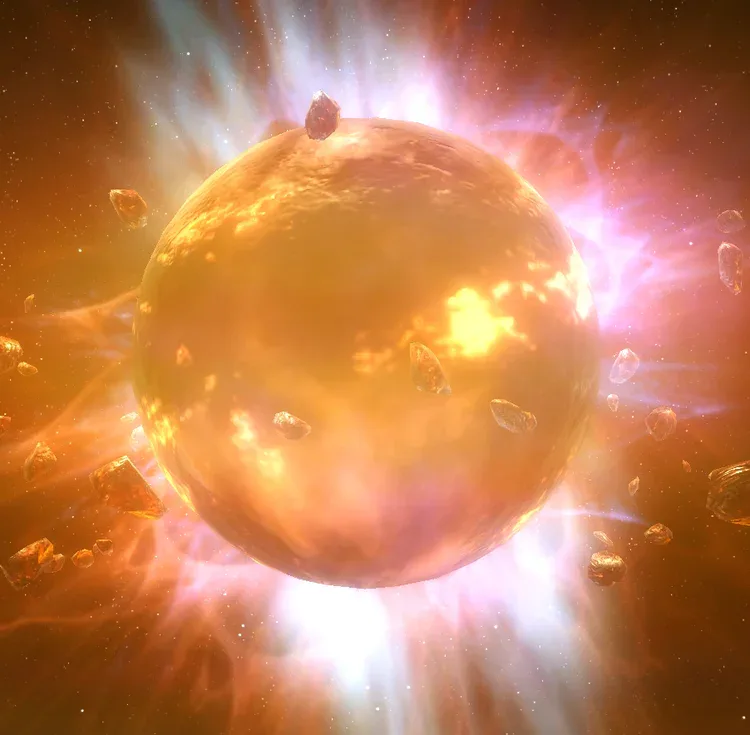
In Legends/SWTOR-era material, Uphrades was a fertile agriworld that supplied Coruscant with much of its food. It was even known as “Coruscant’s Granary.”
That nickname is basically the answer fans are looking for. At least in Legends, Star Wars openly had the concept of a major food-supply planet feeding the capital. Coruscant was not magically creating dinner out of skylane traffic. It depended on agricultural worlds.
Uphrades also shows the dark side of the system. If one of your food worlds gets devastated, blockaded, occupied, or politically cut off, the capital feels it. A city-planet with trillions of people is powerful, but it is also a hostage to logistics. The Empire can have Star Destroyers, stormtroopers, and secret prisons, but someone still has to deliver breakfast.
Coruscant Probably Produces Some Food Locally Too
Imports are the main answer, but Coruscant probably does not import every single edible thing in finished form.
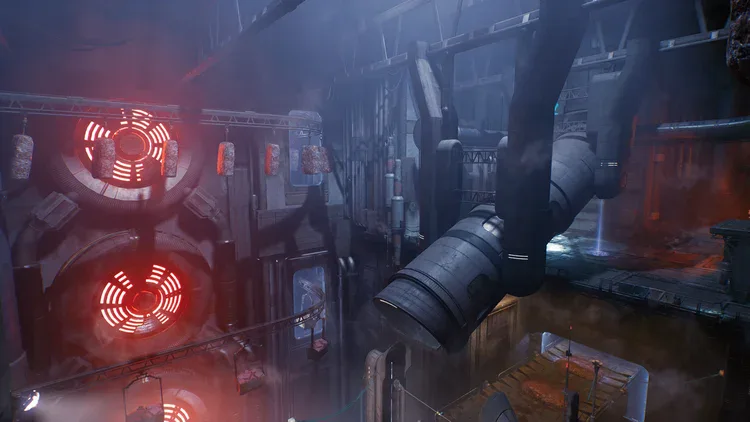

Canon gives us a nasty little clue through Undercity Meats, a location on Coruscant seen in Star Wars Jedi: Survivor. It produced low-grade protein snacks, which is exactly the kind of detail that makes the city-world feel more believable.
That does not mean Coruscant has hidden countryside under the Senate District. It means some imported organic material, livestock, protein, or raw food supply can be processed on-world. Food might arrive frozen, dried, packed, grown in controlled environments, or shipped as raw material before being turned into whatever people actually eat.
And this is where the class divide probably becomes ugly.
The wealthy upper levels can plausibly get fresh imported fruit, rare meats, expensive off-world delicacies, and restaurant meals from places like Dex’s Diner. The middle levels probably get normal processed food and standard imports. The lower levels? That is where cheap protein snacks, industrial meals, questionable meat, and vat-grown food start sounding a lot more believable.
Coruscant might have food for everyone, but that does not mean everyone is eating the same kind of food.
What About Hydroponics, Vats, And Vertical Farms?
This is where the fan answers make sense, even when canon does not spell every detail out.
Hydroponics, vertical farms, artificial-light agriculture, vat-grown protein, and synthetic food all feel completely plausible on Coruscant. If the galaxy can build hyperspace engines, clone armies, bacta tanks, and planet-sized cities, it can probably grow lettuce under lamps and make protein paste in a factory.
But those systems are probably supplements, not the full solution.
Hydroponic farms still need space, power, nutrients, water, maintenance, and distribution. Vat-grown protein still needs raw inputs. Even if Coruscant is extremely efficient, feeding trillions would require a scale so absurd that imports still make the most sense as the foundation.
So the best fan explanation is probably a layered one:
- bulk food comes in from agriworlds and trade routes
- raw material gets processed in massive facilities
- cheap protein and industrial food cover the lower levels
- hydroponics and vertical farms supplement local demand
- the rich buy the best imports, while everyone else eats whatever the system can push downward
That feels much more believable than one single magic answer.
The Gross Part: Waste Has To Go Somewhere
If trillions of beings eat, trillions of beings also produce waste.
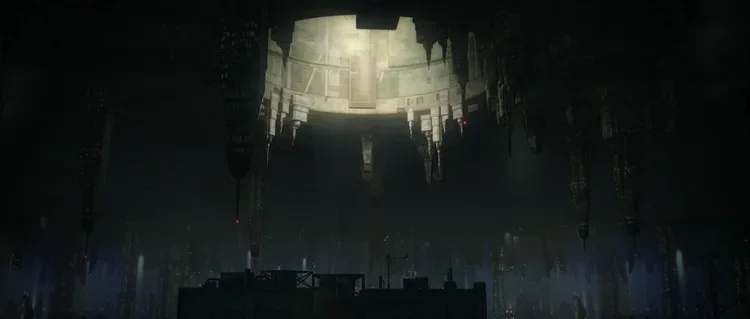
Canon does not give us a neat diagram of Coruscant’s sewage and fertilizer economy, which is probably for the best. But logically, a city-world like Coruscant would need aggressive recycling. Water, organic waste, food scraps, industrial byproducts, and biomass would all have to be reused, processed, exported, or turned into something useful.
The Reddit-style version of the answer is funny because it is probably close to the truth: food comes in, waste goes somewhere, and the whole machine keeps running because it has to. A planet-city cannot afford to be casual about garbage. If the trash system fails on Coruscant, it is not a local inconvenience. It is a planetary disaster.
And yes, some of that waste could plausibly end up back in the agricultural chain as fertilizer or raw organic material. That is not glamorous Star Wars, but neither is tax policy, and the prequels still made that important.
The Real Horror Is The Supply Chain
The scariest part of Coruscant is not that it has no farms. It is that it needs everything to keep moving.
A normal planet can survive some disruption if it has local agriculture, local water, and enough stored supplies. Coruscant is different. The more urbanized it becomes, the more it depends on ships, ports, trade routes, storage depots, distribution networks, and political control.
That makes blockades terrifying. It makes hyperspace routes important. It makes port authorities, import taxes, and shipping delays matter more than they sound like they should in a space fantasy.
It also makes the Trade Federation era feel less silly in hindsight. Star Wars politics often revolve around trade routes, blockades, taxation, shipping, and control of supply. On a planet like Coruscant, those are not background details. They are survival mechanics.
If the food stops coming, Coruscant does not just get hungry. It panics by the trillion.
So How Does Coruscant Eat?
Coruscant eats because it is the center of a galaxy-wide machine.
Canon tells us the planet imports foodstuffs. Legends gives us a direct food-world example with Uphrades, “Coruscant’s Granary.” Canon also shows on-world food processing through places like Undercity Meats. Fan explanations like hydroponics, vat-grown protein, and recycling make sense as supporting systems, especially for a planet with hundreds of levels and brutal class divides.
So the real answer is not one thing. It is all of it at once: agriworlds, freighters, ports, factories, protein plants, hydroponics, recycled organics, luxury imports, cheap lower-level food, and a supply chain so huge that most citizens probably never think about it until something goes wrong.
Coruscant is not self-sufficient. It is the galactic capital because the galaxy keeps feeding it.
And if those supply lines ever truly broke, the planet-sized city would become a planet-sized panic attack.