
Yellow lightsabers are one of those Star Wars details that make fans stop scrolling because they feel important. Blue and green became the default Jedi look. Red became the Sith alarm bell. Purple became Mace Windu’s whole thing. But yellow? Yellow always feels like the story is trying to tell us, “pay attention, this one is different.”
That is why the High Republic makes the question even stranger. During that era, Jedi visuals are much more varied. You see gold and yellow blades pop up more naturally, including Jedi like Loden Greatstorm. Then by the prequel era, yellow is suddenly not something we see regular Jedi swinging around in the films. Instead, it is mostly attached to the Jedi Temple Guards and their pikes.
So what happened? The clean answer is: canon has not given one hard rule saying yellow lightsabers were banned, retired, or phased out. The most convincing explanation is a mix of three things: real-world movie color language, canon specialization around the Temple Guards, and a strong fan read that the Jedi Order became more standardized and rigid as it moved toward the Clone Wars.
First, There Is No Canon Rule That Yellow Sabers “Went Away”
This is the part fans have to separate right away: yellow lightsabers becoming uncommon is not the same as yellow lightsabers being forbidden.
Canon still has yellow blades. The High Republic includes Jedi with yellow or golden lightsabers. StarWars.com’s High Republic character material describes Loden Greatstorm’s saber as glowing with a golden yellow light. The prequel-era Jedi Temple Guards carry yellow-bladed lightsaber pikes. Luke Skywalker has a canon yellow lightsaber in the Marvel comics era between The Empire Strikes Back and Return of the Jedi. Rey’s final lightsaber at the end of The Rise of Skywalker is yellow.
So yellow did not disappear from the galaxy. It became rare on screen, and in the prequel-era Order it seems to have become more associated with a special role than with everyday Jedi identity.
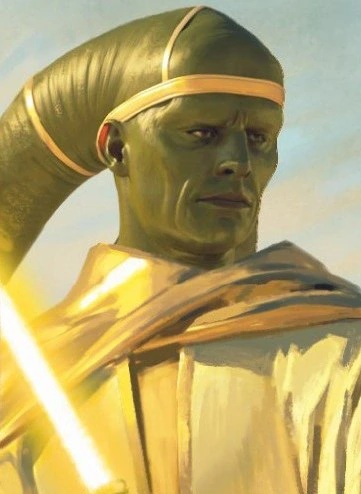
That difference matters because Star Wars fans often want one tidy in-universe answer: “the Council banned it,” “the crystals ran out,” “yellow meant a certain Jedi class,” or “only guards were allowed to use it.” Those are tempting answers, but current canon does not land that cleanly. The better answer is less like a decree and more like a trend.
The Real-World Answer: The Movies Trained Us To Expect Blue And Green
Before the lore explanation, there is a blunt production-history answer: the original films established a very simple color language.
Jedi heroes used blue. Sith villains used red. Then Luke’s green blade arrived in Return of the Jedi, partly because it read better visually against the bright Tatooine sky and also because it gave Luke a new, completed-Jedi look. From there, the films taught audiences that Jedi sabers were mostly blue or green.
That is not a deep mystical rule. It is filmmaking. Star Wars uses color very aggressively. Red tells you danger and Sith. Blue and green tell you Jedi. Purple exists because Samuel L. Jackson wanted a purple lightsaber and George Lucas let Mace Windu stand out. Yellow simply was not one of the main movie colors for Jedi during the era that defined the public’s visual language for the franchise.
That is why the High Republic feels different. It was built later, in books, comics, reference art, and animation-adjacent material where creators had more room to visually diversify the Jedi. The High Republic is also set centuries before the prequels, so it can intentionally feel like a brighter, more expressive version of the Order before the Clone Wars era tightens everything up.
So if you are asking, “Why didn’t we see many yellow lightsabers after the High Republic?” one boring-but-true answer is: because the movies had already made blue and green the normal Jedi colors, and later canon had to work around that visual inheritance.
Canon Makes Yellow Feel Specialized Through The Temple Guards
The strongest in-universe anchor is the Jedi Temple Guard.
StarWars.com’s Databank describes the Jedi Temple Guards as anonymous protectors of the Jedi Temple who carried imposing lightsaber pikes with rare, distinctive yellow blades. Wookieepedia’s canon pages line up with that: the Temple Guards are Jedi Order security figures, masked and anonymous, and their lightsaber pikes produce yellow blades.

That is a huge clue for how yellow functions by the prequel era. It is not just another fashion choice. It has become ceremonial, institutional, and tied to a specific duty. The Guards do not look like individual Jedi heroes expressing their personality. They look like the Order turning a Jedi into a role.
That is why yellow hits differently on a Temple Guard than it does on a High Republic Jedi. In the High Republic, yellow can feel like one color among many in a big, confident Jedi golden age. In the late Republic, yellow feels almost locked inside the Temple itself. It is still Jedi, but it is formal. It belongs to the masked protectors standing between the Order and the outside world.
Canon does not say a regular Jedi could never build a yellow saber during the prequel era. But the storytelling pattern makes yellow visually special. When fans ask why we do not see many yellow blades after the High Republic, this is probably the best canon-friendly answer: by the prequel era, yellow appears to be strongly associated with Temple Guard service rather than being a common field-Jedi blade color.
The Best Fan Explanation: The Jedi Order Got More Standardized
This is where the fan theory gets convincing — as long as we label it as fan interpretation, not confirmed canon.
The High Republic Jedi often feel more individual, more optimistic, and more connected to different corners of the galaxy. Their robes, ships, outposts, missions, and visual designs sell the idea of an Order at its height. It makes sense that their lightsabers would feel more varied too. The whole era is built to feel expansive.
By the time of the prequels, the Jedi are still powerful, but they are also more centralized, more political, and more institutional. They operate from Coruscant. They answer to the Senate in practice, even if they are supposed to serve the Force. Their traditions are stricter. Their anxieties are louder. Their ability to recognize the Sith plot right under their noses is weaker.
So fans read the color shift as symbolic: yellow did not vanish because someone flipped a switch. Yellow became uncommon because the Order itself became narrower.
That interpretation fits the tragedy of the prequels. The Jedi are not evil, and the point is not “yellow good, blue/green bad.” The point is that the late Republic Order looks less like a broad spiritual movement and more like a uniform institution. If most Jedi are carrying blue or green blades, while yellow is mostly seen with anonymous guards, that visual pattern supports the larger theme: individuality is being compressed into roles and rules.
Again, canon does not spell that out as a lightsaber-color policy. But as a story read, it works. It explains why fans feel the difference even if no character sits down and says, “The Council has reduced yellow saber usage by 73 percent.”
The Legends Answer Is Cleaner
Legends gives fans a much tidier explanation, especially through old games and Expanded Universe material. In that framework, saber colors were often associated with Jedi paths or classes: Guardians leaned blue, Consulars leaned green, and Sentinels were associated with yellow.
That is probably why a lot of longtime fans instantly connect yellow with Jedi Sentinels — the more balanced, investigative, practical Jedi type. It is a cool idea, and it absolutely shaped how many fans think about yellow sabers.
But this needs the big caution label: that Sentinel color-coding is Legends, not the clean current-canon explanation. Canon can borrow vibes from Legends whenever Lucasfilm wants, but we cannot say modern canon confirms “yellow means Sentinel” as the answer to the High Republic question.
The Legends version is useful because it shows why yellow feels like it should have a job. Fans are not imagining that. Star Wars has trained people for decades to look for meaning in saber colors. But if we are being strict, the current canon answer is looser: yellow exists, it is rare, and the prequel-era Order most clearly ties it to Temple Guards.
Rey’s Yellow Saber Proves The Color Still Means “Something Different”
Rey’s yellow lightsaber is a nice final piece because it shows yellow still has power as a storytelling choice.
At the end of The Rise of Skywalker, Rey ignites a yellow blade after burying Luke and Leia’s sabers. Whatever fans think of the movie, the visual language is obvious: she is not simply copying Luke’s blue or Leia’s blue. She is marking a new chapter. The yellow blade tells the audience this is a Jedi future, but not just a repeat of the old Order.

That makes yellow feel consistent across eras. In the High Republic, it helps the Jedi feel varied and golden-age adventurous. In the prequel era, it becomes rare and institutional through the Temple Guards. With Rey, it becomes a symbol of renewal, something familiar enough to feel Jedi, but different enough to suggest a new path.
That does not answer every lore question about crystal availability or training traditions. But it does explain why yellow keeps showing up when Star Wars wants a Jedi to feel unusual.
So Why Don’t We See Many Yellow Lightsabers After The High Republic?
The best answer is not that yellow was banned. It is not that every yellow crystal disappeared. And in current canon, it is not simply “yellow means Sentinel.”
The best answer is this: yellow lightsabers became rare because Star Wars’ main film language centered Jedi around blue and green, while canon later made yellow feel specialized through the Jedi Temple Guards. The High Republic shows a more visually varied Jedi Order, and fans reasonably read the later lack of yellow as part of the Order becoming more standardized by the prequel era.
That is the cleanest version because it respects all three layers: production history, canon facts, and fan interpretation.
Yellow never stopped being Jedi. It just stopped being ordinary. And honestly, that is probably why fans still care about it so much.
