
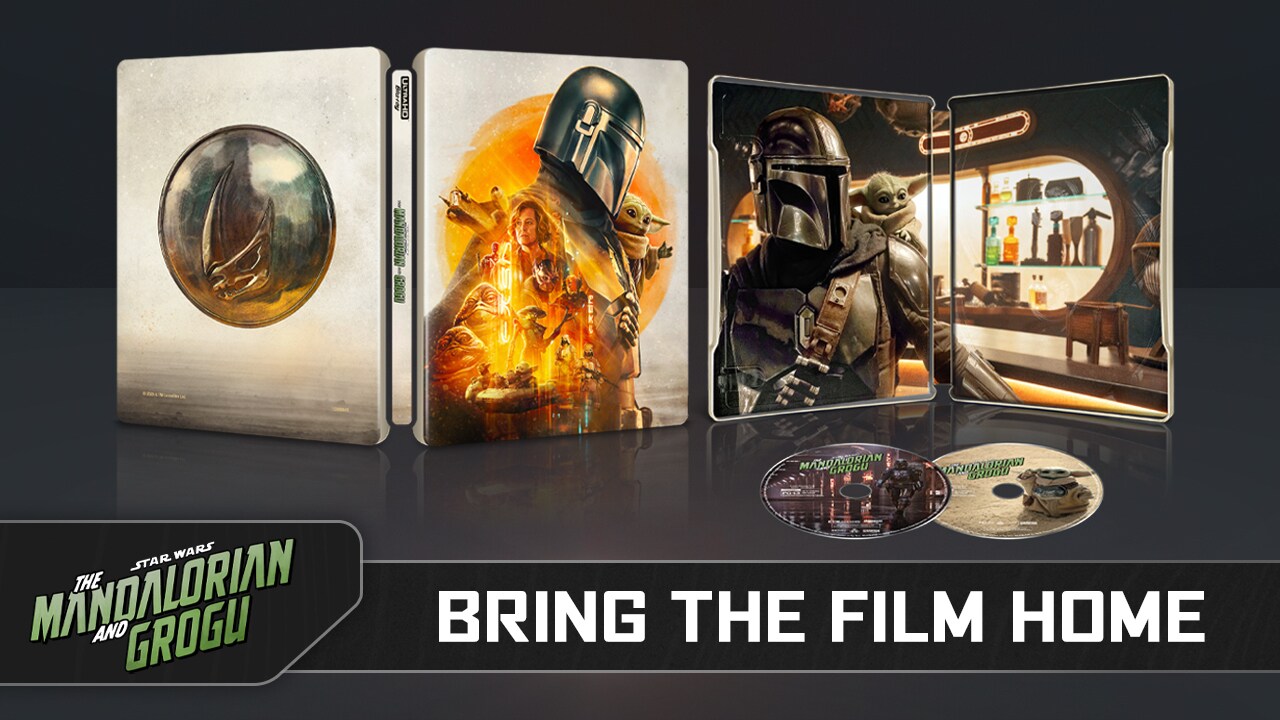
Star Wars announced home release dates for The Mandalorian and Grogu, and the specific phrasing sparked the most intense debate among fans.
The choice of verbs stood out.
Official promotional copy urged fans to “Buy” the movie on digital July 21, and “own it” on 4K Ultra HD August 25. That contrast, shifting from purchasing access to owning an object, caught attention immediately. Fans have spent years “buying” digital movies, games, and books, only to realize that access depends on active storefronts, user accounts, and behind-the-scenes licensing deals.
Lucasfilm likely wrote the copy for marketing purposes, and it accidentally highlighted why physical media remains vital. Digital is convenient, and a physical disc stays on your shelf permanently.
Release Dates and Collector Lineup
According to the official StarWars.com announcement, Star Wars: The Mandalorian and Grogu hits digital platforms, including Amazon Prime Video, Apple TV, and Fandango, on July 21. The physical releases follow on August 25 on 4K Ultra HD and Blu-ray.
The physical release targets collectors with options like a Beskar Collector’s Edition and SteelBook packaging featuring metal posters, 4K UHD, Blu-ray, and digital codes. Both digital and physical versions promise hours of extras, including featurettes and audio commentary from director Jon Favreau. The film features Din Djarin and Grogu alongside Colonel Ward (Sigourney Weaver) and Rotta the Hutt (voiced by Jeremy Allen White).
Notably, the announcement omits a Disney+ streaming date. Fans will need to decide whether to pay for an early digital purchase, wait for the physical disc, or hold out for an unannounced streaming window.
The Wording That Sparked Discussion
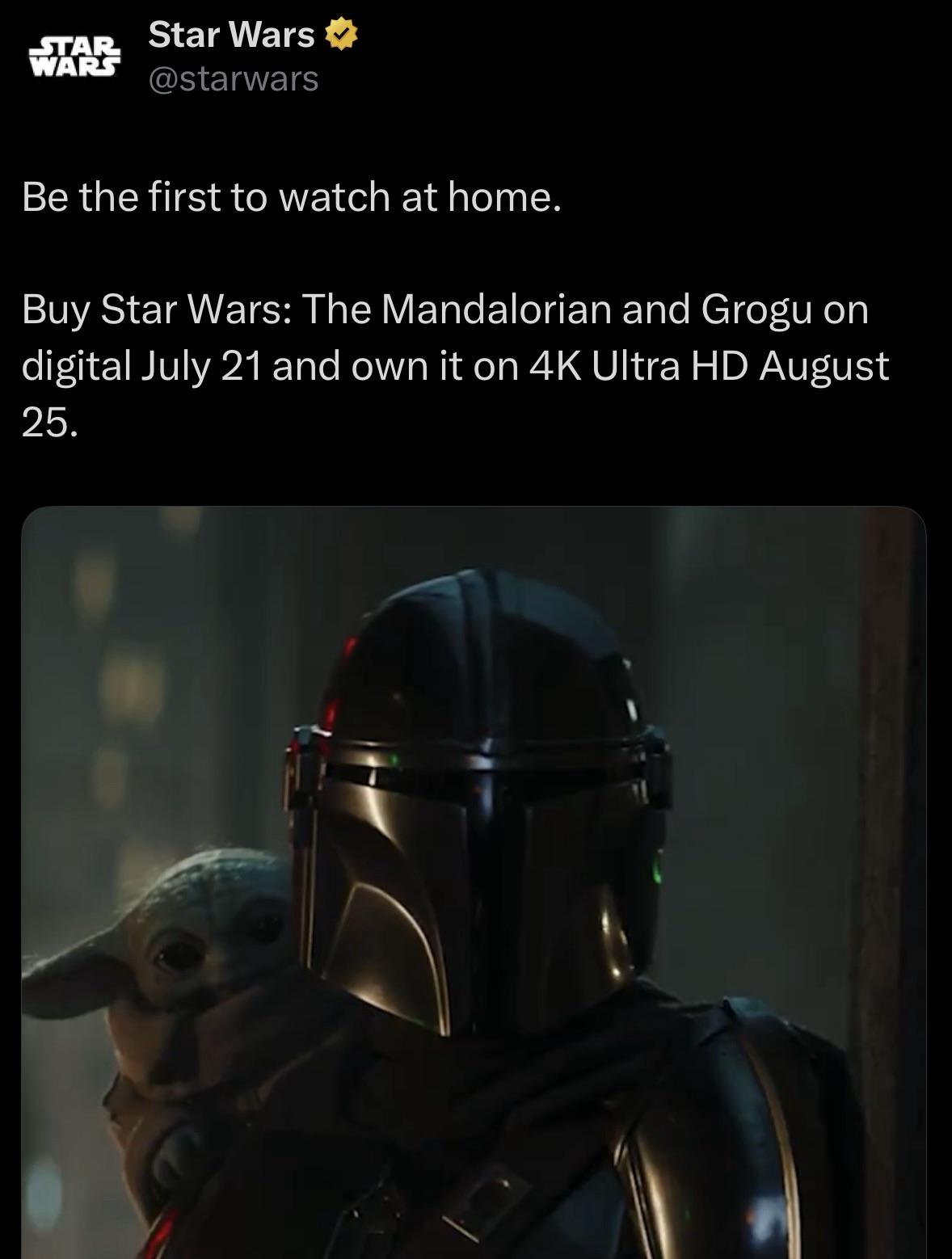
The exact marketing copy reads: “Be the first to watch at home. Buy Star Wars: The Mandalorian and Grogu on digital July 21 and own it on 4K Ultra HD August 25.”
In basic marketing, “buy” and “own” are often used interchangeably. Placing them side-by-side highlights a distinct difference. You buy temporary digital access, and you own the physical disc.
Fans on social media quickly pointed out past instances where digitally purchased movies or games vanished after licensing deals expired. A digital library depends on company stability, storefront apps, platform compatibility, and user accounts.
This dynamic is already drawing legal attention. California’s AB 2426 law requires digital storefronts to state clearly when a “purchase” is actually a revocable license. The copywriters may have simply varied their phrasing to market collector items, and fans recognized the real distinction right away.
Physical Possession vs. Digital Licensing

Disney retains all copyrights and intellectual property rights to The Mandalorian and Grogu. However, buying a 4K disc gives you ownership of the physical object.
That physical copy remains yours even if a server shuts down or a licensing contract changes. You can lend it, resell it, or play it offline as long as you have compatible hardware. Physical discs move control back to the buyer.
Physical media also preserves specific cuts, audio mixes, and bonus content without the risk of automatic digital updates or edits. For Star Wars fans, physical releases double as memorabilia, complete with steelbooks, artwork, and physical displays.
Digital options offer fast access starting July 21 and save shelf space. Physical options on August 25 offer permanent media control. The marketing campaign managed to sum up both choices in a single line. “Buy” convenience now, or “own” the physical copy later.