
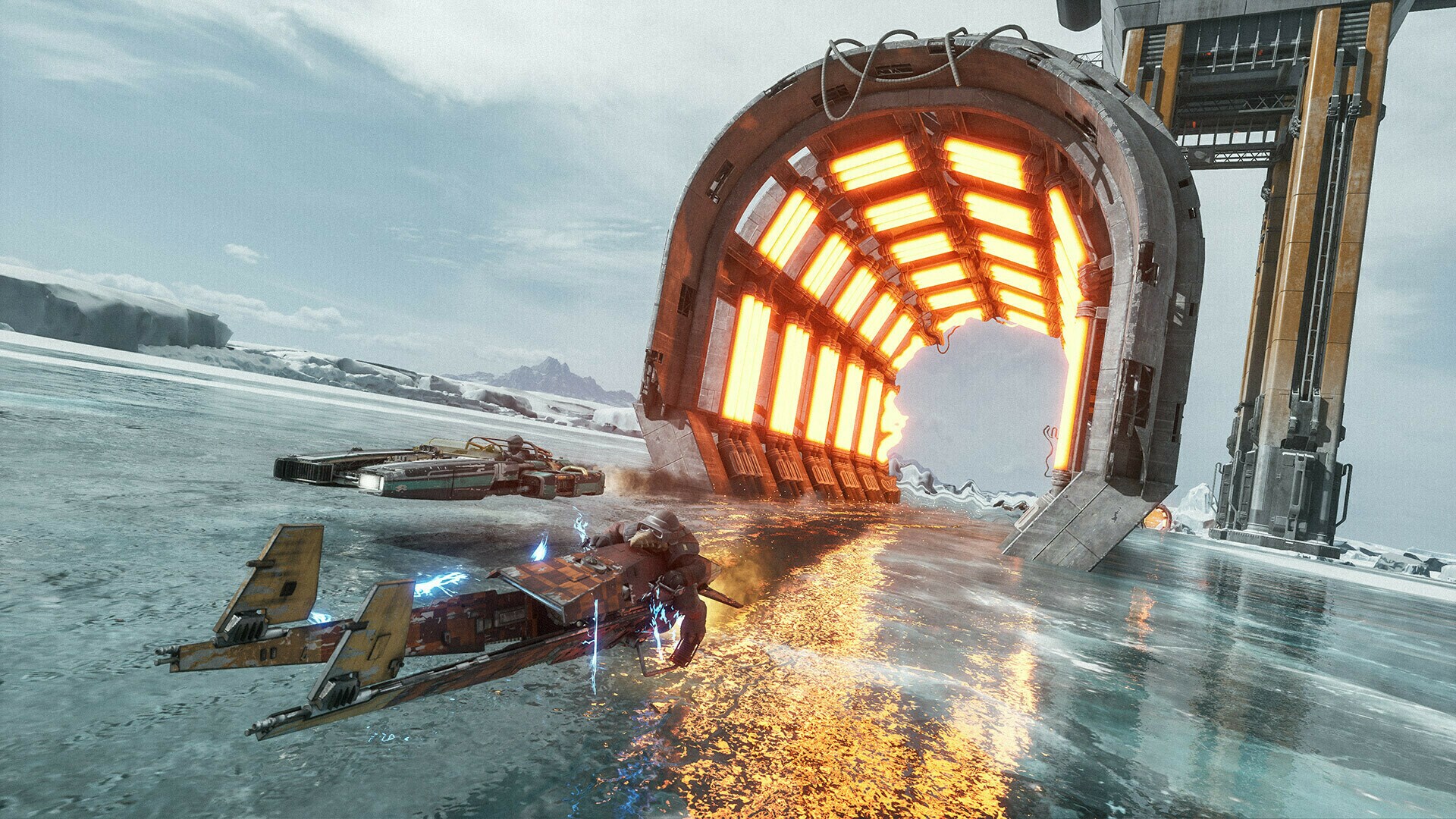
A racing game has put Star Wars back near the top of the review charts. Star Wars: Galactic Racer earned a reported Metacritic score of 88, leading Forbes to call it the franchise’s best-reviewed game in 23 years.
How Galactic Racer Compares with Other Star Wars Games
According to Forbes’ October 2 report, Galactic Racer’s 88 Metascore puts it above several recent Star Wars releases, including Star Wars Zero Company at 86, Jedi: Survivor at 85 and LEGO Star Wars: The Skywalker Saga at 82.
The older benchmark is Knights of the Old Republic. BioWare’s 2003 RPG earned 94 on the original Xbox, so Galactic Racer has not taken its crown.
There is one exception worth keeping in view: Star Wars Pinball: Balance of the Force scored 88 on Xbox 360 in 2013. Including that table pack means Galactic Racer ties a more recent release. The 23-year claim therefore needs that qualification, but it does not change the broader point: this is an unusually strong reception for a new Star Wars game.
The figure is also a critic aggregate, not a player score. Metacritic scores can differ between platforms and change as reviews arrive, so the 88 should be understood as the score reported at that point.
Critics Are Praising More Than the Star Wars Setting
The reviews help explain why Galactic Racer has attracted so much attention. Radio Times gave it five stars, praising the racing, customization and sense that decisions have consequences. Forbes also highlighted GameSpot’s 9/10 review, which praised its speed and the satisfaction of learning and improving between runs.
That matters because a familiar planet or a Sebulba appearance can get fans interested, but neither can carry a racing game on its own. The praise is largely about what happens behind the controls: how the vehicles handle, when to take risks and how your setup affects the next race.
Galactic Racer connects those choices through a campaign built around racing tours. You select events as you progress through the Galactic League, fit parts to your vehicle and try to keep the attempt alive. Crash too often and the tour ends.
An aggressive move can therefore cost more than a few seconds. You might gain a position by forcing your way through a narrow gap, but a wreck could put the rest of the tour in danger. Upgrades matter for the same reason: improving handling or acceleration helps you prepare for the events ahead.
Failure does not erase all your progress. Certain perks and unlocks carry into later attempts, letting you rebuild and try another approach. For players who enjoy experimenting, that creates a reason to return beyond chasing a faster lap.

The Vehicles and Tracks Give Those Choices a Purpose
Different vehicle classes demand different driving habits. As explained in the official reveal coverage, skim speeders favor smooth racing lines and preserved momentum, while speederbikes lean more heavily on braking into corners and accelerating out.
That makes learning a vehicle more involved than checking its top speed. When different classes share a race, competitors may brake and turn at different points, creating opportunities to pass or collide.
Track conditions add another challenge. Radio Times highlighted weather, malfunctions and faulty parts as reasons to adjust your strategy. A setup that feels comfortable in one event may need changes for another, giving customization a practical role.
The locations include Jakku, Ando Prime, Tatooine, Sentinel I, Lantaana and Derven Acos, with Crait joining the lineup at launch. Ice, heat and hazardous environments help make those destinations feel different during a race, rather than simply changing the scenery.

A Racing Campaign with Characters Worth Following
The campaign follows Shade, a challenger with a personal grudge against the Bool family. Galactic League champion Kestar Bool uses his position to intimidate other racers, giving Shade a rival whose influence reaches beyond the track.
Between tours, you visit paddocks where racers share stories, offer support and issue challenges. Hibi, Shade’s Ardennian mechanic, fits parts earned during runs or purchased from her workshop. Those quieter moments give the competition some personality and make the League feel like a place with relationships and rivalries.
Sebulba also returns, with Shade needing to earn the veteran podracer’s respect. He fits naturally into a story about dangerous racing and dirty tactics, while connecting the game to The Phantom Menace.
Radio Times found the full campaign more engaging than its preview suggested, praising both the characters and the audio. Its review also noted that returning after failure can reveal further conversations, giving repeated attempts a story purpose alongside the vehicle upgrades.
The developer’s background helps explain the racing focus. Fuse Games includes former Criterion developers with experience on Burnout and Need for Speed. That experience is relevant to a game built around speed, close competition and destructive crashes.

However, Strong Reviews Do Not Mean Every Player Will Love the Format
The tour structure is central to the praise, but it is also worth understanding before buying. Starting again can be rewarding when you want to test another build or improve your driving. It may be less appealing if you prefer finishing individual races without risking progress through a longer attempt.
Galactic Racer also includes Scenario and Arcade modes, alongside multiplayer, so the campaign is not the only way to play.
Released on October 6 for PlayStation 5, Xbox Series X|S and PC, Galactic Racer has earned attention for bringing something different to Star Wars gaming. The reported 88 puts it in impressive company; the reviews point to fast handling, useful customization and meaningful racing decisions as the reasons it belongs there.